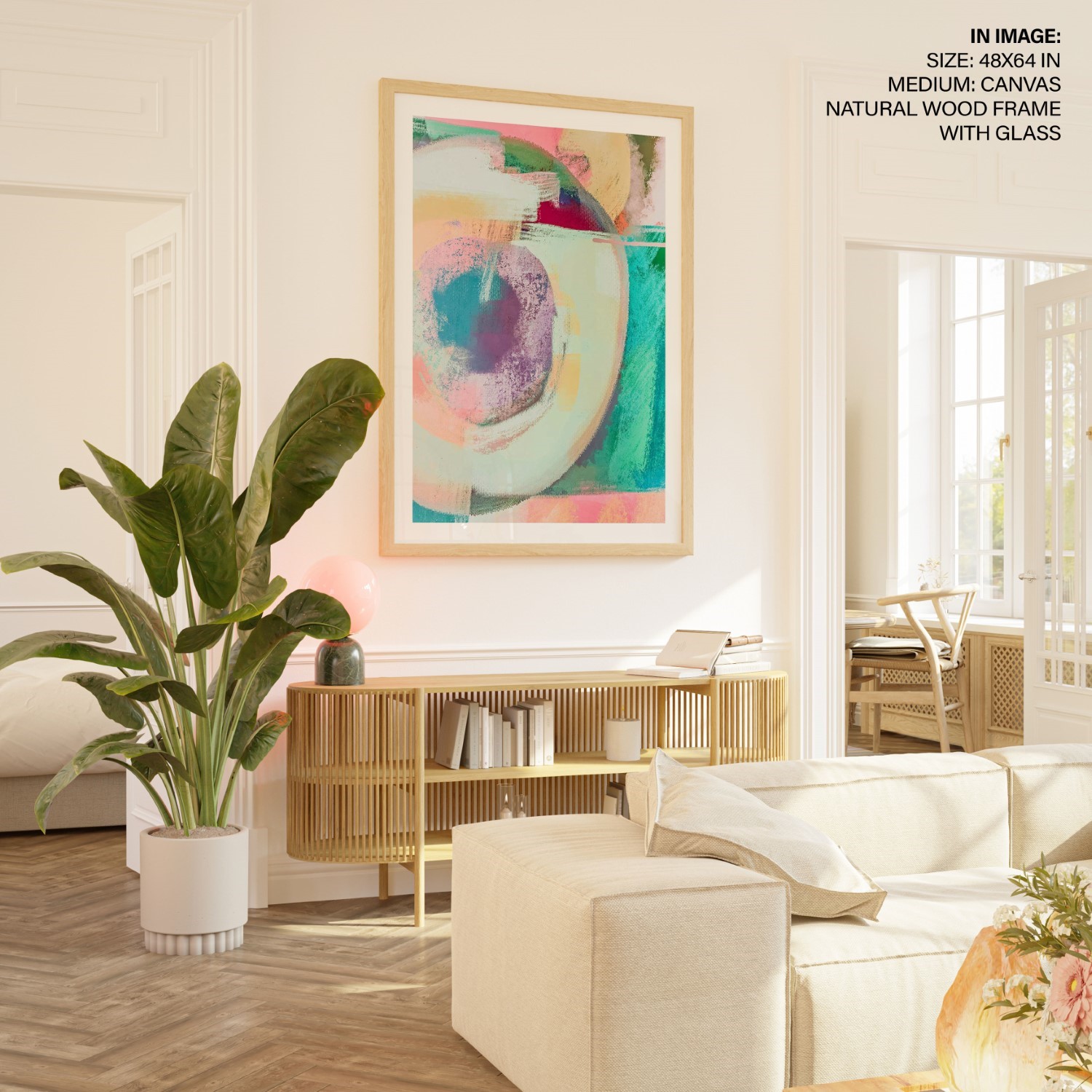
Researchers reviewing the evidence on looking at art started with 3,893 published abstracts. By the time they had applied their criteria — prospectively registered, art viewing only, no art-making or art therapy folded in — 38 studies and 6,805 participants remained, tested against 42 separate outcomes. Six of the forty-two moved.
That six is the finding worth building an article around. Nearly all of them measured the same kind of outcome: a sense of meaning or purpose, the kind of shift a good book or a hard conversation leaves behind for days, not an hour.
This piece works from three studies about looking at art, chosen for the same reason: prospectively registered where the design allowed it, replicated across multiple sites when the original called for it, and read at the primary source rather than summarized secondhand. Two describe what viewing art actually does. The third explains why the first two only get you partway toward choosing what to hang — and why the wall above your sofa still needs your own eye to finish the job.
The Outcomes That Moved Were About Meaning, Not Mood
The review above is Trupp and colleagues, published in the Journal of Positive Psychology in 2025. The authors registered their method before collecting a single result, screened 3,893 abstracts down to 38 papers, and pooled 6,805 participants across studies that isolated art viewing specifically, not art-making, not art therapy, just looking. Against a control condition, they tracked 42 separate outcomes: mood, anxiety, stress, self-esteem, and more. Six reached statistical significance. Almost all six were measures of what psychologists call eudemonic wellbeing.
Eudemonic Wellbeing Means A Sense Of Growth Over Time
Eudemonic wellbeing is a different instrument than a mood scale. Where a mood measure asks how you feel right now, a eudemonic measure asks whether you feel your life has direction, whether you are growing, whether what you are doing has purpose. Those are the items that moved in this review when the mood and anxiety items mostly did not. If you have ever stood in front of a painting and felt something closer to recognition than relaxation — a sense of your own life coming briefly into focus — that is the effect this review measured against a control group.
Nature Scenes On A Screen Helped Stressed Viewers Feel Calmer
The clearest recent test of imagery and mood comes from a 2026 multisite replication in the Journal of Environmental Psychology. Ten research teams across five countries ran the same preregistered design on 959 people: watch a stressful video, then watch one of several follow-up scenes, a forest, a stream, a busy pedestrian street, or traffic. People who watched the nature scenes reported feeling calmer afterward than people who watched the street or traffic scenes.
This Study Used Screen Video, The Same Format As A Framed Print
The exposure here was never a walk outdoors. Participants sat in front of a screen, which is the reason this study transfers to a picture on a wall rather than to a garden or a window view; the format matches. Two limits are worth carrying forward with the finding. The sample skewed young, a mean age of 22, mostly students. And recovery was measured over minutes in a lab, not lived with over years in a bedroom. The physiological readings in the same study came back mixed, so what holds up here is specifically how people said they felt, not what a monitor recorded.
The Art That Moves You Differs From What Moves Someone Else
A smaller, older study explains why the two findings above can only take you so far toward choosing an actual piece. In Vessel, Starr and Rubin’s 2012 study, 16 observers rated their response to 109 artworks drawn from the Catalog of Art Museum Images Online while researchers scanned their brains. The artworks each person rated as most moving activated the default mode network, the brain system tied to self-reflection, the same one active when you are thinking about your own life rather than the world in front of you.
Sixteen Viewers Agreed On Almost Nothing About Which Artwork Moved Them
Which artwork did that for a given person turned out to be almost unpredictable from what did it for anyone else. Mean agreement between any two observers, across the whole set, was 0.13, close to what strangers picking at random would produce. Sixteen people and a lab scanner is a narrow base to build a rule on, and the authors do not claim more than that. But it is a specific, well-conducted answer to a question the first two studies leave open. Research can tell you what a category of image tends to do across a room full of strangers. It cannot tell you which painting will do that for you. Only standing in front of the piece can run that test.
Three Sightlines Decide What Job Each Wall Does
The same painting does different work depending on which wall carries it, because you meet it under different conditions each time you look. Three sightlines cover most of a home: what you see walking in, what you see from bed, and what you see from a desk.
Entryway Wall Art Should Resolve In Under A Second
Whoever walks through your door reads the nearest wall before they have said hello or sat down. That is a glance, not a study session, so an entryway can carry your busiest, most detailed piece, the one with too much going on for a room where people actually sit. Save the quieter work for a wall people spend longer in front of. The abstract collection holds most of the pieces bold enough for this job.
Wall Art For A Bedroom Earns A Calm Scene Over A Loud One
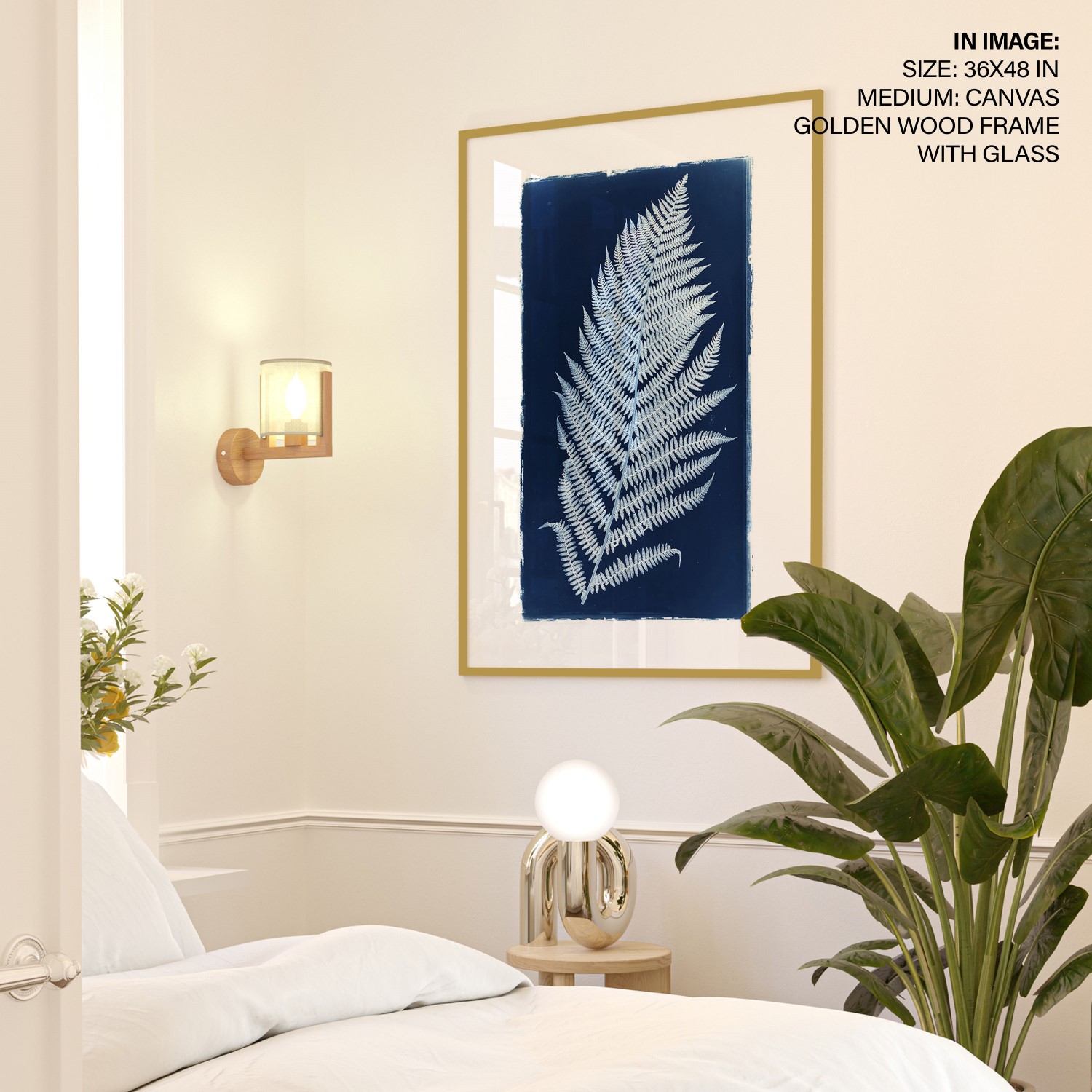
A bedroom wall gets viewed at low light, half-attention, for years, the last image before sleep and the first after waking. This is the wall the 2026 replication above speaks to most directly: a nature scene is one of the few images with a tested, self-reported link to feeling calmer after stress, which is why it earns the space above a headboard more than a high-contrast abstract does. If the frame or print itself is the next question, what it is actually made from, this close to where you sleep, is your wall decor toxic covers that ground. For the directional reasoning on top of it, vastu paintings for the bedroom runs alongside this. Browse bedroom wall art, or the botanical and green ranges for the nature scenes the replication actually tested.

Wall Art At Your Desk Changes How The Room Feels
None of the three studies above tested a desk, and nothing here licenses a focus or productivity claim for the wall behind one. What a desk wall can do is set the tone of a room you spend hours in: work you do not tire of over months, chosen for the same reason the review above points toward, engagement and a sense of purpose in the space, not a performance edge nobody measured. How art affects your office space goes further into what that looks like in practice, and the office wall art range is filtered for desk-facing walls.
Dwell Time Decides How Bold Your Living Room Wall Art Can Be
A hallway gets seconds of attention from anyone passing through it. A sofa gets hours, spread across months, looked at half-consciously thousands of times before anyone consciously notices it again. That gap should drive more of a colour or composition choice than taste alone does.
In a transitional space, an entry, a corridor, a stairwell, the boldest, busiest piece in a collection reads as energy, not noise, because nobody stands there long enough to tire of it. Move that same piece to a living room where people sit still, and the print that looked exciting in a showroom starts to grate by the third month. A quieter composition is not a compromise in a sit-still room. It is the requirement the room itself is making. For the sit-still end, living room wall art is the range to start from; for a hallway or stairwell, the abstract collection carries the bolder work. Our guide to abstract art and energy works through how much visual pull each room can actually spare.

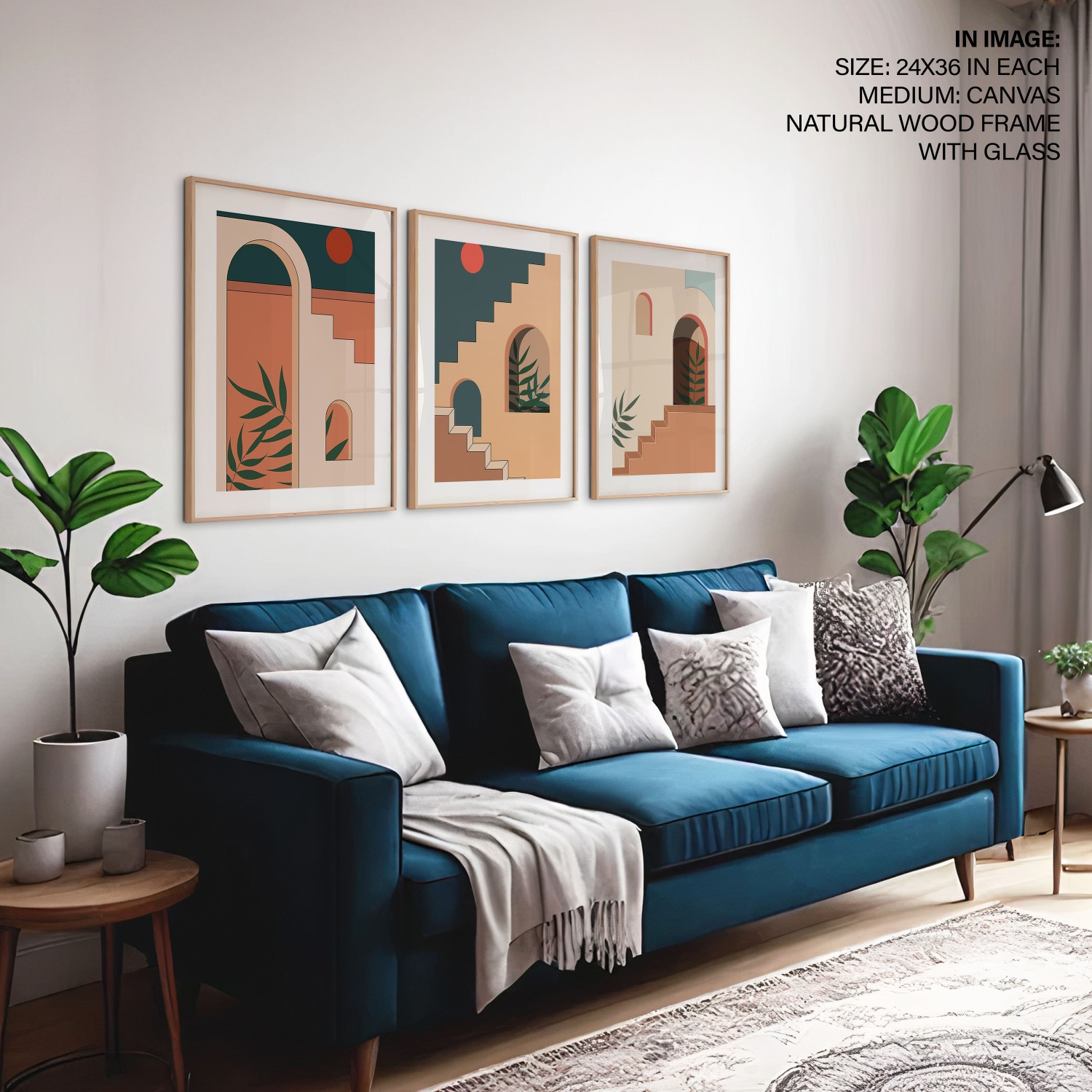
Wall Art Above A Sofa Should Span 60 To 70 Percent Of Its Width
Colour and composition are judgment calls. Scale is not: how to hang wall art above a sofa comes down to one arithmetic rule, and it is the single most-saved piece of advice on this site.
The rule. Art hung above a sofa or console should span roughly 60-70% of the furniture’s width, whether that is one large piece or a tight grouping treated as one visual block.
Why it holds. Narrower, and the art reads like an afterthought stranded on bare wall. Wider, and it starts competing with the sofa instead of framing it.
Wall Art Size For An 84-Inch Sofa Runs 50 To 59 Inches
The arithmetic. On an 84-inch, 7-foot, sofa, 60-70% works out to 50 to 59 inches of art or arrangement. Measure the sofa first, then shop to the number.
Hang The Frame’s Bottom Edge 15 To 20cm Above The Sofa Back
Where it sits. The bottom edge of the frame belongs 15-20cm above the sofa back, not at a generic eye-level line. Eye-level rules are for walls with nothing nearby to line up with; a sofa already gives the piece something to sit on.
If you are building a grouped arrangement instead of one statement piece, our Indian art gallery wall starter guide covers the spacing math in more depth than fits here.

Vastu Placement And This Research Point At The Same Walls
Vastu recommends specific art for specific directions on cosmological grounds: a water scene for the north wall, tied to Kubera and the flow of wealth, calmer and more grounded work for the bedroom, welcoming pieces for the entry. The sightline and dwell-time reasoning above arrives at close to the same placements from an entirely different direction, evidence about attention and recovery rather than a directional system.
Neither needs the other to be wrong for either to be right. The bedroom guidance above, keep the sightline from the bed calmer, not louder, sits next to what vastu paintings for the bedroom recommends on its own terms. The sofa-width arithmetic pairs with the placement logic in vastu paintings for the living room. For the full direction-by-direction guidance, vastu paintings for the home covers each wall in turn, and the seven horses painting and vastu is the most-read piece on this site for readers who want both systems working the same wall.
If colour is the axis you want to plan by next, our companion piece on colour psychology for every room picks up from here.
Frequently Asked Questions
Does looking at art actually make you feel better?
The best-designed review on this, published in 2025, tested art viewing against a control across 42 outcomes and found six reached significance, nearly all of them measures of meaning and purpose. Expect a sense of engagement or growth, the kind the review measured directly, rather than a mood swing in the moment.
Does a picture of nature help you feel calmer the way a walk outside would?
A 2026 replication across 959 people in five countries found nature video, watched after a stressful clip, produced more reported calm than street or traffic video, and the exposure was screen imagery, so it applies to a framed piece. The sample skewed young and the effect was measured in minutes.
Should I pick art based on research, or on what I personally respond to?
Research can tell you what a category of image tends to do across a room full of strangers, nature scenes and calm, for instance. It cannot tell you which painting will do that for you: a 2012 brain-imaging study found the artwork 16 viewers rated most moving barely overlapped between them. Trust your own reaction.
What size of wall art should hang above a sofa?
Roughly 60-70% of the sofa’s width, as one piece or a grouping treated as one block. On a typical 84-inch sofa, that is 50 to 59 inches of art. Hang the frame’s bottom edge 15-20cm above the sofa back rather than at a generic eye-level line; the sofa itself is the reference line once it is in the room.
What kind of wall art works best in a bedroom?
A calmer scene over a loud one. The wall you see from bed gets viewed at low light for years, and the closest tested match is nature imagery: a 2026 study found people reported feeling calmer after nature video than after street or traffic video. Save busy pieces for a hallway instead.
Choose Your Next Piece For The Wall’s Actual Job
Start with the wall you already have and name what it does: greeting, rest, work, or a room people sit in for hours. Match the image and its scale to that job, using the sofa-width arithmetic above wherever furniture sets the frame, and use your own reaction as the final filter. The 2012 finding above is the whole argument for why nobody else’s list, including this one, can make that last call for you.
If a sit-still room is what you are solving for, our abstract collection carries the colour and composition choices participants engaged with in the review above. If it is the wall behind a headboard, the botanical collection carries the nature imagery the 2026 replication’s participants recovered faster looking at. Either way, stand in front of the piece before you buy it. That is the only test with a citation behind it.