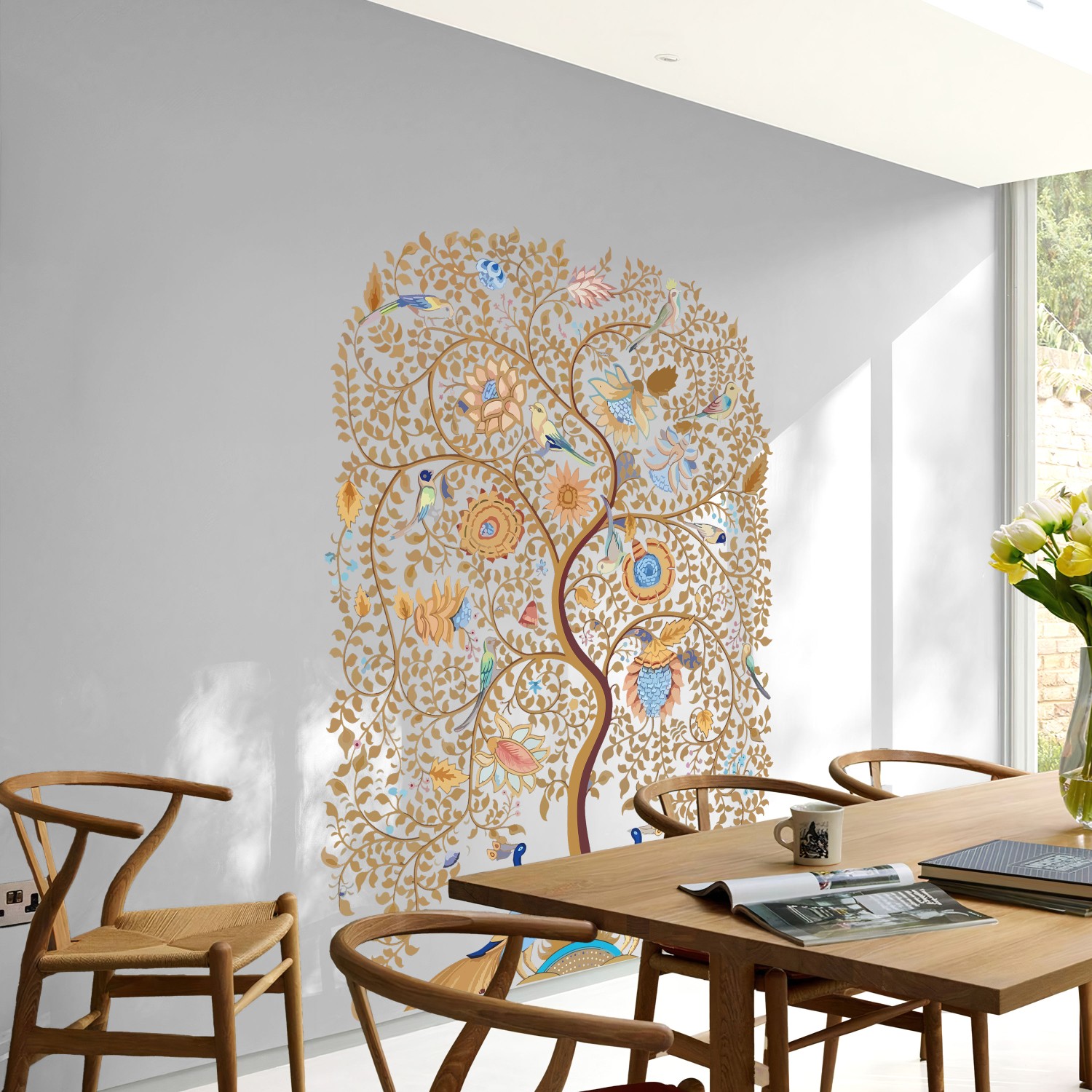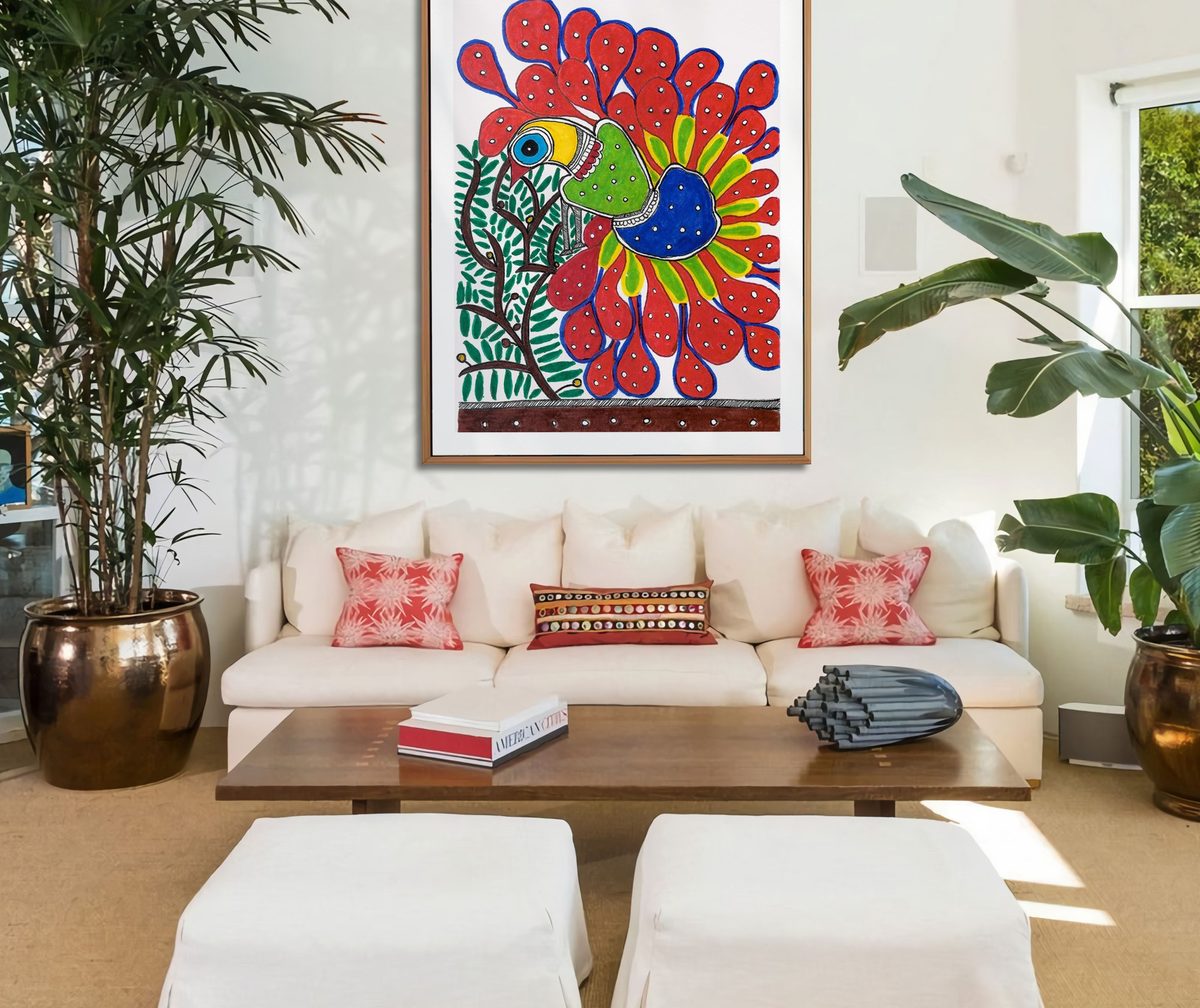
Every home has one wall that carries the room. In Ritu’s flat in Pune, it used to be the TV. Then she hung four small folk paintings beside a large madhubani peacock — nothing matched, everything belonged — and now nobody looks at the TV. Guests stand in front of that wall with their chai and ask the same question: where is this from?
That is what a gallery wall does. One frame is decor. Five frames with a thread running through them is a story about the person who lives there.
Why Indian Folk Art Works as a Gallery Wall
A gallery wall needs two things most collections lack: variety in scale and unity in spirit. Indian folk art gives you both by default.
Madhubani’s dense borders, warli’s spare white-on-earth figures, gond’s dotted lines and pichwai’s lotus motifs are visually different enough that a group never looks repetitive. But they share hand-drawn patterning and a rooted palette, so the group always reads as one collection rather than five strangers.
There is also a practical reason: folk art holds up at small sizes. A 12x16 inch warli still reads clearly from across the room, which is exactly what the supporting frames in a gallery wall need to do.
Gallery Wall Layout: Three Arrangements That Always Work
1. The grid. Same-size frames, arranged 2x2 or 3x3, with even 5–8 cm gaps. Calm and orderly — best for hallways and above sideboards. Works beautifully with a single art form, like four warli scenes.
2. The anchor and satellites. One large piece (24x36 inch or bigger) sits slightly off-centre; three to five smaller frames orbit it. This is the layout in the photo above — the madhubani peacock anchors, the room breathes around it. Best above sofas and beds.
3. The spine. All frames align along one horizontal centre line at eye level — roughly 145–152 cm from the floor to the centre of the artwork. Sizes can vary wildly; the shared spine keeps order. Best for staircases and long corridors.
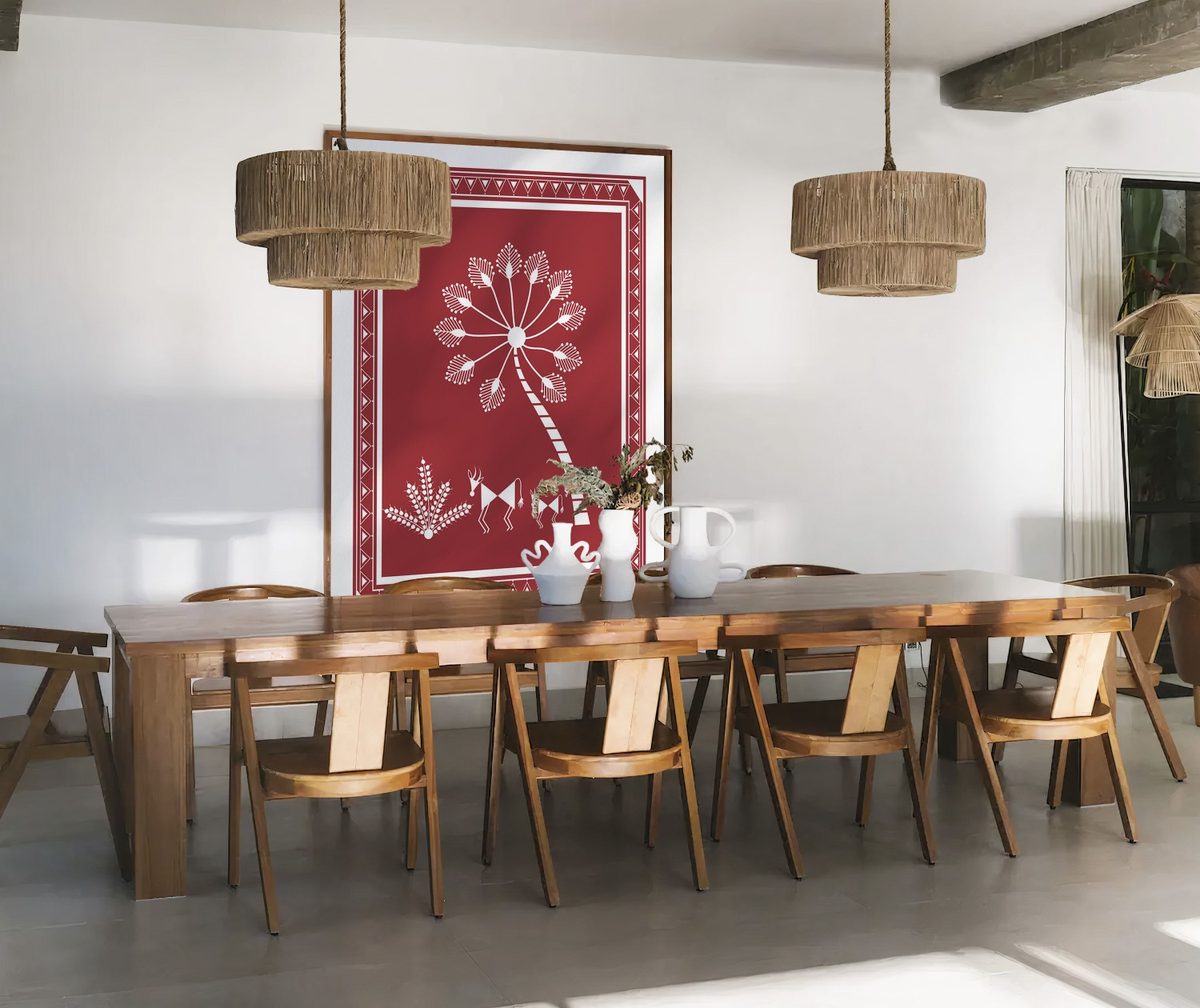
Whichever layout you choose, lay it out on the floor first with paper cutouts taped to the wall. Ten minutes of paper saves ten nail holes.
Choosing the Pieces: Mix the Art Forms, Keep One Thread
The rule that keeps a mixed wall coherent: change the art form, repeat one element. That element can be a colour (the red in a pichwai echoing the red border of a madhubani), a subject (birds across three traditions), or the frame finish.
A starter set that works in almost any room: one large madhubani as the anchor, a warli pair for quiet contrast, and a gond or pichwai piece for pattern density.
Sizing and Spacing Cheat Sheet
- Total arrangement width: two-thirds the width of the furniture below it
- Gap between frames: 5–8 cm — tighter reads as one unit, wider reads scattered
- Centre of the arrangement: 145–152 cm from the floor
- Above a sofa: leave 20–25 cm between the backrest and the lowest frame
- Odd numbers of frames look more natural than even ones in loose layouts
If you are starting from zero, browse wider than you plan to buy — the rejects teach you what the wall actually wants.
Shop all Wall Art →FAQ
How many frames should a gallery wall have? Start with five to seven. Fewer than four can look accidental unless the pieces are large; more than nine needs a strict grid or spine to stay tidy. You can always grow the wall later — leave expansion space on one side.
Can I mix madhubani and warli on the same wall? Yes — they contrast well because madhubani is dense and colourful while warli is sparse and monochrome. Repeat one element across both, like frame colour or a shared earthy background tone, and the pairing looks intentional.
What size should the main piece be? Above a standard three-seater sofa, an anchor of 24x36 inches or larger holds the wall. In the anchor-and-satellites layout, satellites work best at half the anchor’s size or smaller.
One wall, a handful of frames, one thread running through them. Start with the anchor, build outward, and let the traditions do the talking.
Browse the full Wall Art collection to find your anchor piece, or chat with us on WhatsApp for free gallery-wall advice.