A waterfall painting belongs on the north wall. North answers to the water element and to Kubera, keeper of wealth, so falling water on that wall reads as money in motion rather than money sitting still. The north-east takes it too, kept pale and light. The south never takes it, whatever the piece cost.
Most Vastu guides get that far and stop. What they leave out is that a waterfall is the one subject carrying a second direction you have to get right: the direction the water travels inside the frame.
What a Waterfall Painting Means in Vastu
Water is the element Vastu ties to movement: cash flow, career momentum, opportunities arriving rather than drying up. A waterfall is the clearest picture of that idea anyone has painted, water arriving from a source outside the frame and never appearing to run out.
North belongs to Kubera and to that same element, which makes the north wall the obvious home for falling water. The painting is not doing the work on its own. It keeps the wall’s own subject in front of you every day, and that is the mechanism Vastu is describing.
Which Direction Should a Waterfall Painting Face?
North first, north-east second, and never the south. The full ruling:
North (Water · Kubera) — the primary wall. Why: water rules the direction and Kubera governs wealth, so painting and wall want the same thing. Best in: living room, entrance foyer, the wall facing your desk. See the north wall vastu guide.
North-East (Water & Space · Ishan) — acceptable, with conditions. Why: the Ishan corner mixes water with open space, so it takes water well if the piece stays light. Keep it: pale, bright, never dark or heavy. See the north-east corner guide.
South and South-East (Fire · Yama, Agni) — never. Why: both are fire directions, so a waterfall asks the wall to carry the opposite element and it ends up doing two jobs, neither well. Instead: seven running horses or a mountain range, per the south wall guide.
The Flow Rule Most Guides Skip
Hang the painting so the water falls into the room, never out of it. If the fall runs toward a doorway, a window, or the open edge of the wall, the image reads as flow leaving the house, and that is the most common mistake with water art in Indian homes.
Now look at the bottom of the frame. The water should land somewhere you can see: a pool, a basin, a river carrying on out of view. A fall that runs off the lower edge gives the eye nowhere to settle, and Vastu reads that as flow with no destination.
Three checks worth making before you buy:
- Full, unbroken water. A thin trickle or a half-dry rock face carries the meaning backwards.
- Steady, not violent. Aim for water you could stand beside and still hear someone speak.
- A visible source. Water appearing from behind green cover reads as continuous supply. A hard, empty top edge reads as finite.
Rooms That Suit a Waterfall, and Rooms That Do Not
Living room. The sofa wall is where a waterfall earns its keep, provided it faces north or north-east. On an 8 to 10 foot wall, one large canvas holds the room better than three small frames. Leave 8 to 10 inches between the sofa back and the bottom of the frame, and set the water moving toward the seating.
Entrance and foyer. Flowing water at the threshold suits a north or east-facing door. Keep it bright; a dark fall at the entrance sets the tone for everything past it.
Study or home office. Hang it on the north wall in your line of sight, not behind your chair. Wealth imagery works where you can see it; the wall at your back is for support, which is a mountain’s job.
Bedroom and kitchen. No to both. Moving water reads as restless where sleep needs stillness, and water above the bed is specifically discouraged. The kitchen sits in the fire zone, where the clash is most direct.
Choosing the Right Waterfall Artwork
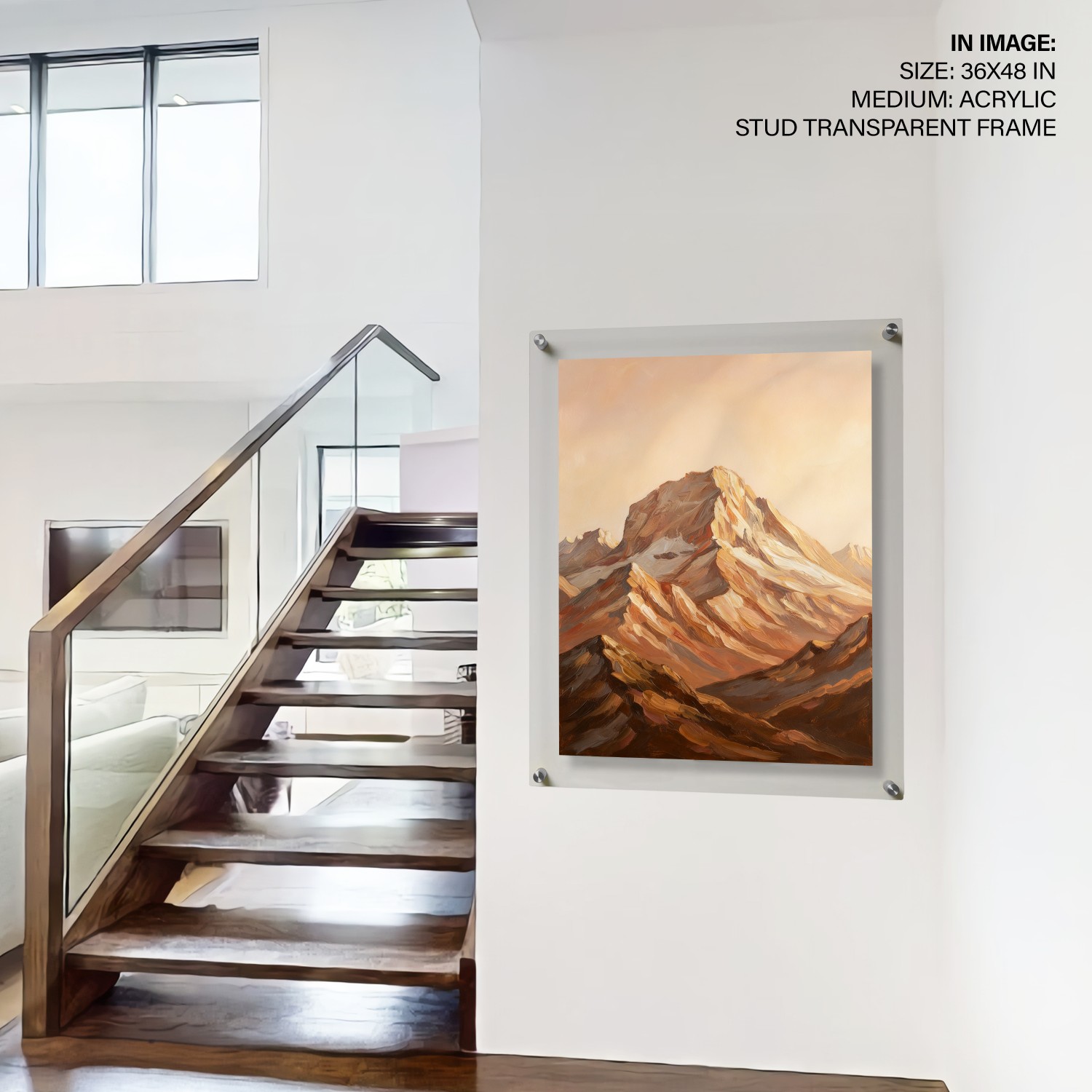
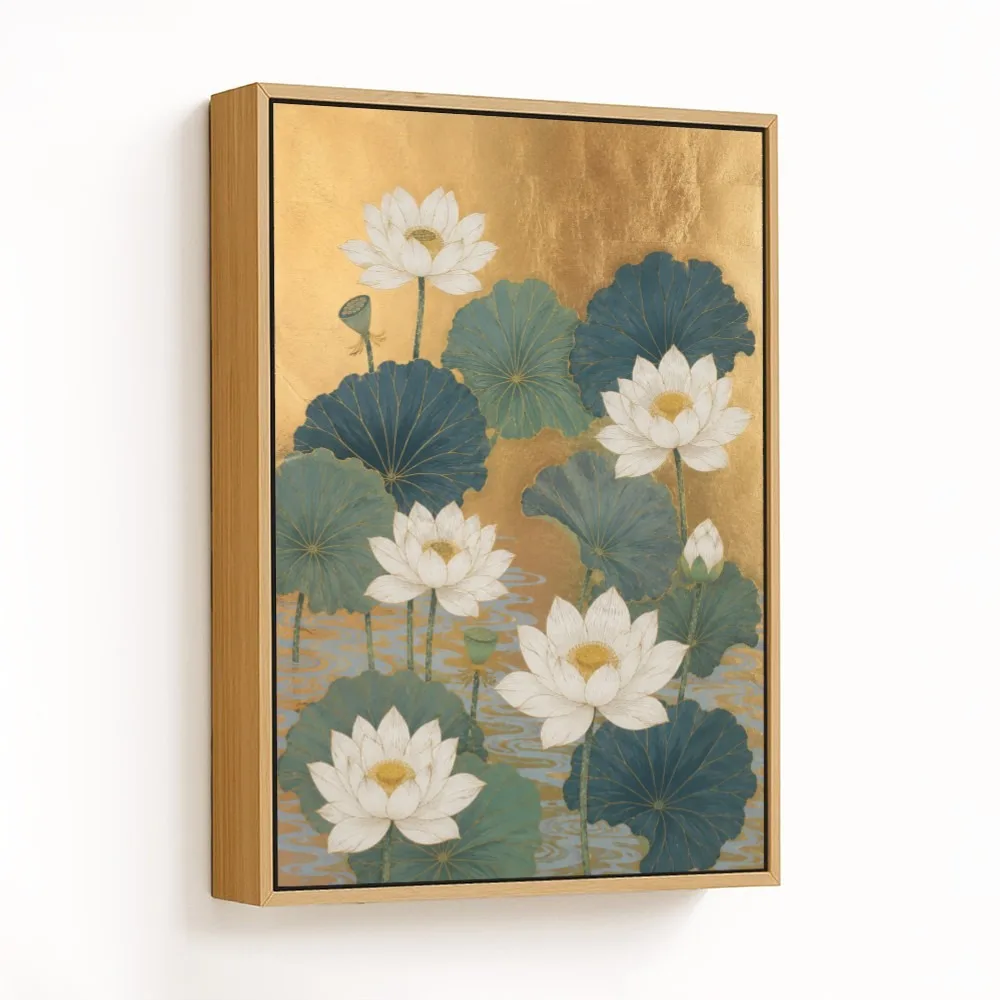
Start with the palette, because it decides whether the piece belongs on a north wall at all. Cool blues, greens and soft whites are what the direction wants. A fall painted in warm gold and red light may be beautiful, but it reads as fire on a water wall.
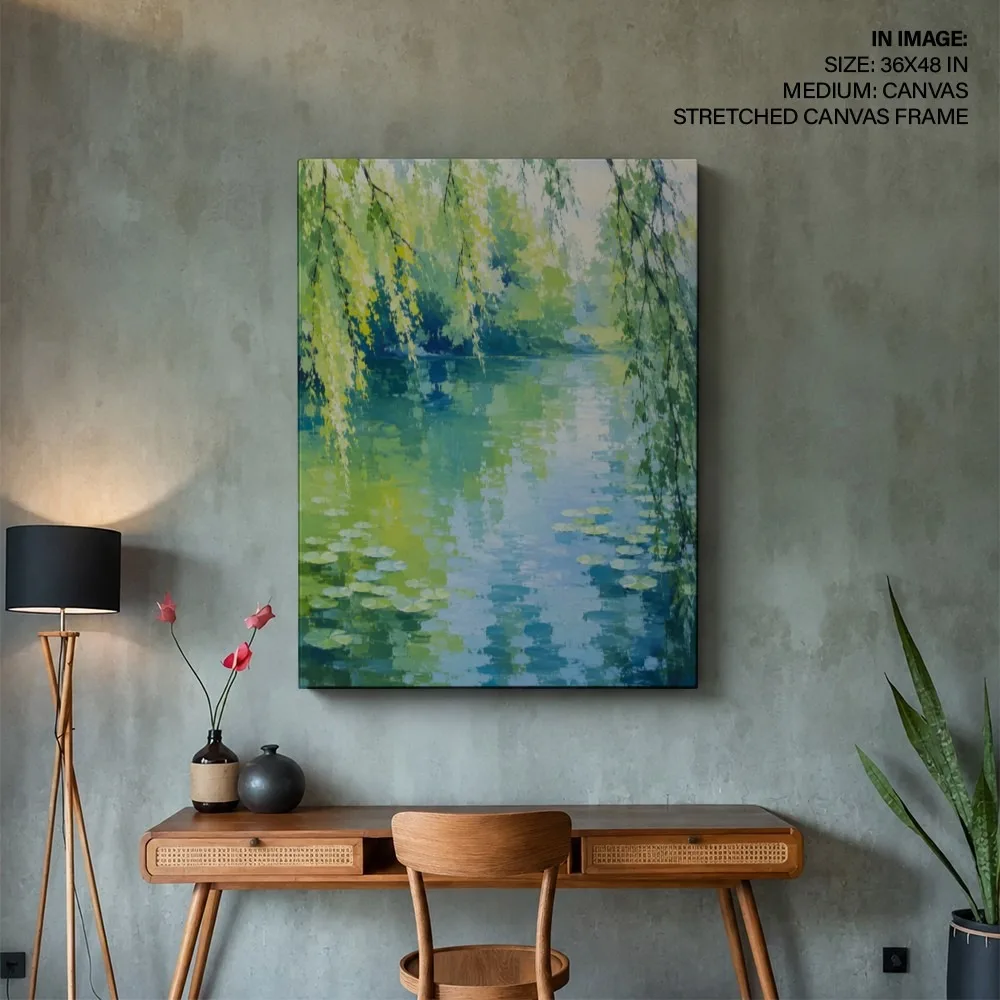
Green matters as much as the water. Planted banks, overhanging trees and moss on the rock all say living, continuous supply; bare grey stone says the opposite.
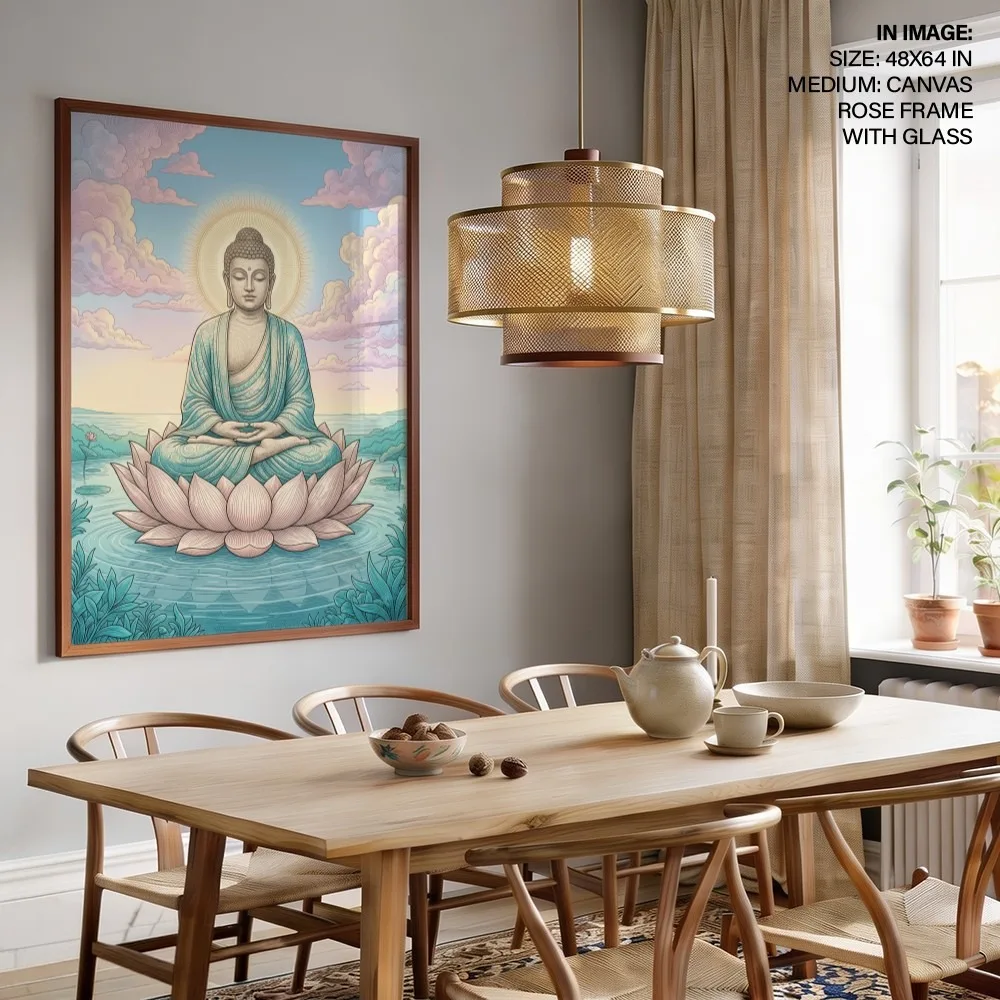
Then size the piece to the wall rather than to the budget. A 36x48 inch canvas suits most sofa and foyer walls in a 2BHK or 3BHK, while 48x64 inches is for an extra-wide wall where anything smaller looks stranded. A framed canvas behind glass gives a formal finish; a stretched canvas sits lighter.
Our Calm Water collection is built to this brief: water in cool blues and greens, framed or stretched, cut to the wall size you give us. A few pieces that suit a north or north-east wall:
Benefits People Attribute to a Waterfall Painting
As per Vastu belief, a waterfall on the north wall keeps wealth in circulation: money that moves is money that returns. That is why the subject turns up in so many Indian family homes, and above so many shop counters.
The same painting is credited with settling a room. Water cools, so a fall is the usual suggestion for a space that runs hot or agitated, and people hang one for renewal after a move or a difficult year. A waterfall or calm-water canvas is also a popular housewarming and Diwali gift for exactly that reason — see our Diwali gift ideas for wall art for more pairings.
Treat all of it as belief rather than guarantee. What a well-placed waterfall does reliably is raise the question of flow every time you walk past it, in the corner of the house Vastu assigns to exactly that. Plenty of good habits have been built on less.
What to Avoid with Water Art
- The south and south-east walls. Fire rules both. Water there cancels the momentum those walls exist to build, and no amount of size or spend fixes the mismatch.
- Rough seas, storms and high surf. Turbulent water carries instability into a room meant to feel settled.
- Sinking or half-submerged boats. Any vessel going down points fortunes downward with it. A boat belongs in the frame only when it is clearly afloat.
- Stagnant ponds and dried-up falls. Still green water and an empty rock face both read as flow that has stopped, the exact reverse of the meaning you are after.
Frequently Asked Questions
Where should a waterfall painting be placed at home?
On the north wall, the direction of water and of Kubera. North-east is the second choice, kept pale and light. Hang it in the living room, entrance or study where you see it daily, position the fall so water moves into the room, and keep it out of bedrooms and the kitchen.
Is a waterfall painting good for the living room?
Yes, and the living room is where it does its best work, as long as the piece goes on a north or north-east wall. The sofa wall is the usual spot. Choose one large canvas over a cluster of small frames, and check that the water falls toward the seating rather than toward the door.
Can a waterfall painting go in the bedroom?
No. Vastu treats moving water as restless energy, which works against the stillness a bedroom needs, and water hung above the bed is specifically discouraged. Choose a soft floral, a calm landscape or a Radha-Krishna piece instead, and keep the waterfall for the living room or study.
Which direction is best for a water painting as per vastu?
North is best for any water subject, because water is the north’s ruling element and Kubera governs wealth there. North-east comes next, and west suits calm water since it answers to Varuna. Keep every water scene off the south and south-east, where fire rules.
Start with the Wall, Then the Flow
Find your north wall before you look at a single painting. After that the choice is a short checklist: cool blues and greens, water falling into the room, a pool you can actually see at the bottom of the frame, and nothing at all on the south. Every piece in our Vastu range is printed and framed in India and cut to your wall size, so the artwork that suits the direction also fits the space.
Browse the Calm Water collection or the wider Vastu shastra art range. To map the whole house wall by wall, start with the wall-by-wall vastu painting guide.