Mountains stand for stability and support in vastu. Hang a mountain painting on the south wall for recognition and standing, or the south-west wall for grounding, and place it behind your desk or your sofa, where its weight does the most work. Keep it off the north wall, which belongs to water and to Kubera, and where a heavy range sits on the flow of money instead of helping it.
That last rule is the one people break, usually because the north wall is the empty one. Mountains are the heaviest subject in the whole vastu vocabulary, and vastu is largely a question of where weight belongs.
What Mountains Mean in Vastu
A mountain is the earth element at its most solid, which is why every direction vastu gives to earth is glad to hold one. Earth rules the south-west, the Nairuti corner. The south carries the fire of Yama and Mars, where a warm rock face reads as something you have built and can stand on.
The meaning follows from the mass. A waterfall painting promises money in motion; seven running horses promise speed. A mountain promises that nothing shifts, which is a quieter kind of good fortune. It suits the family that has just moved into a new flat, or the household going through a bad stretch at work.
That is also why mountains are the subject vastu asks you to put behind something rather than in front of it. Flow subjects want to be seen. Earth subjects want to be leaned on.
The Right Wall for a Mountain Painting
Two walls take mountains well, one position matters more than either, and one wall turns the painting against you.
South (Fire · Yama) — fame, recognition, standing among peers. Hang: warm rock faces, golden-hour ranges lit by late sun.
South-west (Earth · Nairuti) — stability, relationships, grounding. Hang: solid, close-up massifs. The heavier the range, the better it sits here.
Behind a desk or sofa — support at your back. Hang: one wide range on a single canvas. Keep off: water in the lower third.
North (Water · Kubera) — avoid. A heavy range blocks cash flow. Hang: a waterfall or river instead. Keep off: mountains of any size.
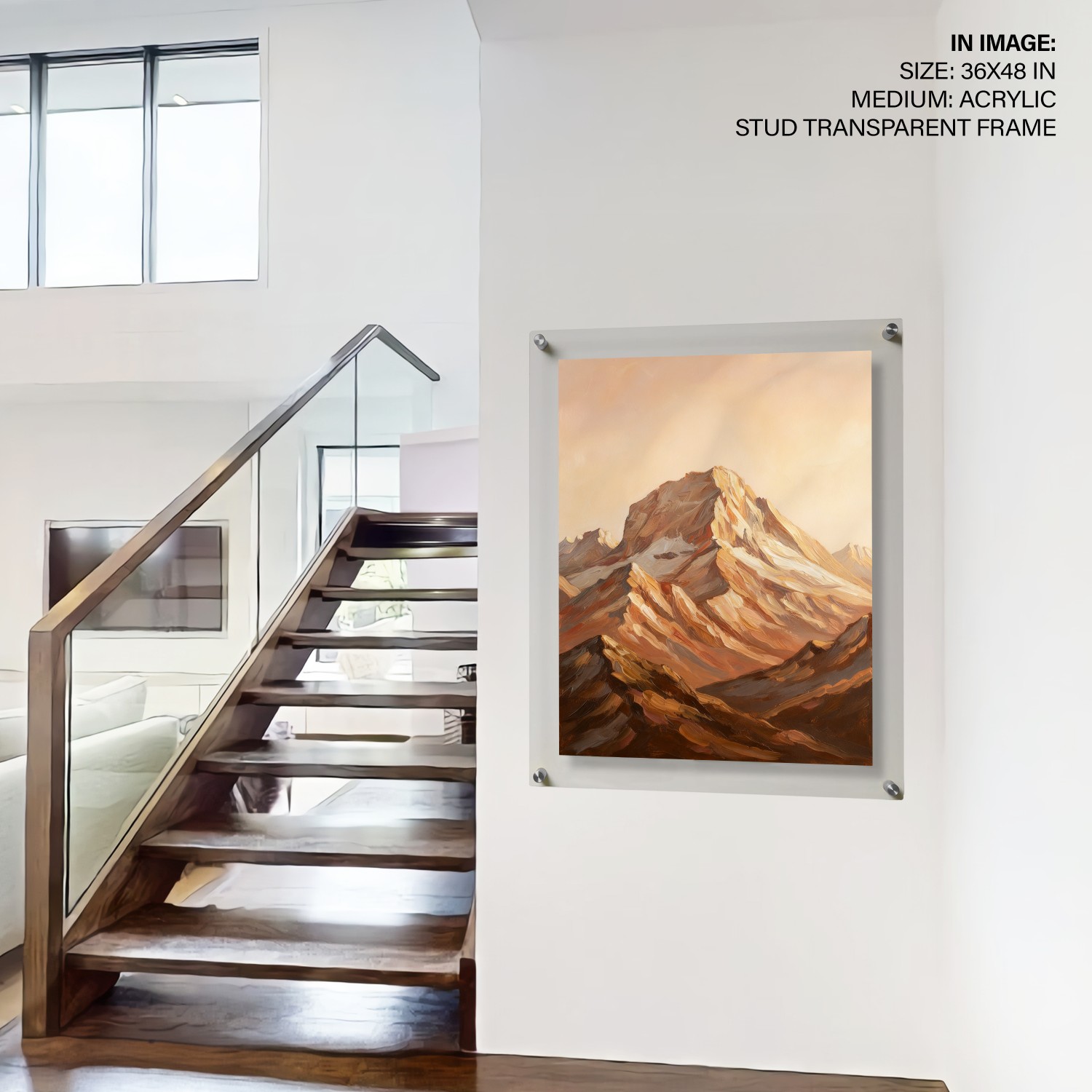
The south wall is the ambition wall. Fire governs reputation there, so a range lit by late sun, with warm ochre and rust in the rock, belongs on it. Full placement rules for that wall are in our guide to vastu paintings for the south wall.
The south-west is the primary earth zone and the corner vastu gives to relationships and to the head of the family. It is the stronger of the two for a mountain, and the heavier your painting, the better it does here. See the south-west wall guide for what else that corner takes, or the vastu paintings for home pillar for the whole map.
Behind the Desk: The Career Wall Rule
Vastu has a plain rule for where you sit: something solid at your back, open space in front. A wall behind the chair is good, a window behind it is not, and a mountain on that wall is the strongest version of the rule.
The arithmetic works out neatly in an Indian home office. A desk is usually set so you face north or east, for Kubera or for the morning light, which puts the south or south-west wall directly behind your chair. The wall your back is turned to is the wall mountains want.
Two things to get right. Hang the range so the horizon line sits a little above your head when you are seated, not level with it, so the mass reads as backing rather than a load. And give it width. A single wide range across one large canvas holds a wall better than three small frames, which break the ridge into pieces and lose the solidity that made you pick a mountain.
The same rule covers the living room. Most Indian sofas back onto the longest wall of the room, and a mountain above a three-seater does the same job for the family that it does for you at a desk.
Choosing Your Mountain Artwork
Match the palette to the wall, then to the room.
Golden-hour and sunset ranges are the south-wall pick. The warm rock tones agree with fire, and they are forgiving in a room that gets little natural light. Green valley scenes sit well in a living or dining space where you want calm rather than drive. Muted, minimal ranges in beige and stone belong in a bedroom or study, where a loud canvas would keep the room awake. A snow peak works when the room is already warm in colour.
Our curated Mountains collection runs to 27 artworks across those styles, each printed and framed in India, with the direction and purpose listed on every product page so you are not guessing at the wall.
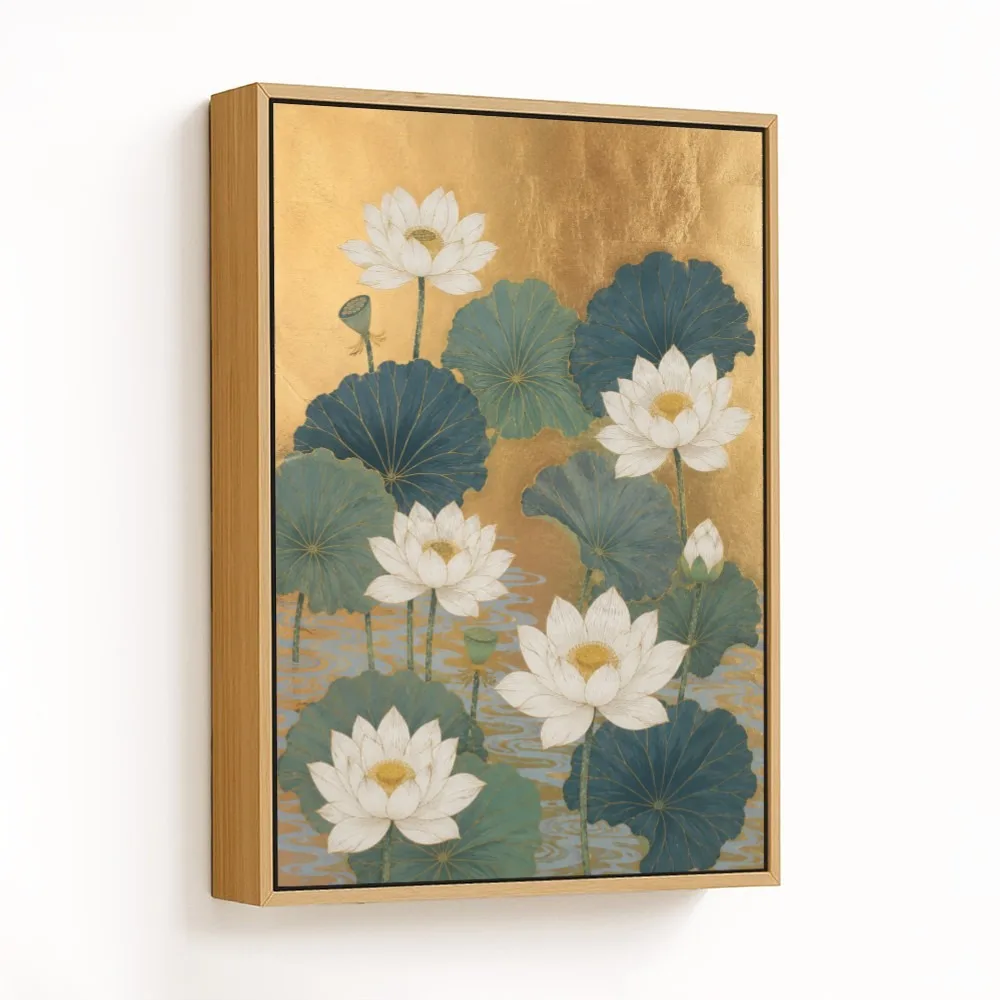
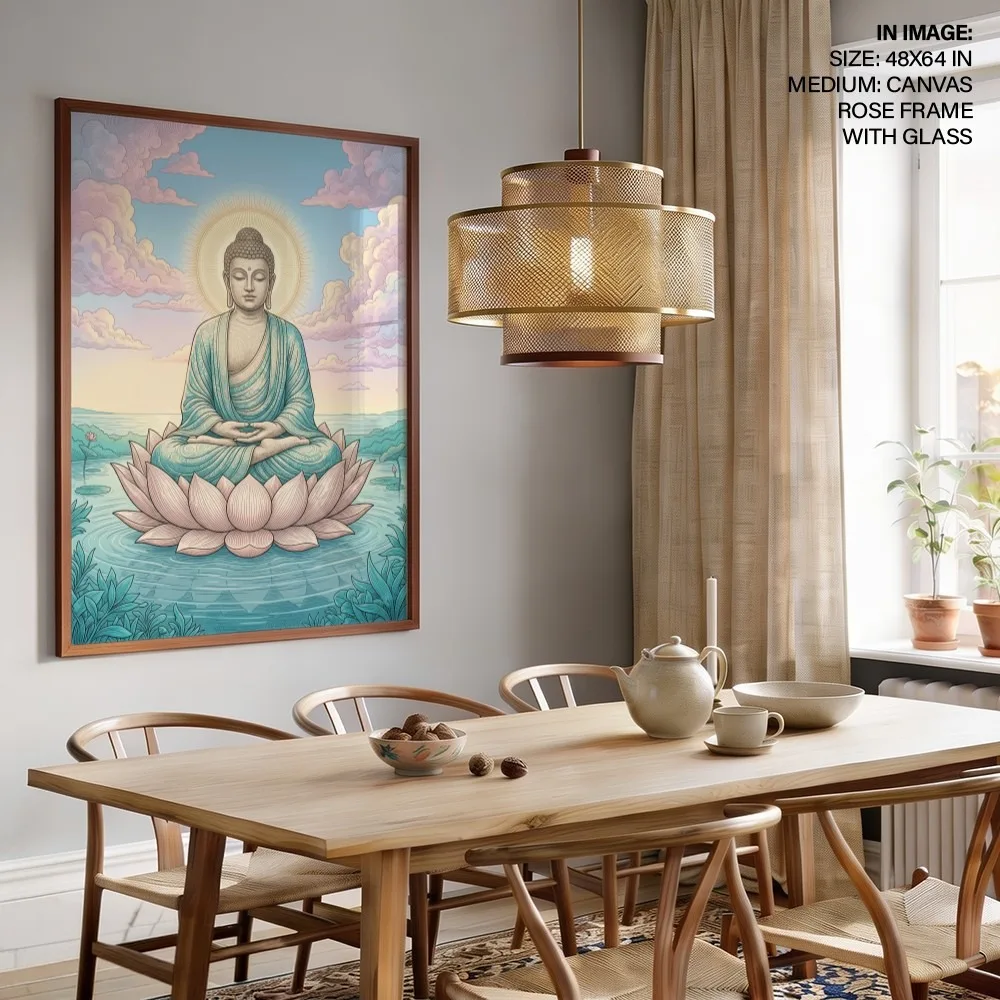
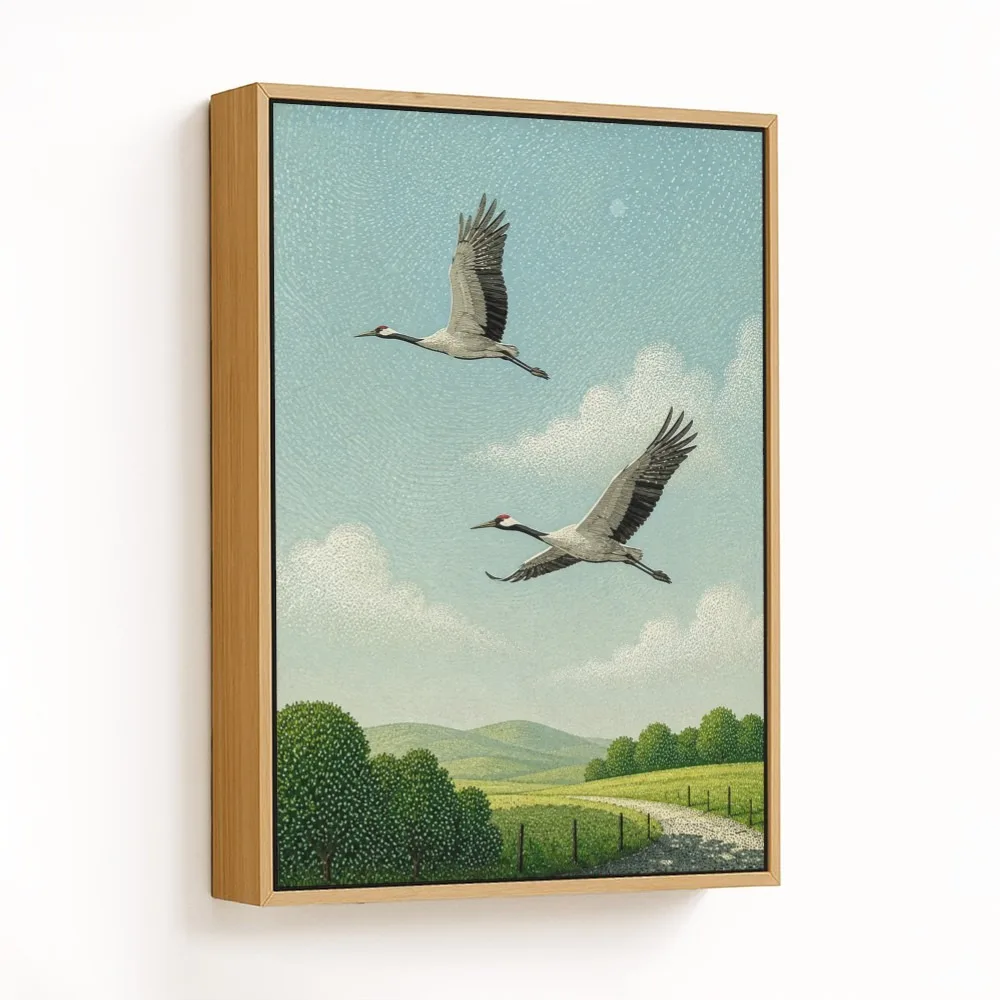
Here are four to start with.
What to Avoid
The subject can go wrong in five ways. Three are about the picture you choose, two about where you put it.
Volcanoes and erupting peaks. Fire coming out of earth is instability, the exact opposite of what you hung a mountain for.
Barren scree and rockfall. A range shown as loose rubble, or with rocks visibly coming down, reads as ground giving way. Choose an intact ridge.
Mountains above or behind flowing water. A river running under a peak undercuts it. Keep the two subjects on separate walls.
A range facing the main door from inside. A wall of rock squarely opposite the entrance meets incoming energy with a block. Move it to a side wall of the foyer.
The north wall. North is Kubera’s, ruled by water, and every subject that belongs there flows. A mountain is the one thing that cannot. Our guide to paintings for the north wall as per vastu covers what to hang instead. The north-west has a softer version of the problem: Vayu governs air and movement there, so a heavy, dark range stalls a corner that should stay light. See the north-west wall guide.
FAQs
Is a mountain painting good as per vastu?
Yes. Mountains carry the earth element and stand for stability, support and steady progress, which makes them one of the safest subjects in vastu. The benefit depends entirely on placement: excellent on the south and south-west walls and behind seating, harmful on the north wall.
Which direction should a mountain painting be placed?
South or south-west. The south wall, ruled by fire, suits mountains hung for recognition and professional standing, and warm golden rock tones work best there. The south-west, the primary earth corner, suits mountains hung for stability and family harmony, and takes the heaviest, most solid ranges well.
Can a mountain painting go behind an office desk?
Yes, and it is the best use of the subject. Vastu asks for solid support behind your seat, and a mountain is the most literal form of it. Since desks usually face north or east, the wall behind your chair is normally the south or south-west, which is where mountains belong anyway.
Why avoid mountains on the north wall?
North is ruled by water and by Kubera, the god of wealth, so images on that wall should flow: waterfalls, rivers, calm water. A mountain is immovable mass. Placing one there sets a block where money is meant to move, which is why vastu keeps earth subjects off the north.
Start With the Wall
Pick the wall before the painting. Stand in the room, find the south or south-west side, look at what your chair or sofa has behind it, and the choice narrows to a handful of pieces. Then browse the Mountains collection and pick the range you actually want to look at every day.