A lotus painting belongs on the north-east wall — vastu’s Ishan corner — or in the pooja space, and that’s the one placement the tradition is firm about. Everywhere else is a secondary option. The reasoning holds up on its own: a lotus roots in silt and opens clean at the surface, and Ishan is the direction vastu assigns to clarity and spiritual energy for exactly that reason. Pink and white blooms, painted in soft, natural light, carry the meaning; a muddy palette or a drooping flower cancels it.
What the Lotus Means in Vastu
In vastu, the lotus stands for two things at once: purity and Lakshmi. The flower’s own growth does the symbolic work — it starts in the mud at the bottom of a pond and rises through the water to flower untouched by it, which is why Lakshmi, Saraswati, and Brahma are shown seated on a lotus rather than a plain throne. Painted on a wall, it reads as a standing reminder that circumstances don’t decide the outcome: a home can sit on a difficult plot, a business can start in a bad year, and the lotus is the symbol vastu uses to say growth is still available. That’s also why it pairs with wealth and clarity themes rather than protection or grounding ones.
The Right Direction for a Lotus Painting
Vastu assigns directions by element, and the lotus’s element is space, which puts it in the north-east ahead of anywhere else in the house.
North-east (Ishan) — the primary wall. Hang a pink or white lotus in bloom, alone or in a small cluster. Ishan governs clarity and inward focus, and a lotus here reinforces both without competing against any stronger claim from another element.
North — a fair second choice. Hang a lotus pond scene with calm, light-filled water. North belongs to Kubera and wealth, and water is the lotus’s own medium, so the two motifs support each other instead of pulling in different directions.
The pooja space — acceptable on any wall. Hang a single open bloom, pink or white, near eye level. Purity is already the operating idea in a prayer room, so the usual direction rules relax here.
Skip the south and south-east walls for this particular motif: both are fire directions, and a water-born flower asks them to carry the opposite element. The west can take calm water, but its settled, gains-focused character is better served by its own subjects — a peacock or an evening seascape — than by a bloom that belongs in Ishan’s corner.
Choosing the Right Lotus Artwork
Two compositions cover most of what’s available. A single bloom — one or two flowers, tight framing — reads well in a small or narrow space, a study nook or a hallway, because it doesn’t need room to breathe. A pond scene — several lotuses, lily pads, open water — wants a longer wall, a dining room or a living room, where the eye has distance to take in the water.
Colour matters more than composition. Pink and white are the two shades vastu actually credits — pink for abundance, white for the purity reading — and both need a dark, leafy background behind them to read as alive rather than flat.
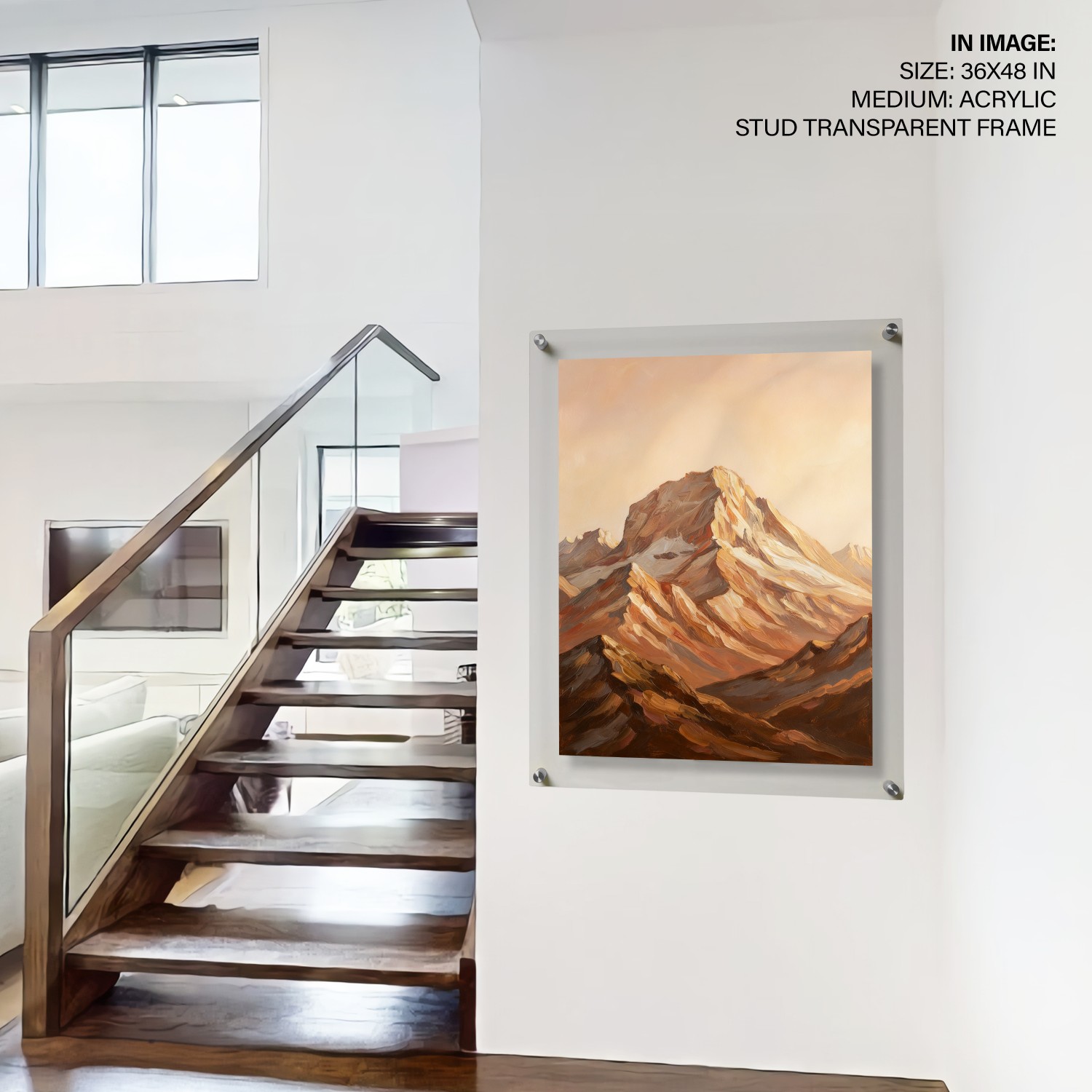
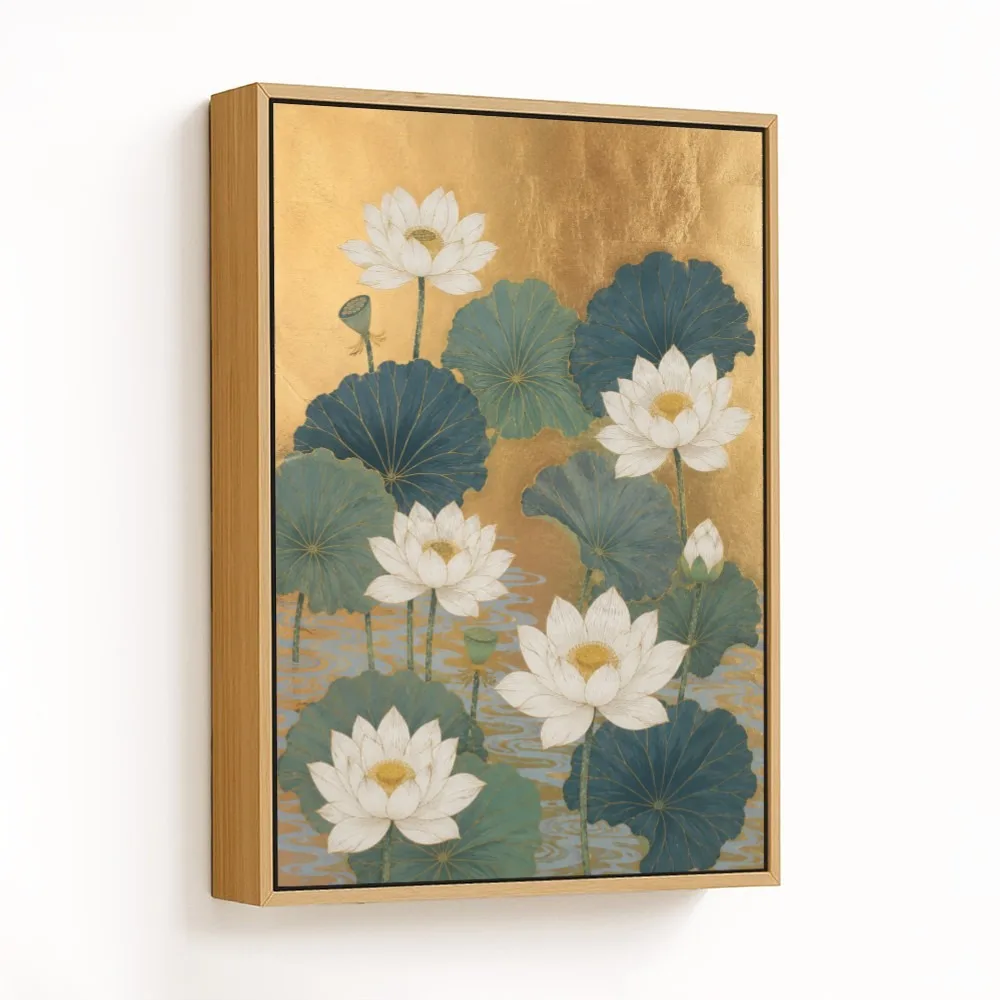
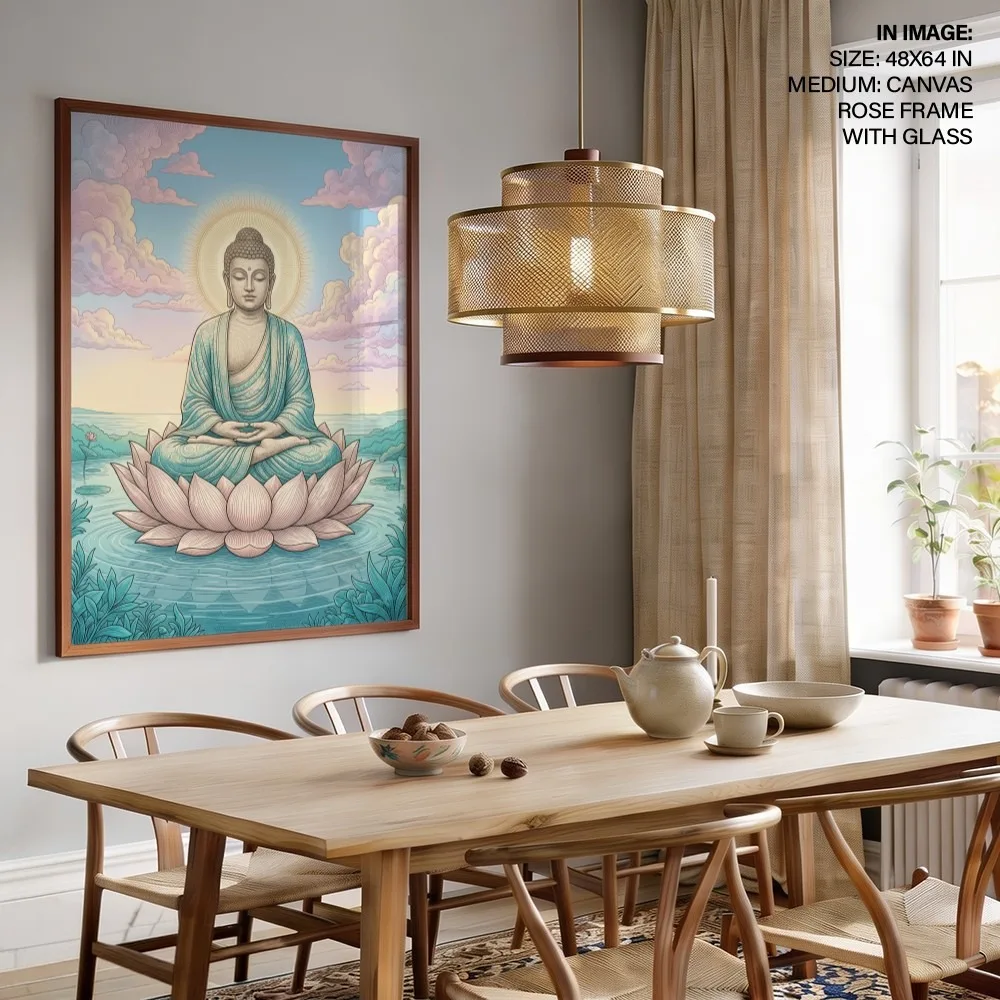
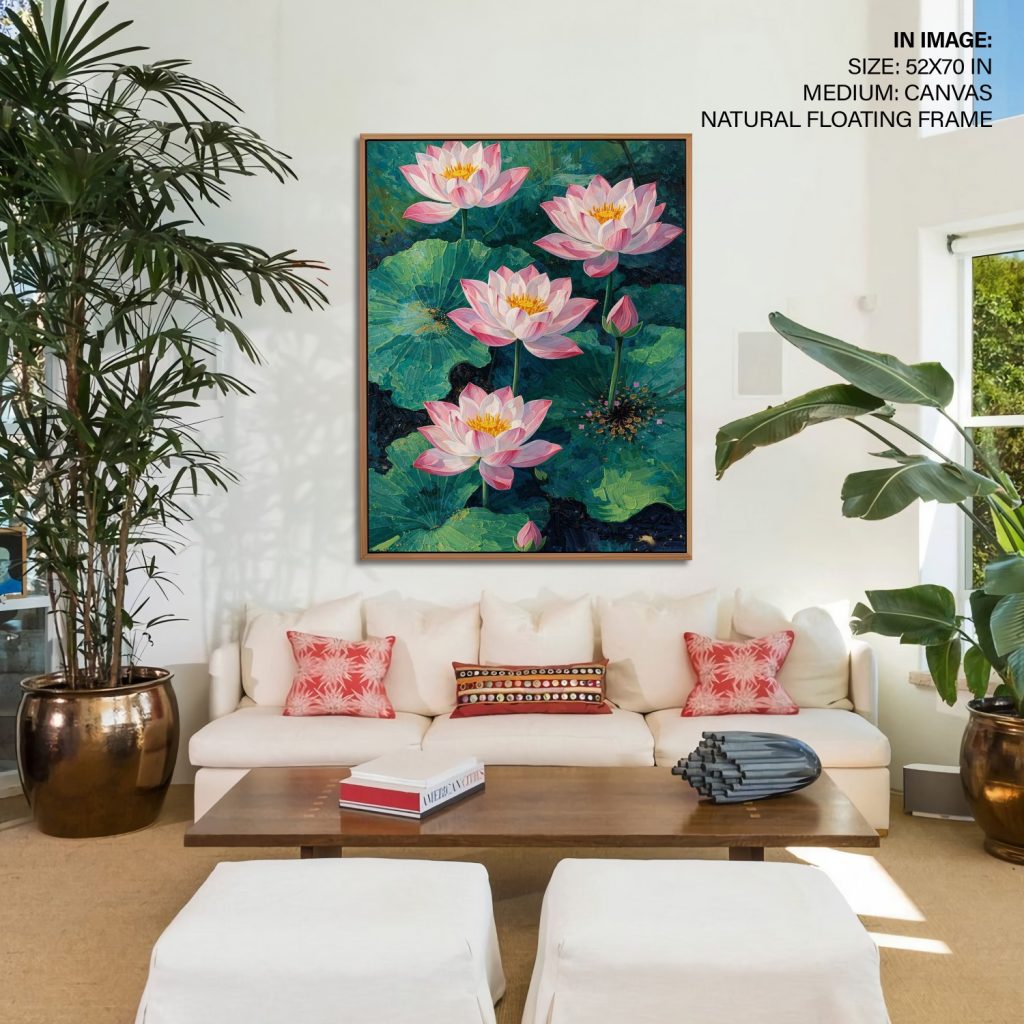
BestOfBharat’s white lotus collection runs across exactly this range, from tight single-stem pieces to full pond scenes:
The full White Lotus collection runs to more than thirty pieces if none of these four are the right size or frame. A lotus painting also works well as a Diwali or housewarming gift, pairing purity with new beginnings — our Diwali gift ideas for wall art has more ideas if you’re buying for someone else.
Lotus by Room
Beyond the north-east wall and the pooja room, a lotus painting works in a few other places without any conflict in the doctrine.
Living room. A larger pond-scene lotus reads well behind a sofa, especially with a couple of plants nearby — the green and pink end up looking like part of the room instead of an addition to it.
Entrance or foyer. A single-bloom lotus near the front door works as a purity marker for the whole home, on the same logic as the pooja room placement.
Bedroom, with one condition. Lotus is one of the few florals vastu doesn’t restrict in the bedroom, since it reads as calm rather than stimulating; the detailed bedroom placement guide covers what else that room allows and rules out. Keep the painting off the wall directly above the headboard regardless of subject.
Study or home office. A single-bloom lotus supports the same clarity reading Ishan gets credit for, which makes it one of the few florals suited to a work space and not just a living space.
What to Avoid in a Lotus Painting
Three problems come up more than any others. A wilted or drooping lotus works against the whole symbol — vastu reads it as blocked growth, the opposite of the intended meaning, so a bud that’s closing rather than opening defeats the purpose. A muddy-dominant palette, where brown pond water covers more of the canvas than the pink or white bloom, shifts the painting’s read from purity toward stagnation. And a very dark, low-light pond scene, however well painted, sits heavy in the rooms this motif is meant for.
Skill isn’t the variable here — a technically strong painting still fails on placement if the bloom itself isn’t open and pale.
Seeing a few options side by side makes the choice easier:
FAQs
Where should a lotus painting be placed at home?
The north-east wall — vastu’s Ishan corner — is the primary placement for a lotus painting, since Ishan governs clarity and spiritual energy, the same qualities the lotus represents. A north wall or the pooja space both work as secondary options. Living rooms and entrances work well too, provided the north-east wall isn’t already carrying a different motif.
Is lotus painting good for the bedroom?
Yes — lotus is one of the few motifs vastu clears for the bedroom without conditions, since it reads as calm rather than stimulating. Hang a single or twin-bloom pink or white lotus on a wall facing the bed, not directly above the headboard. Skip pond scenes with heavy, dark water in a room meant for rest.
Which colour lotus is lucky?
Pink and white lotus are the two colours vastu credits as lucky, tied to Lakshmi and to purity respectively. Soft pink suits prosperity-focused spaces like the living room or north-east wall; white suits the stillness of a pooja room. Deep red, black, or heavily shadowed lotus paintings fall outside this tradition and are best avoided.
Can lotus art hang in the pooja room?
Yes — the pooja room is one of the few spaces where a lotus painting is appropriate on any wall, regardless of the home’s direction chart. Choose a single open bloom in pink or white, ideally near eye level facing the deity. It reinforces the same purity the space already stands for.
A lotus painting is one of the more forgiving vastu choices precisely because it carries only one strong rule — north-east or pooja space, pink or white, open rather than wilting — and very little else to get wrong. Get that much right and the rest is decoration. For the wider picture of what goes where, our guide to vastu paintings for every wall maps every direction, the dedicated north-east wall guide goes deeper on Ishan specifically, and the broader vastu wall art collection covers everything that didn’t fit in this one.