A Ganesha painting belongs on the wall your front door opens onto, facing into the home, or in the north-east corner where the pooja space sits. Never on the wall behind the door, and never facing outward, toward the street rather than the room. Ganesha is invoked first in every ritual because he clears obstacles before anything begins, and a home’s vastu treats the entrance the same way: whatever crosses it meets his gaze first.
Ganesha painting vastu, at a glance:
The entrance wall, facing in — Ganesha’s strongest post in the house. Hang: a seated Ganesha facing into the home from the entrance wall. Keep off: the wall behind the door, facing outward.
The north-east corner (Ishan) — his second home. Hang: a pale, seated Ganesha near the pooja corner. Keep off: dark, heavy frames that crowd the corner’s calm.
Seated over dancing, for most rooms — calm before celebration. Hang: a seated, soft-toned Ganesha in the entrance, pooja space or study. Keep off: a dancing Ganesha wherever the room needs to feel settled.
Never — bathrooms, floor level, the door’s outward-facing wall. Hang: nothing here; move the piece elsewhere. Keep off: any Ganesha painting, however fine the work.
Why Ganesha Guards the Threshold
Every Hindu ritual, a wedding, a housewarming, a new ledger, opens with an invocation to Ganesha before any other god is named. Vastu carries the same logic onto a wall: he is Vighnaharta, the remover of obstacles, and a home’s entrance is where obstacles first try to enter. This is why vastu gives him two addresses, the entrance and the north-east, rather than any wall a family happens to like. The entrance is the physical threshold; the north-east, the Ishan corner, is the quieter one, where a home’s energy sits at its clearest. Either spot says the same thing to whoever enters: obstacles pause here.
The Right Spots for a Ganesha Painting
Entrance and foyer
The wall your front door opens onto, not the wall behind it, is the strongest spot for a Ganesha painting. Facing into the home, he welcomes whoever enters and filters what comes in with them. A mid-sized, simply framed Ganesha suits a foyer better than an oversized piece crowding a small entry.
The north-east corner and pooja space
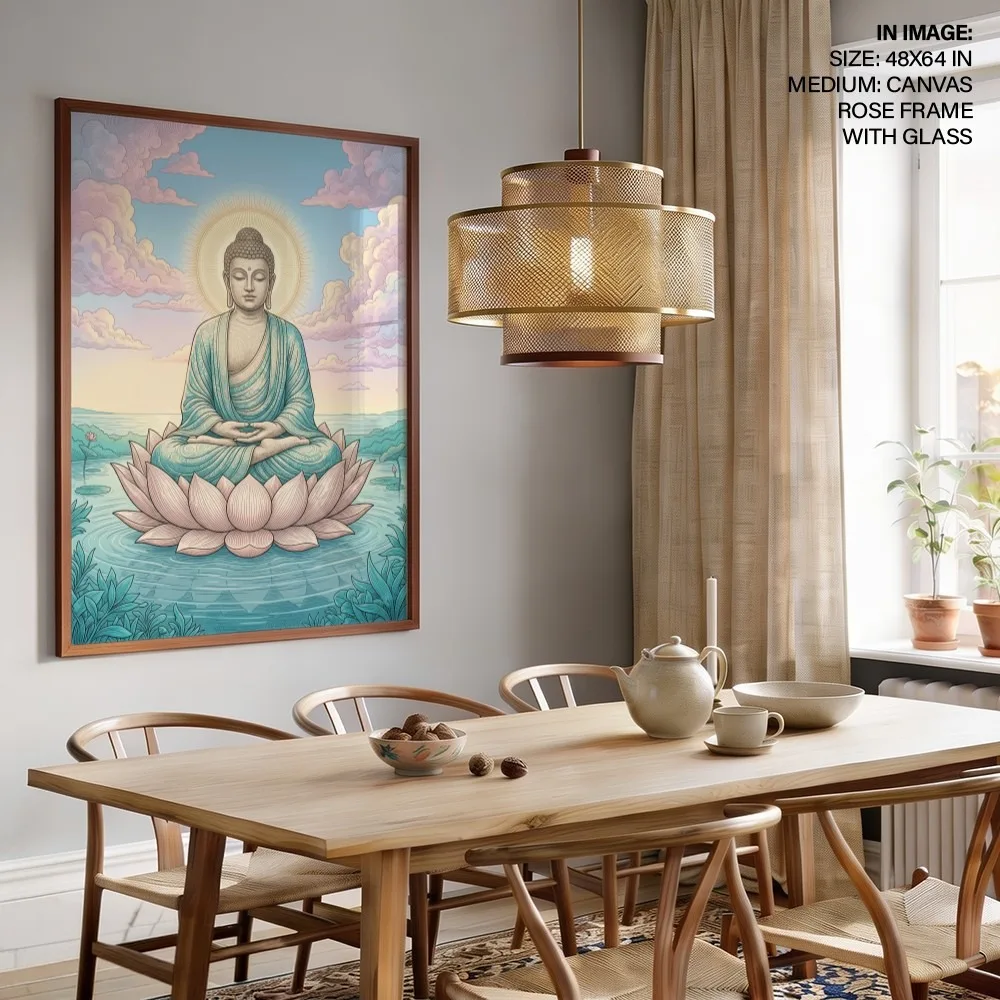
Our north-east wall guide already places a pale, seated Ganesha here alongside the lotus and meditating Buddha, for the same reason: the Ishan corner wants clarity, not colour. Wherever the household prays, Ganesha is invoked first, so this corner, or any pooja space in the home, is his natural second wall.
The study, for beginnings
Every new venture traditionally opens with his name, making a study or home office a natural fourth spot. A calm, seated Ganesha behind the desk carries the same intent: obstacles cleared before the work starts.
Seated, Standing or Dancing?
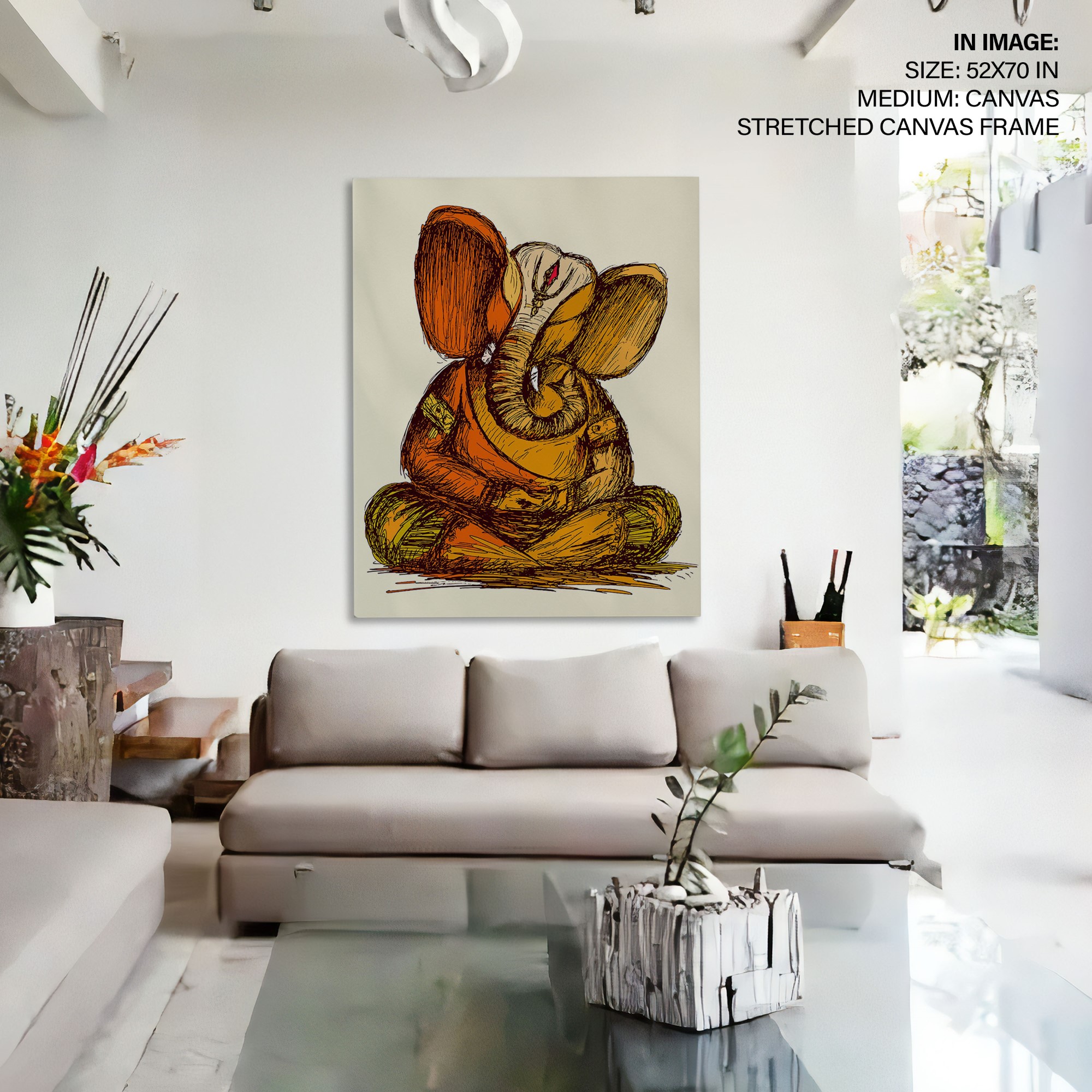
Ganesha appears in three broad postures, and vastu reads each differently. A seated Ganesha, cross-legged and still, carries patience and calm, right for an entrance, a pooja corner or a north-east wall. A standing Ganesha carries more forward motion, suited to a hallway or workspace where steady progress matters more than stillness. A dancing Ganesha, mid-movement and celebratory, belongs on a livelier wall or festive corner, not where the energy needs to settle.
Colour follows the same logic: white and pale-toned seated forms hold a room’s calm without adding visual weight, which is why they suit the entrance and Ishan corner best. Save brighter or dancing forms for walls that can carry more energy without disturbing the parts of the home meant to stay settled.
Choosing the Artwork
A single, well-placed Ganesha does more for a wall than a cluster of small pieces. Vastu treats clutter at the threshold as a mild obstacle in itself, so one focused painting, sized to the wall, works harder than three competing frames.
Palette carries most of the decision. A pale or white-toned seated Ganesha is safest for an entrance, a foyer or the north-east corner, sitting easily against the light walls vastu already favours there. Warmer gold and ochre tones suit a study or living-room wall, reading as rich rather than quiet. Save deep, dark grounds for rooms where Ganesha is more a feature artwork than a threshold guardian.
An entrance wall rarely comes in a standard size, and a made-to-measure painting reads better than one floating in too much empty wall. Browse the Ganesha collection to compare seated, standing and dancing forms side by side.
Ganesha paintings are also a favourite Diwali or housewarming gift, since he’s the god invoked before any new beginning — our Diwali gift ideas for wall art has more pairings if you’re buying for someone else.
A few seated and festive Ganesha pieces from the collection, made to your wall size:
Where Not to Place It
Some spots undo what Ganesha is meant to do. Never hang him in a bathroom, pairing a deity of clarity with the one room vastu treats as unclean. Never place him behind the main door facing outward, he ends up guarding the street, watching everyone leave rather than welcoming who arrives. Keep him off the floor or a low shelf; like any deity image, he belongs at eye level or above. And resist crowding him into a busy gallery wall, one clear image does a threshold’s job better than a dozen competing for attention.
FAQs
Which direction should a ganesha painting face?
A Ganesha painting should face into the room, from the wall the entrance opens onto, so he looks toward whoever walks in. On a north-east wall, the same rule holds: seated, facing the room rather than a window or blank wall. Never hang him facing the outside of the house.
Is ganesha painting good at the entrance?
Yes, the entrance is Ganesha’s strongest spot in vastu. As Vighnaharta, remover of obstacles, he belongs where the home meets the outside world, filtering what enters before it reaches the rest of the house. Hang a seated, pale-toned Ganesha facing in, never on the wall behind the door.
Can we hang ganesha painting in the living room?
Yes, a Ganesha painting, or Ganpati as many homes call him, works well in a living room, especially on an entrance-facing wall. Choose a seated form for a quiet room, a livelier or dancing form if it doubles as a gathering space. Our living room vastu guide covers the rest of that wall.
Which ganesha image is best for home?
A seated Ganesha in white or pale tones is the safest, most versatile choice for a home, suited to the entrance, the north-east corner and the pooja space alike. It holds a room’s calm rather than commanding attention. Save brighter or dancing forms for a festive living room or family wall instead.
Where Ganesha Belongs First
Most Ganesha placements come back to one idea: he belongs where the home meets something new, whoever walks in the door, whatever begins in the study, whatever calm the north-east holds. Get the wall and direction right; the rest, seated or standing, pale or gold, is a question of taste. See our vastu paintings for home pillar for the full map, or browse the vastu-shastra collection for the wider catalogue.
Made-to-size Ganesha paintings for the entrance, the Ishan corner, or wherever yours begins: