Free Shipping across India
What can we help you find?
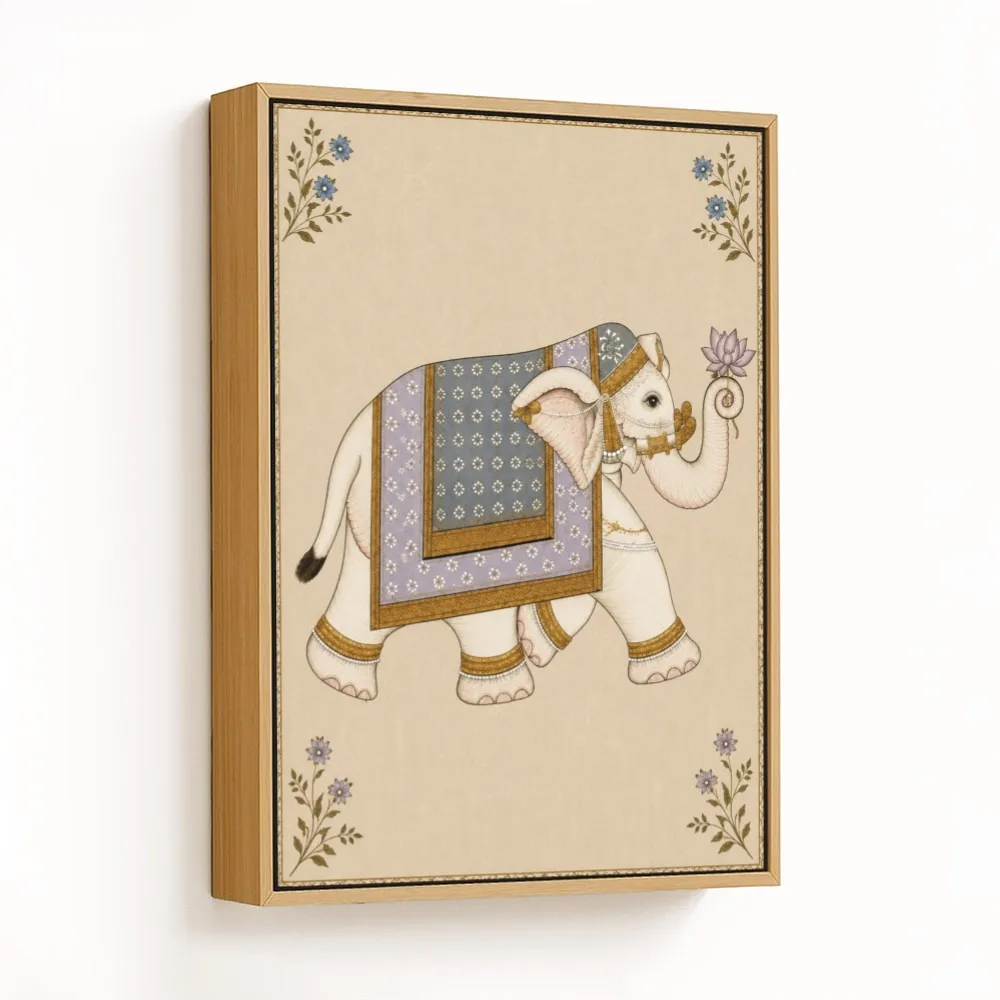
In Vastu tradition, the elephant is a gentle guardian — a symbol of strength, wisdom and victory over obstacles, long welcomed at the thresholds of Indian homes. This collection brings together serene white elephants, jungle herds and golden-dawn scenes, each framed for walls that call for quiet authority. Hang one where you greet the day, and let tradition stand watch.
In Indian tradition, the elephant carries meanings that few other animals can match. It is the royal mount of kings, the gentle face of Lord Ganesha who removes obstacles, and a favourite motif at temple gateways across the subcontinent. Vastu Shastra inherits all of this. Within the tradition, elephant imagery is regarded as a guardian presence — a symbol of strength, wisdom and victory over difficulty, believed to stand watch over the home the way temple elephants stand watch over sacred doors. None of this is a promise of outcomes; it is a way of living with a symbol generations have trusted, and of letting your walls say something steady about the household within.
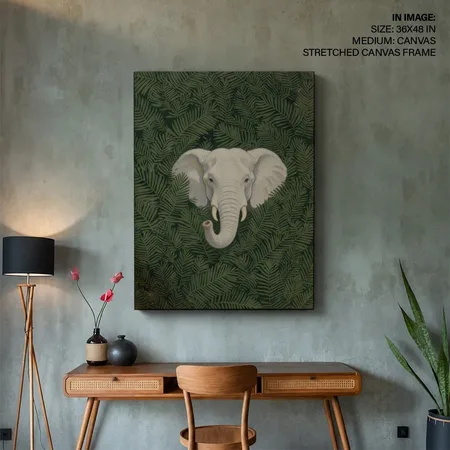
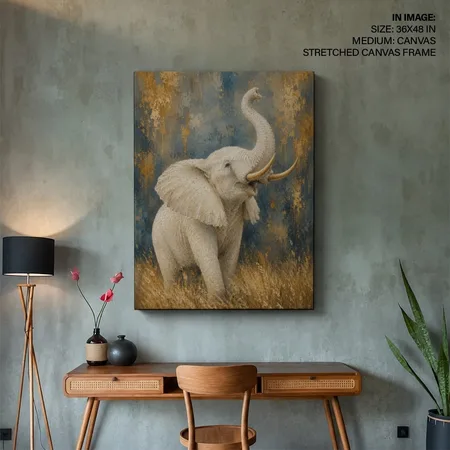
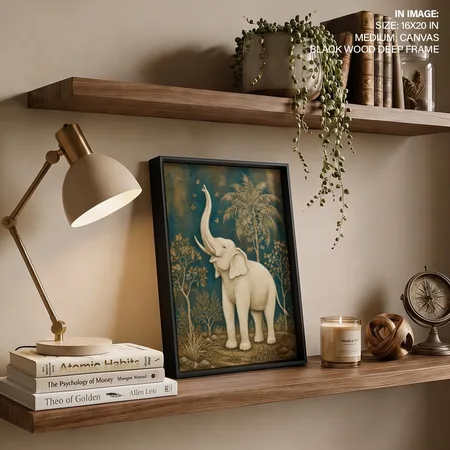
The collection gathers the elephant in its most serene forms. White elephants — associated in tradition with purity and rare auspiciousness — bring a calm, luminous presence to neutral rooms, and a gilded white elephant adds a warmer, more decorative note where you want a touch of gold. Jungle elephant scenes place the herd back in green wilderness for spaces that suit a wilder mood, while golden-dawn artworks catch elephants in the first warm light of day — a natural fit for east-facing rooms and morning corners. All are subjects, not talismans: choose the one whose character feels like your home's.
Tradition is unusually specific here. The pieces in this collection are composed with the north-west in mind — the direction Vastu associates with air, movement and steady support — and many practitioners consider it the natural quarter for elephant imagery. The other classic position is the threshold: entrance halls, foyers and landings, where the elephant plays its oldest role as guardian of the door. A common convention is to hang the artwork so the elephant faces into the home, as though walking in with blessings rather than away with them. Living rooms and studies work well too; wherever it hangs, give the piece room to feel unhurried.
Start with the wall, not the artwork. A broad living-room wall can take a single commanding elephant; a hallway or stairwell often suits a smaller piece, or a pair hung to flank a doorway in the old gatekeeper manner. Then match palette to mood: white and gilded elephants sit beautifully in calm, neutral and gold-accented schemes, while jungle and golden-dawn scenes bring depth to earthy greens and warm woods. If in doubt, choose the image you instinctively slow down for — guardianship, in this tradition, begins with attention. Every artwork here is an archival print, hand-framed, delivered ready to hang, and made in India.
Wall Art
by Kamal Mohan
Wall Art
by Kamal Mohan
Wall Art
by Kamal Mohan
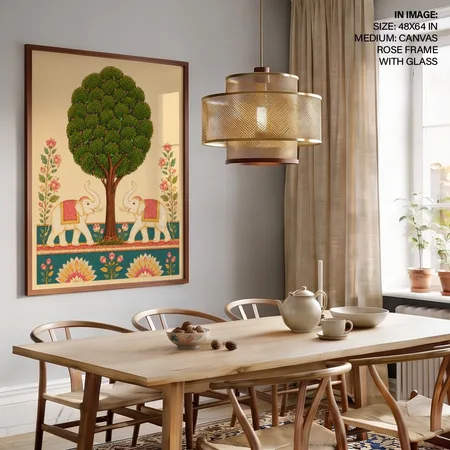
Wall Art
by Kamal Mohan
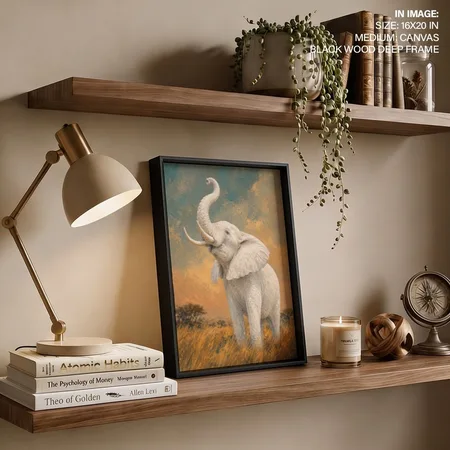
Wall Art
by Kamal Mohan
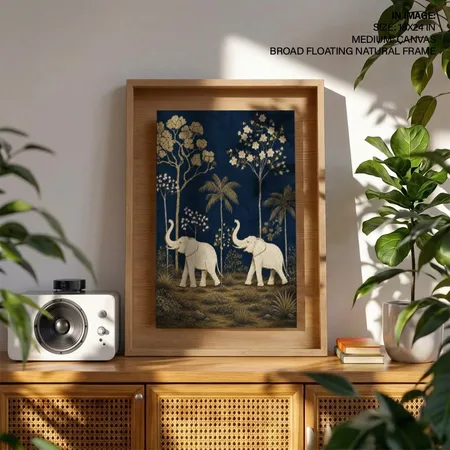
Wall Art
by Kamal Mohan
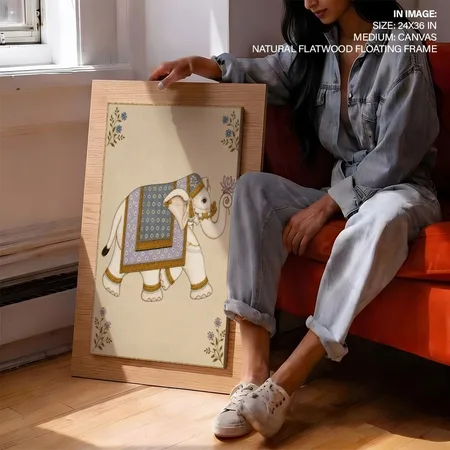
Wall Art
by Kamal Mohan
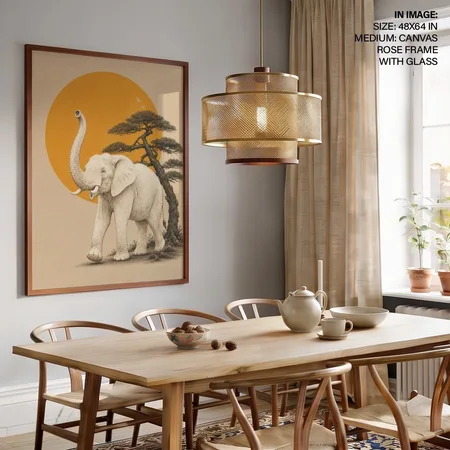
Wall Art
by Kamal Mohan
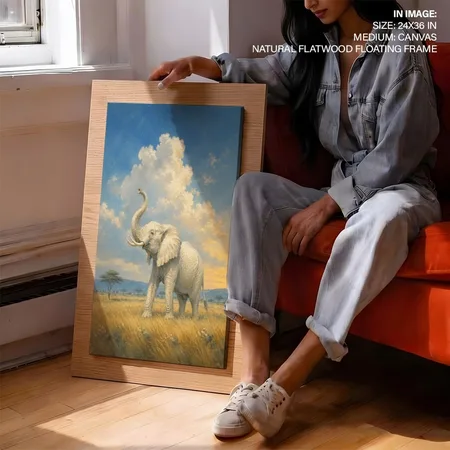
Wall Art
by Kamal Mohan
