Free Shipping across India
What can we help you find?
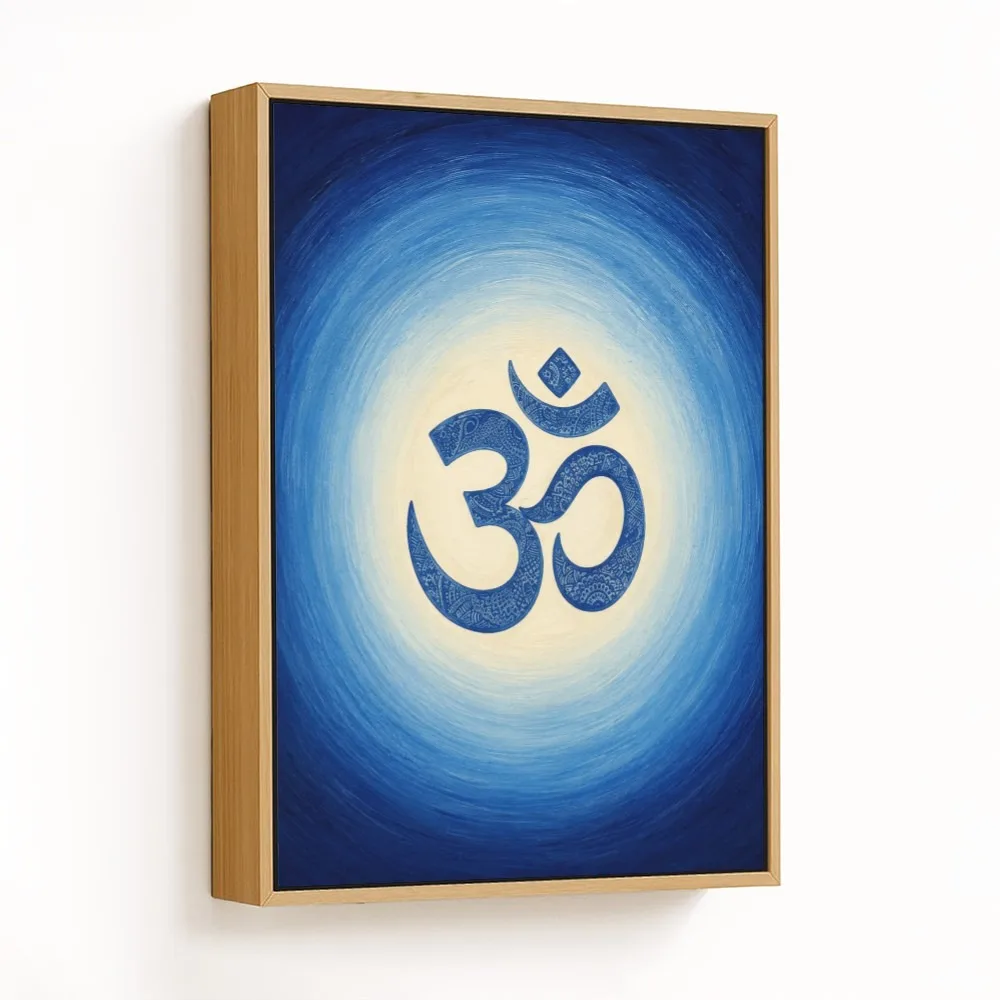
Om is the sound tradition places at the very beginning — the sacred syllable chanted before prayer and study across India for thousands of years. This collection of serene Om mandalas, sacred blue Om artworks and Om lotus designs is made for the quietest corner of the home: the north-east pooja space, where Vastu tradition seats the divine.
In Hindu tradition, Om is the first sound — the syllable from which, it is said, all else unfolds. It opens prayers, mantras and sacred texts, and simply seeing it written is considered a quiet blessing. Vastu Shastra gives this reverence a place in the home: the north-east, called Ishanya, is held to be the most sacred quarter, the seat of the divine and the traditional site of the pooja room. Art for this corner is chosen differently from art for any other wall — not to impress guests but to settle the mind. This collection of Om artworks is made in that spirit, for households that keep, or wish to keep, a corner of genuine quiet.
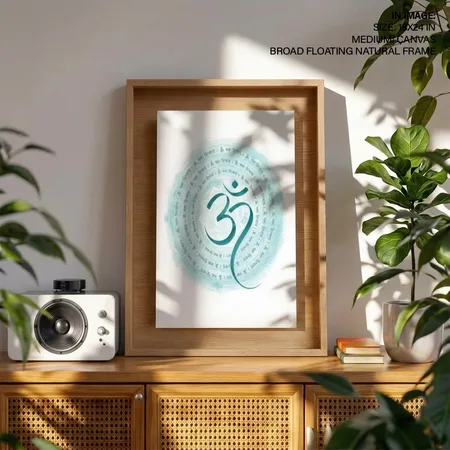
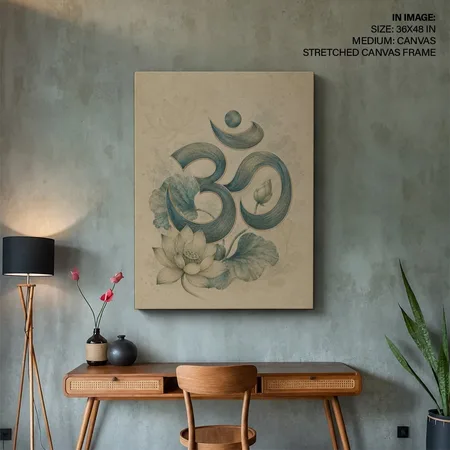
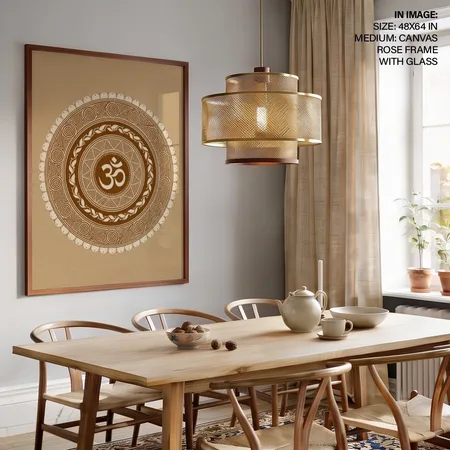
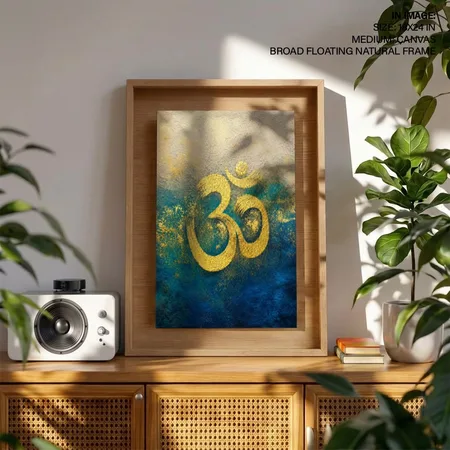
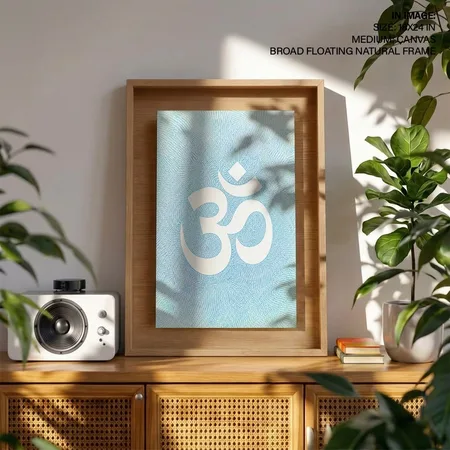
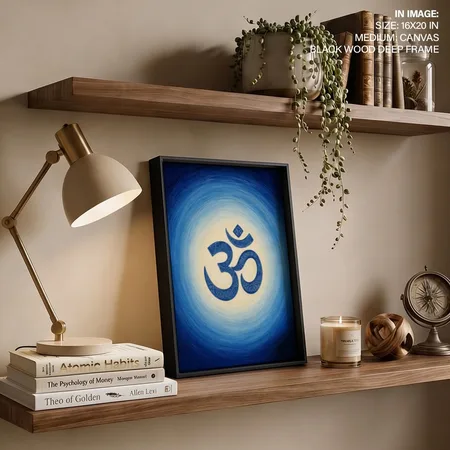
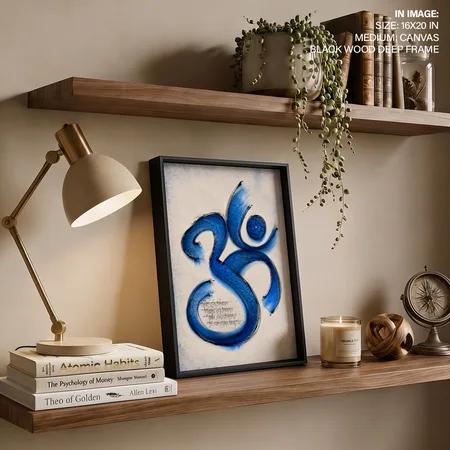
The collection approaches the sacred syllable in four moods. The serene Om mandala sets the symbol within soft concentric patterning, made for stillness. The sacred blue Om renders it in deep, meditative blues — the colour tradition associates with the infinite. The Om lotus pairs the syllable with the flower of purity, rising untouched from the water it grows in, while the golden azure Om balances warm gold against clear blue for a pooja wall that glows in lamplight. Each treats Om as devotion first and decoration second.
These artworks are composed for the north-east, and the pooja space is their natural home — behind or beside the shrine, at a height that meets the eye of someone seated in prayer. If your home has no separate pooja room, tradition is accommodating: a north-east wall in the bedroom or living room can hold a small devotional corner, and an Om artwork marks it gently. Practitioners generally advise keeping the surrounding area clean and uncluttered, away from televisions and busy shelving, so the symbol keeps its stillness. Meditation and yoga corners, wherever they fall, also welcome these pieces.
Let the room's light decide the palette. Lamplit pooja corners flatter the golden azure Om and the warmth of the serene mandala; daylit walls suit the cool depth of the sacred blue Om; the Om lotus sits gracefully in either. Smaller devotional spaces are best served by a modest piece that draws you in close, while a meditation room can carry something larger and more enveloping. Above all, choose the artwork that slows your breathing when you look at it — that, tradition suggests, is the whole point. Every piece is an archival print, hand-framed, delivered ready to hang, and made in India.
Wall Art
by Kamal Mohan
Wall Art
by Kamal Mohan
Wall Art
by Kamal Mohan
Wall Art
by Kamal Mohan
Wall Art
by Kamal Mohan
Wall Art
by Kamal Mohan
Wall Art
by Kamal Mohan
