Free Shipping across India
What can we help you find?
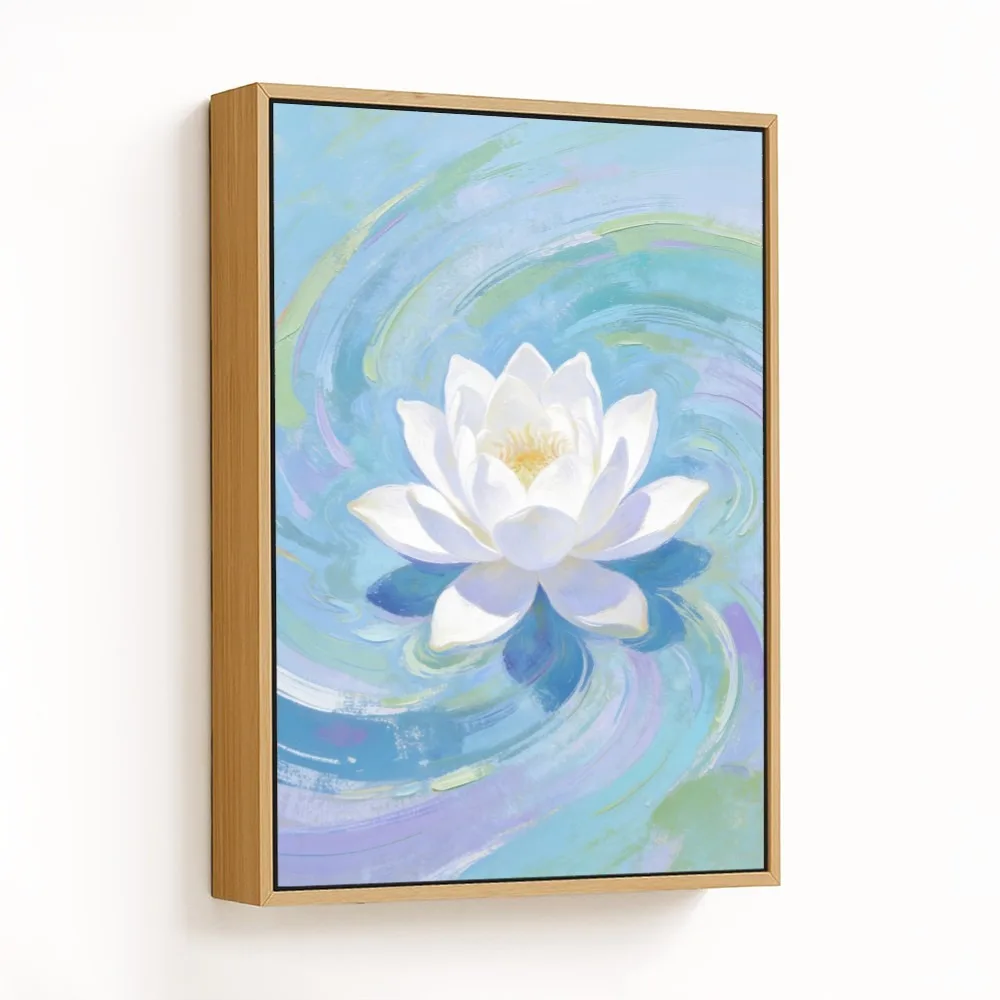
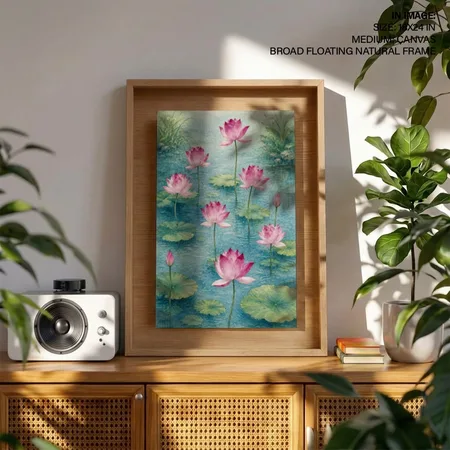
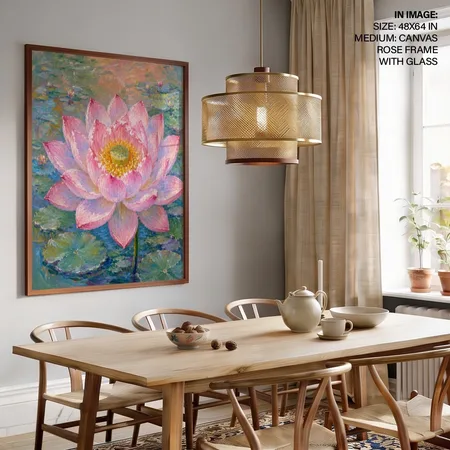
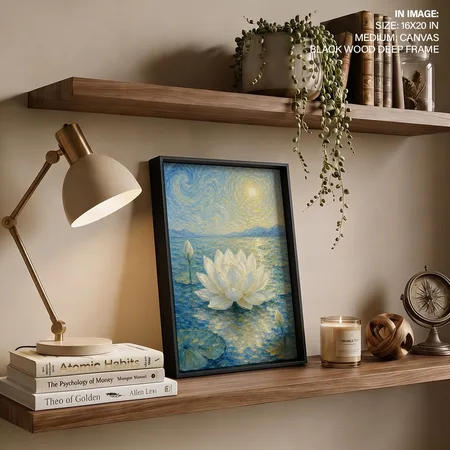
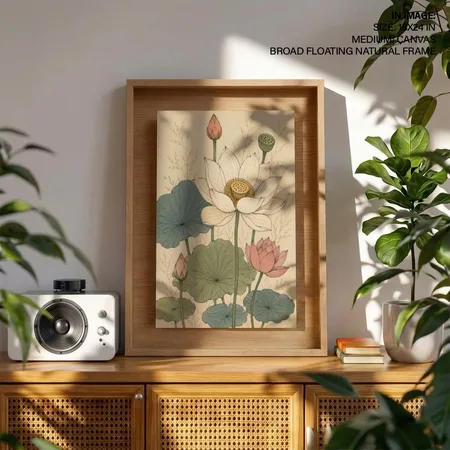
In Vastu tradition, the north-east corner is reserved for stillness and clarity, and few subjects express it better than the lotus rising unstained from the water. This collection gathers 25 artworks — white lotus ponds, muted lotus gatherings, gilded lotus studies and white horses — chosen for homes that want a quieter, cleaner presence on the wall.
In Vastu Shastra, purity — shuddhata — is treated as a quality of the home itself, not merely of its housekeeping. Tradition maps this quality to the north-east, the ishan corner, which classical texts associate with water, dawn and the divine. It is the corner families have long kept light, open and free of clutter, and the imagery placed there is believed to set the tone for the rest of the house. In this reading, art is more than decoration: whatever the wall holds, the eye keeps returning to. A purity-themed artwork is chosen so that the returning glance finds something calm, clean and quietly uplifting — an intention the tradition encourages, rather than an outcome it guarantees.
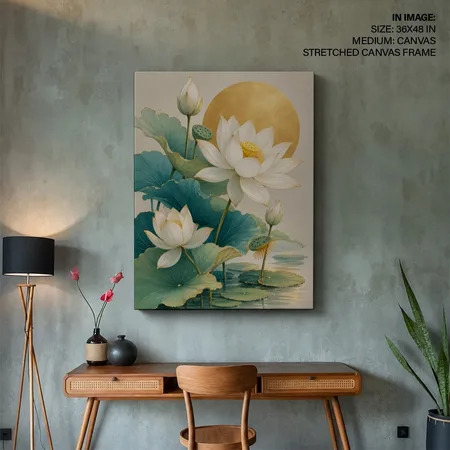
The 25 artworks in this collection follow the classical vocabulary of purity. White lotus ponds sit at its heart: in Indian thought the lotus rises unstained from muddy water, which is why it has stood for inner cleanliness for centuries. Muted lotus gatherings carry the same symbolism in softer, tone-on-tone palettes suited to minimal interiors, while gilded lotus artworks add warmth and a sense of ceremony without disturbing the calm. Running alongside them are white horses, long associated in Indian tradition with honesty, nobility and unforced grace. The common thread is restraint — pale grounds, gentle colour, and subjects that ask nothing of the room but stillness.
Most pieces in this collection are intended for the north-east, and their titles say so. Tradition favours the north-east wall of the pooja room, a meditation corner, the study, or an entrance that opens towards the north or east. Vastu practice suggests hanging the artwork at eye level on an uncluttered wall, ideally where morning light can reach it, and keeping the surrounding corner free of heavy furniture and storage. If your north-east is already spoken for, practitioners commonly point to the north or east walls as sympathetic alternatives. As with all Vastu guidance, treat these placements as traditional recommendations, to be followed as closely as your floor plan comfortably allows.
Start with the room's existing palette: whites and unbleached creams settle into almost any wall, while muted greens and soft golds suit rooms that can take a little more presence. A single large lotus pond makes a serene focal point above a console or low cabinet; a pair of smaller lotus studies works well on narrower walls and in passageways. If the room already feels busy, choose the quietest piece you are drawn to — purity, in this collection, is as much about what an artwork leaves out as what it shows. Whichever you settle on, it arrives as an archival print, hand-framed, delivered ready to hang, and made in India.
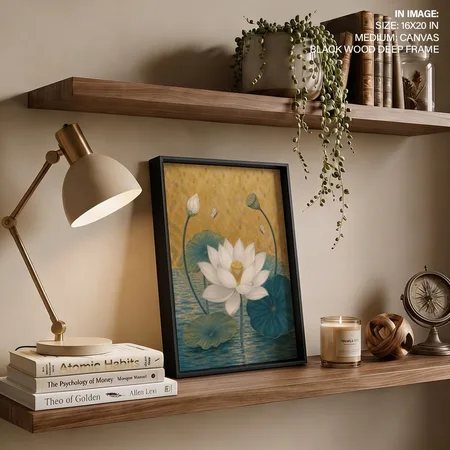
Wall Art
by Kamal Mohan
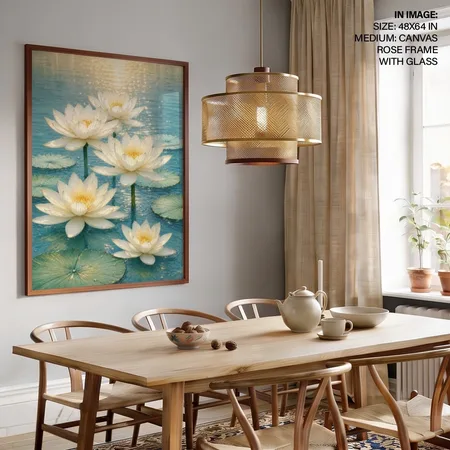
Wall Art
by Kamal Mohan
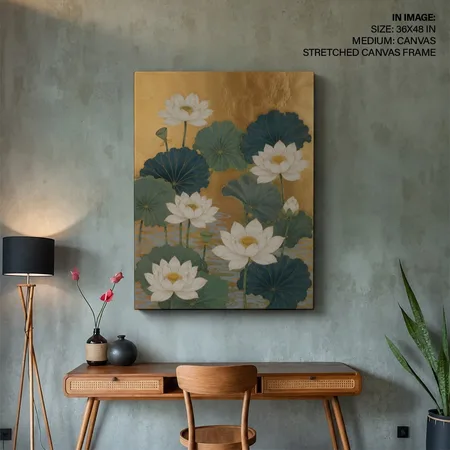
Wall Art
by Kamal Mohan
Wall Art
by Kamal Mohan
Wall Art
by Kamal Mohan
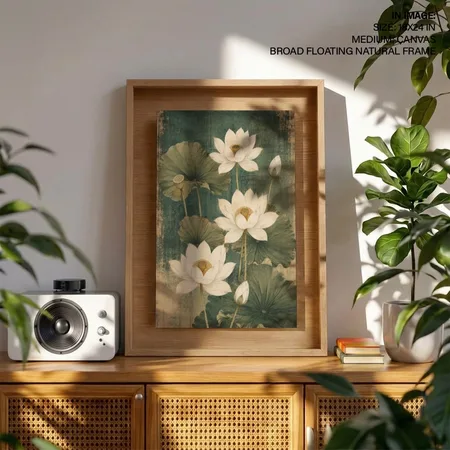
Wall Art
by Kamal Mohan
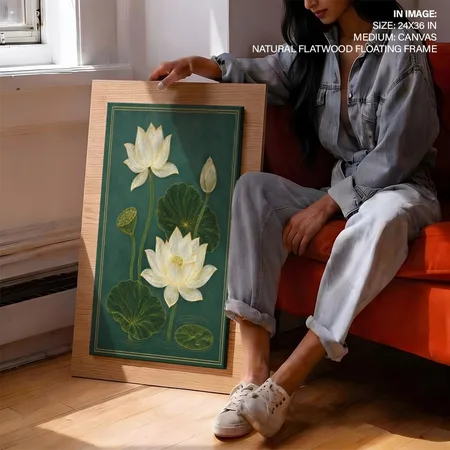
Wall Art
by Kamal Mohan
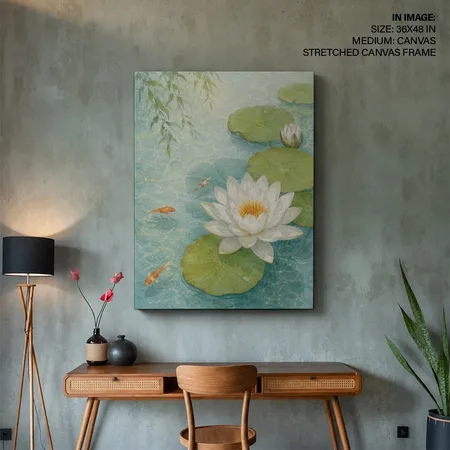
Wall Art
by Kamal Mohan
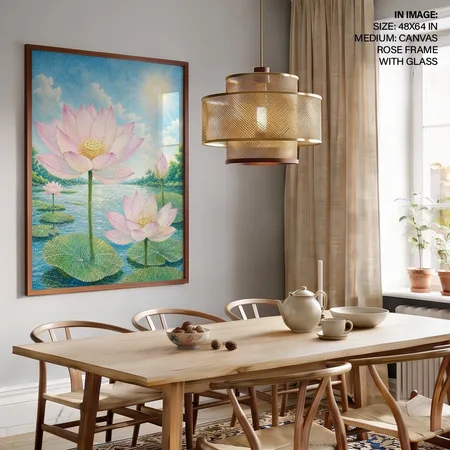
Wall Art
by Kamal Mohan
Wall Art
by Kamal Mohan
