Free Shipping across India
What can we help you find?
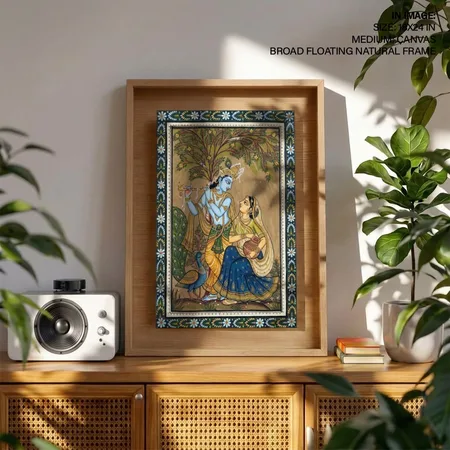
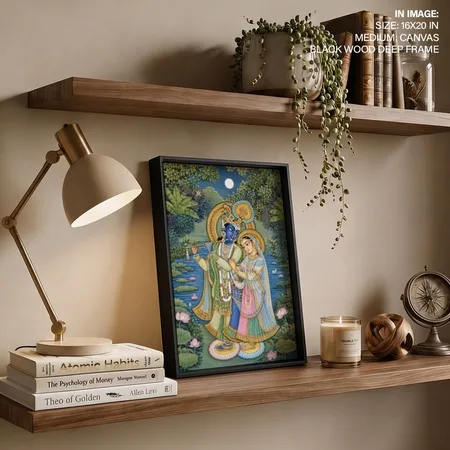
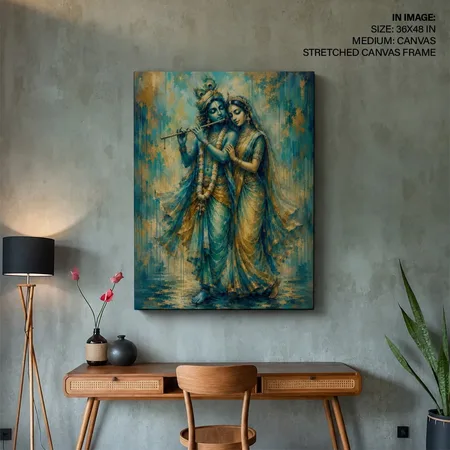
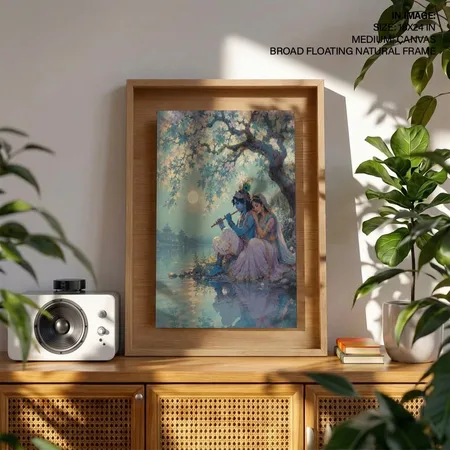
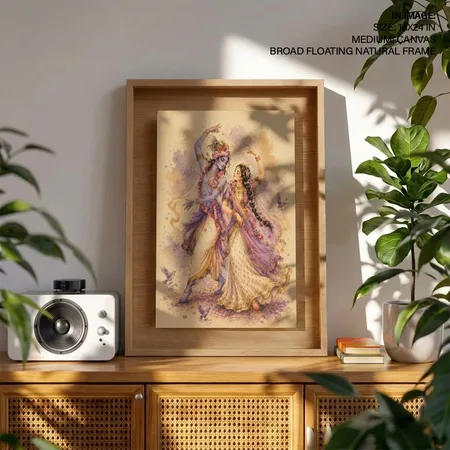
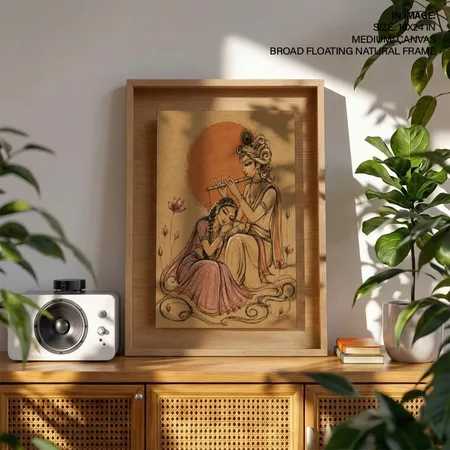
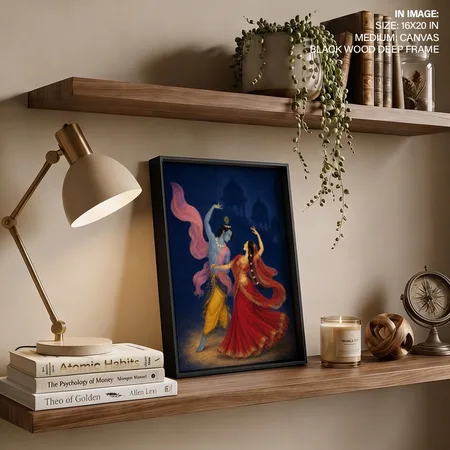
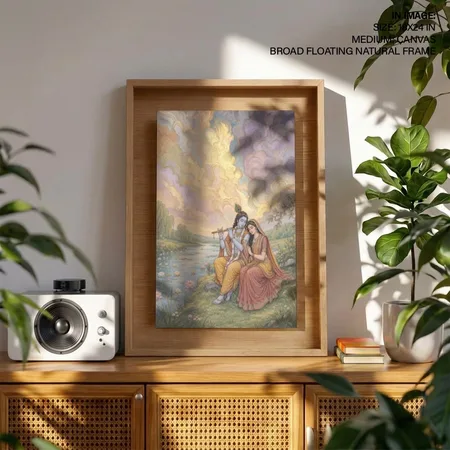
In Vastu belief, the south-west anchors the home — it is the direction of the couple, the family and everything meant to last. These 20 artworks celebrate togetherness the Indian way: Radha-Krishna dance scenes, golden dandiya circles and moonlit divine dances, made for bedroom and family walls.
Vastu Shastra assigns relationships to the south-west — the nairritya corner, governed in tradition by the earth element. Earth stands for weight, permanence and everything built to last, which is why classical practice places the couple's bedroom in this quarter and treats it as the anchor of the household. The imagery chosen for this zone follows a simple traditional principle: the walls of the south-west should show togetherness. Paired figures, shared dance, mutual delight — subjects that mirror the bond the room is meant to shelter. Vastu offers this as a supportive practice rather than a promise: the artwork keeps the intention in view, and the rest is lived day by day.
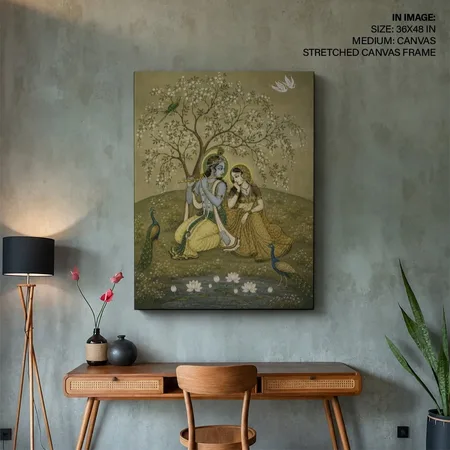
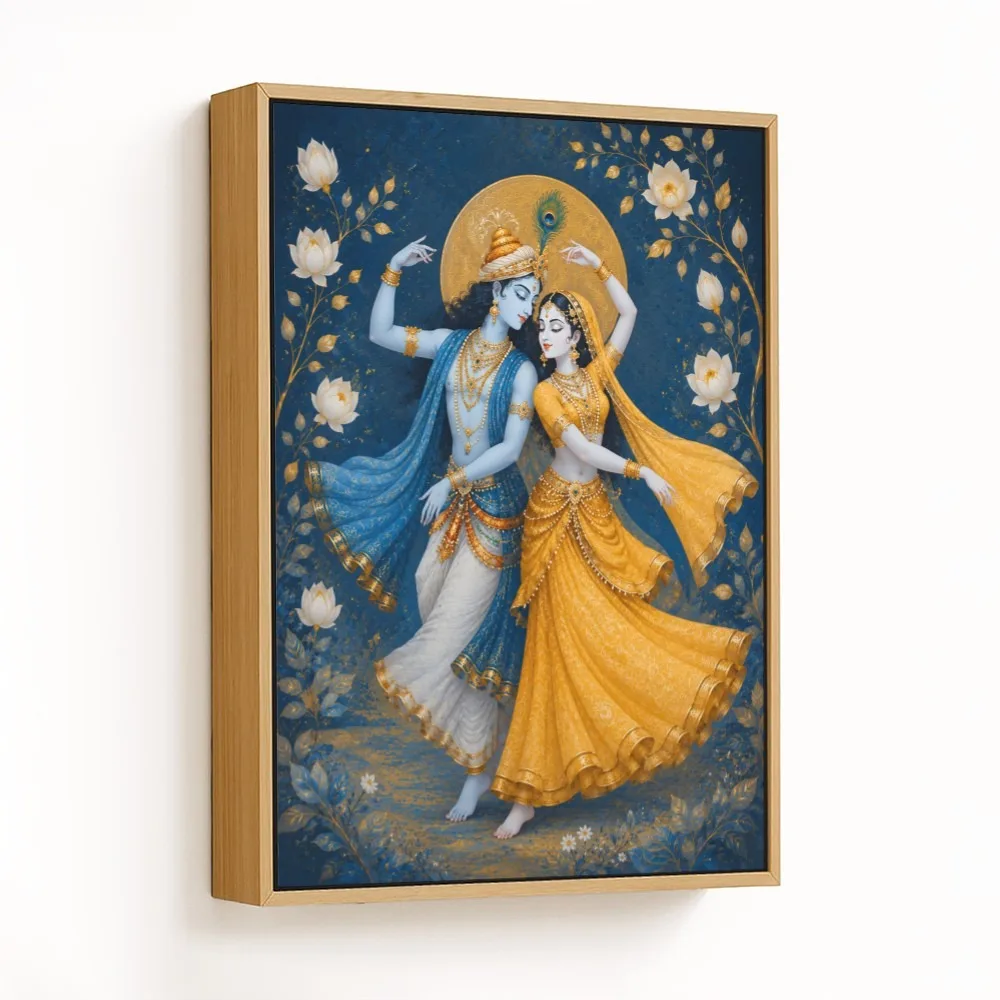
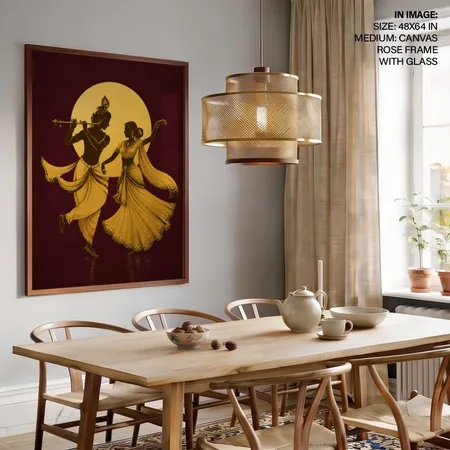
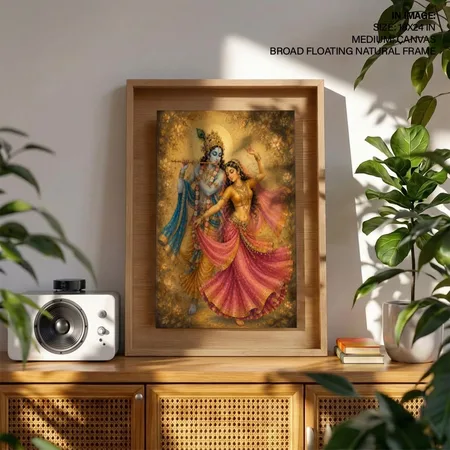
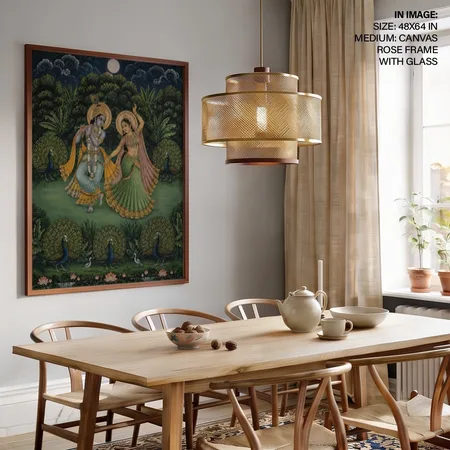
The 20 artworks in this collection celebrate love the Indian way — as something danced rather than declared. Radha-Krishna dance scenes lead the set: in devotional tradition their raas is the archetype of love in perfect step, two figures moving as one. Golden dandiya dance artworks widen the circle, carrying the festive joy of Navratri — sticks raised, colours swirling — into everyday rooms, a reminder that harmony is also a communal art. Divine moon dance pieces bring the quietest register: moonlit figures turning under a night sky, romance at its most serene. Between them the collection covers the whole span of togetherness, from intimate to celebratory.
Tradition is unusually specific here. The south-west wall of the couple's bedroom is the classic position, and most artworks in this collection carry south-west placements in their titles. Family sitting rooms and dining spaces in the southern and western parts of the home are considered sympathetic alternatives. Two pieces of long-standing guidance are worth knowing: bedroom artwork is traditionally shown in pairs — solitary figures are avoided — and the image is ideally visible from the bed, so it is the first and last thing seen each day. Romantic themes are generally kept out of the north-east, which tradition reserves for prayer and study.
Match the artwork's mood to the room's temperature. Radha-Krishna scenes in deep blues and golds suit bedrooms that can hold rich colour; a moonlit dance in silvery tones flatters calmer, paler schemes; a golden dandiya scene brings festival warmth to a family room or dining wall. Above a bedhead, one generous piece reads better than several small ones — an idea very much in keeping with the tradition's preference for a single, unified image of the couple. Whichever dance you choose, it arrives as an archival print, hand-framed, delivered ready to hang, and made in India.
Wall Art
by Kamal Mohan
Wall Art
by Kamal Mohan
Wall Art
by Kamal Mohan
Wall Art
by Kamal Mohan
Wall Art
by Kamal Mohan