Free Shipping across India
What can we help you find?
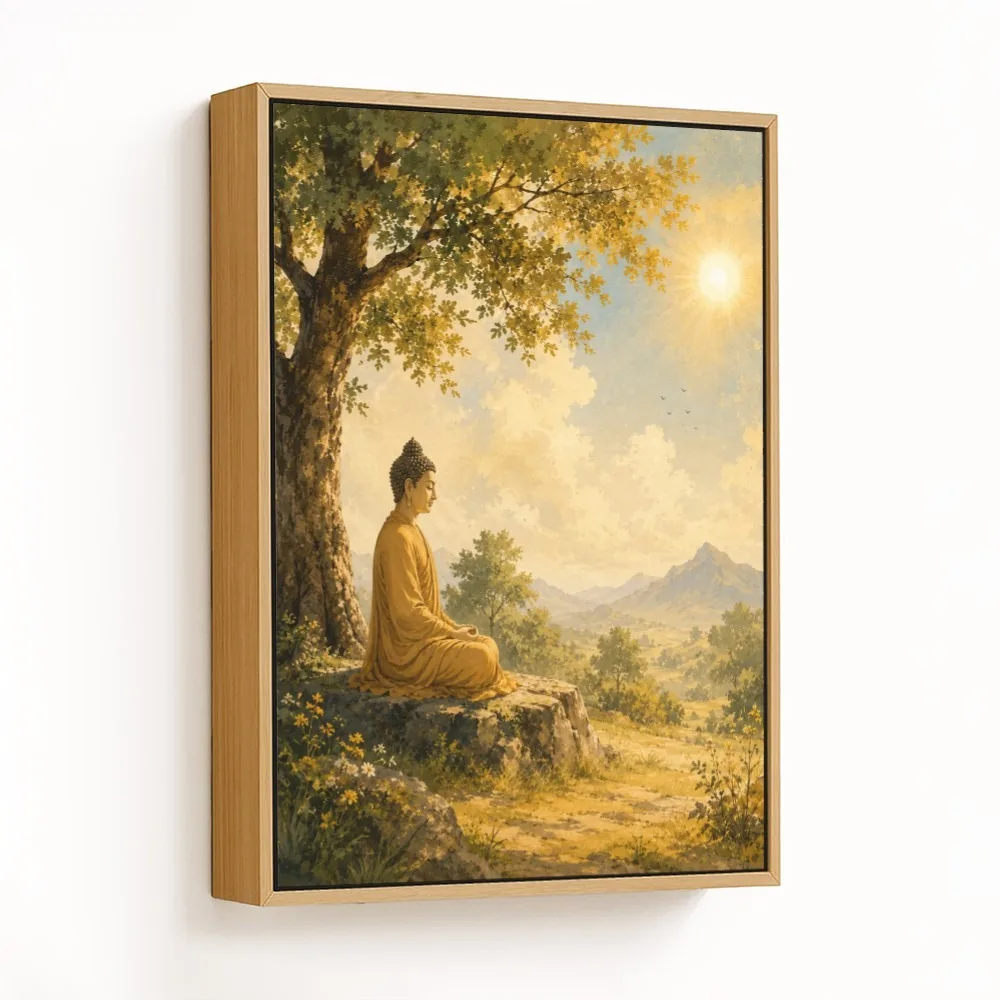
Divine energy is what these pieces are chosen to carry — not merely to soothe a wall, but to charge it with presence. Drawing on the serene Buddha and the spirited horse, this collection pairs stillness with strength, the meditative with the vital. Vastu tradition holds such imagery to lift and steady a home's atmosphere, inviting a sense of the sacred into everyday space.
Vastu Shastra describes divine energy as moving through the home along two very different channels. The north-east — the ishan corner — is tradition's gateway for the sacred: stillness, prayer and the first light of day. The north-west — vayavya — belongs to vayu, the wind, and classical accounts give it charge of movement, momentum and support from others. A well-kept home, the tradition suggests, honours both: a still centre and a moving edge. This collection is built around exactly that pairing, with meditative Buddha subjects for the quiet corner and galloping horses for the active one. As with all Vastu, these are inherited beliefs about how a home feels — offered as guidance, never as guarantee.
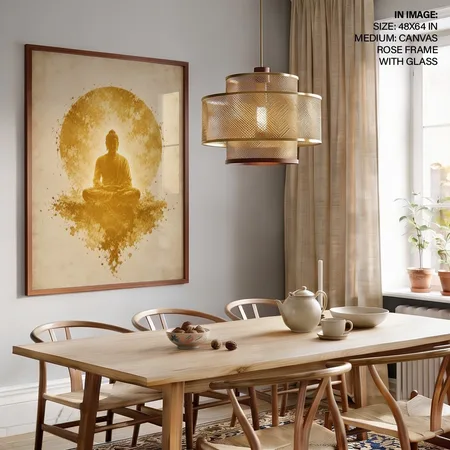
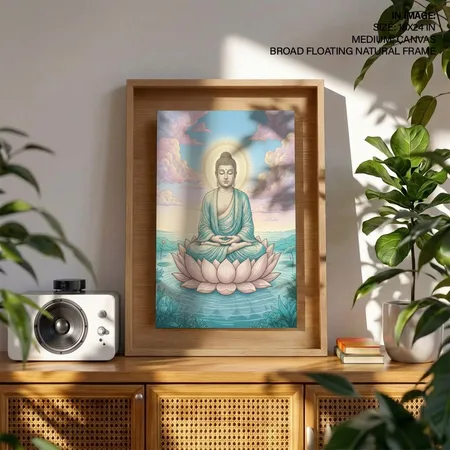
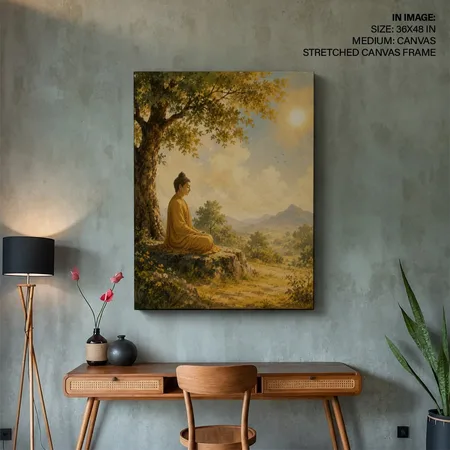
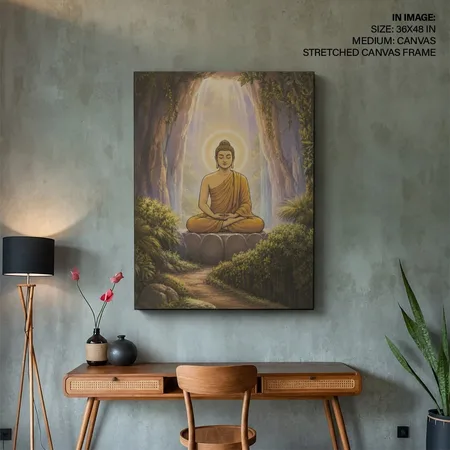
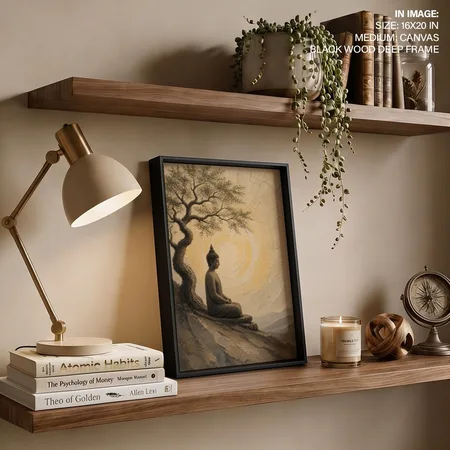
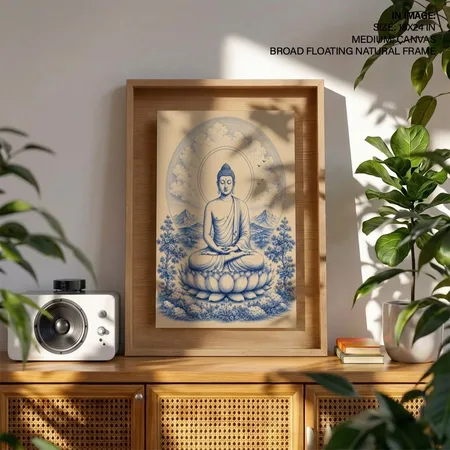
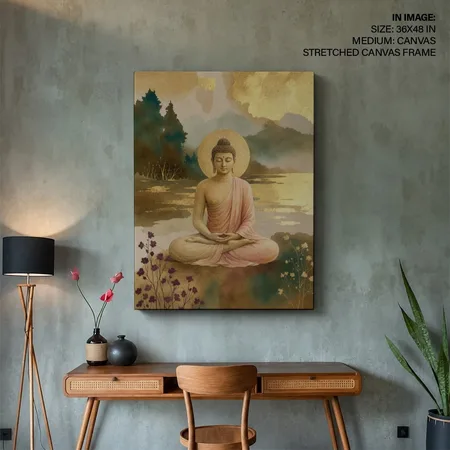
The 18 artworks here fall into two families. On the still side are tranquil Buddha meditation scenes — the seated figure composed, eyes lowered — and Buddha's golden light artworks, where the same serenity is wrapped in warm, radiant colour; their titles mark them for the north-east. On the moving side gallop the horses: ivory and golden, manes streaming, a subject Indian tradition has long read as energy, victory and forward motion, and one it assigns to the north-west. Hung in the same home, the two families balance one another — the Buddha steadies the room, the horses set it in motion.
Follow the split the titles already make. Buddha artworks belong in the north-east by tradition: the pooja room, a meditation corner, or the north-east wall of the living room, ideally with clear space and morning light around them. The horses take the north-west: the living room, a home office or a hallway wall, where tradition associates them with momentum in work and steady support from allies. Two commonly observed customs are worth noting: galloping horses are usually shown facing into the home rather than out of it, and energetic imagery of this kind is generally kept out of the bedroom, which tradition reserves for restful subjects.
Ask what the room lacks. A workspace that feels stagnant is the traditional candidate for golden horses in full stride; a living room that never quite settles may be better served by a tranquil Buddha in muted tones. Buddha's golden light pieces suit dim corners that need warmth, while ivory horses on pale grounds keep a bright room feeling airy. Many homes simply take one of each and let the two directions do their traditional work. Every artwork arrives as an archival print, hand-framed, delivered ready to hang, and made in India.
Wall Art
by Kamal Mohan
Wall Art
by Kamal Mohan
Wall Art
by Kamal Mohan
Wall Art
by Kamal Mohan
Wall Art
by Kamal Mohan
Wall Art
by Kamal Mohan

Wall Art
by Kamal Mohan
Wall Art
by Kamal Mohan
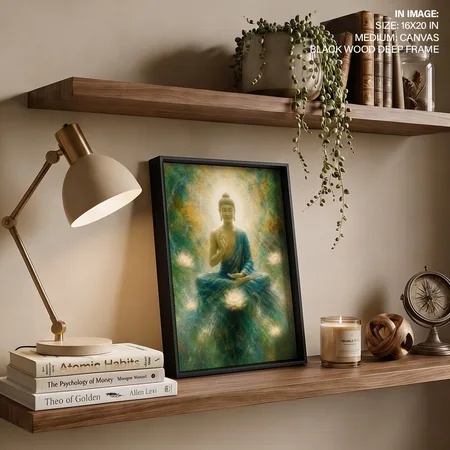
Wall Art
by Kamal Mohan
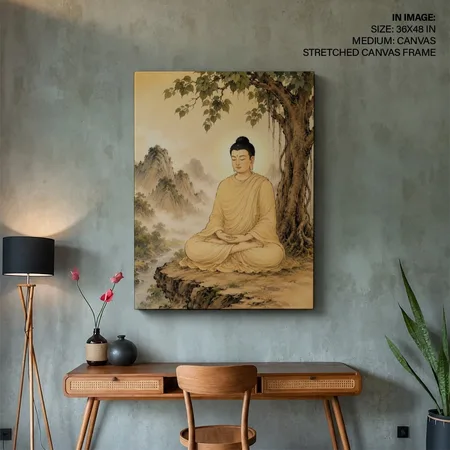
Wall Art
by Kamal Mohan
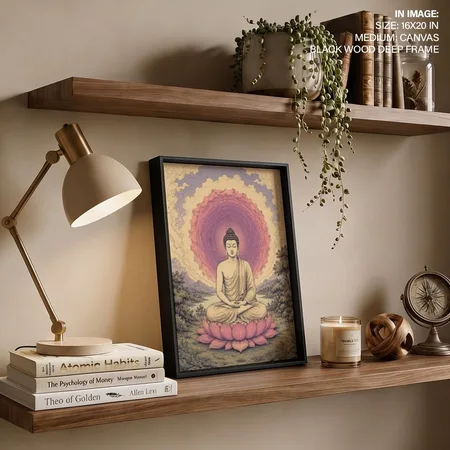
Wall Art
by Kamal Mohan
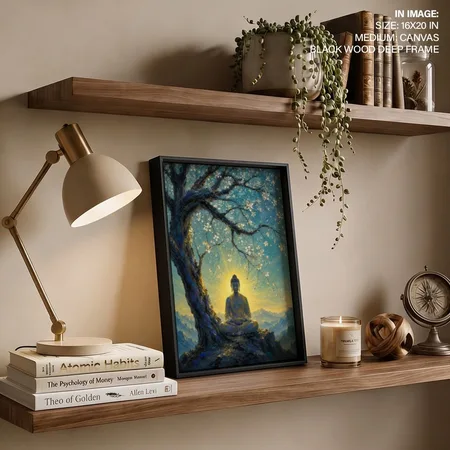
Wall Art
by Kamal Mohan
