Free Shipping across India
What can we help you find?
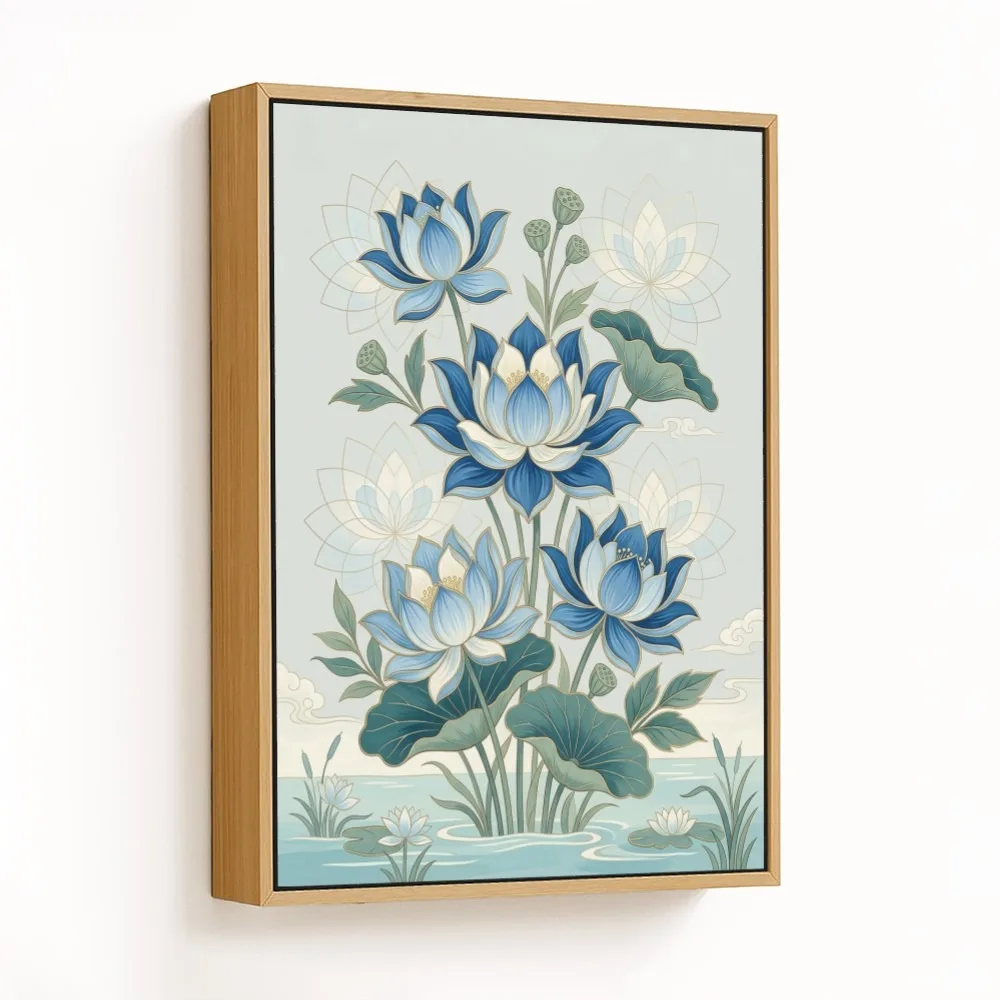
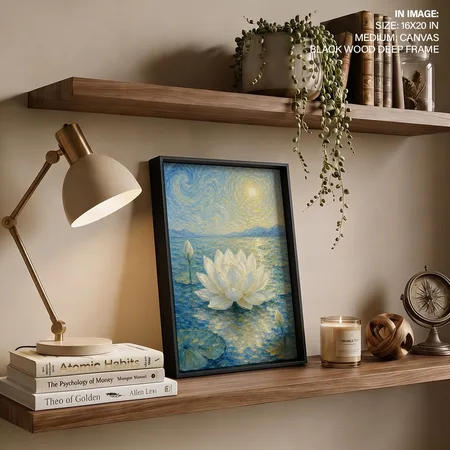
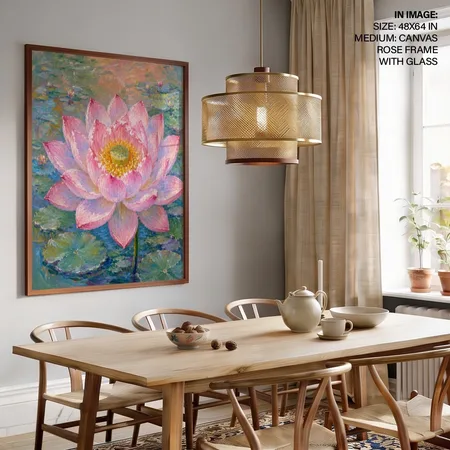
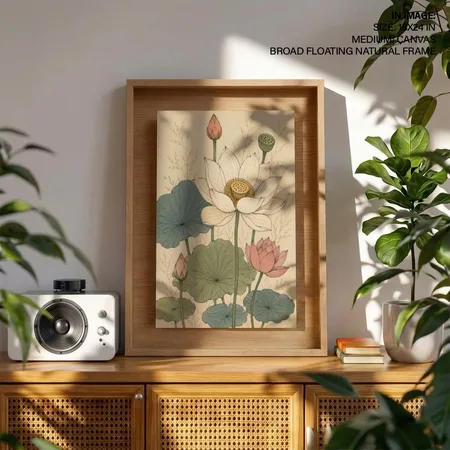
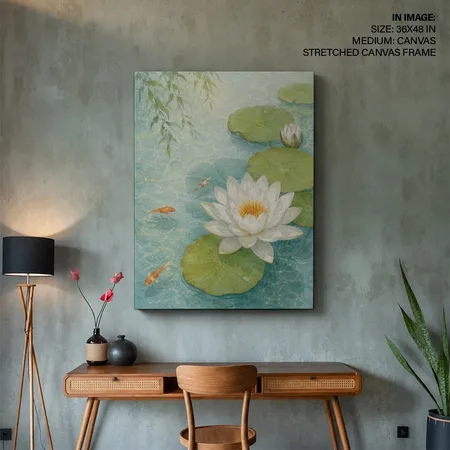
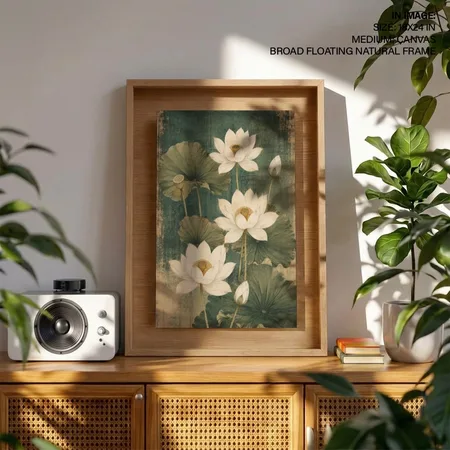
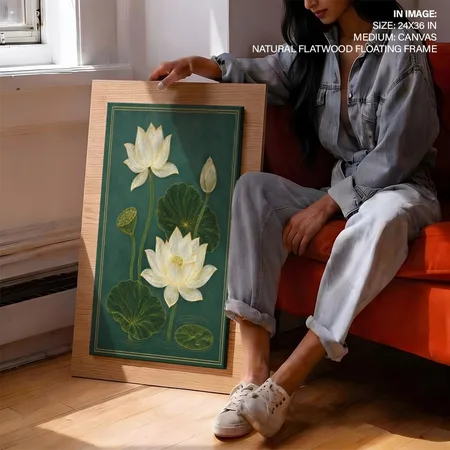
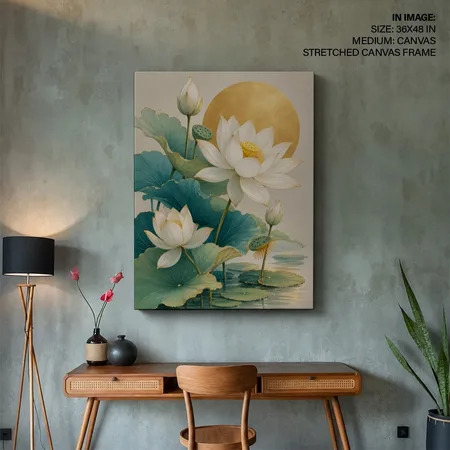
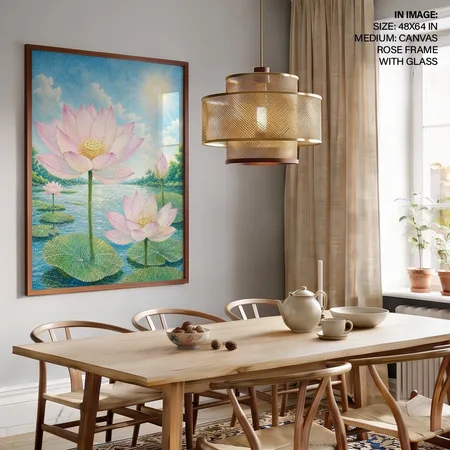
Vastu tradition calls the north-east the ishan corner — the zone of dawn light, prayer and inner growth. The 25 artworks in this collection speak that language: white lotus elegance, soft lotus blooms and first-light skies, chosen for meditation corners, pooja rooms and any wall where the day begins.
Vastu Shastra reserves its most sacred geometry for the north-east — the ishan kona, named in tradition for the deity Ishana and touched first by the rising sun. Classical practice treats this corner as the seat of prayer, study and inner growth, which is why pooja rooms have traditionally been placed here. The imagery hung in this zone is believed to support the mind's turn inward, favouring subjects of dawn, water and gentle unfolding. Vastu does not frame this as a shortcut to enlightenment; it frames it as alignment — a way of letting the home quietly agree with whatever practice, prayer or reflection you already keep.
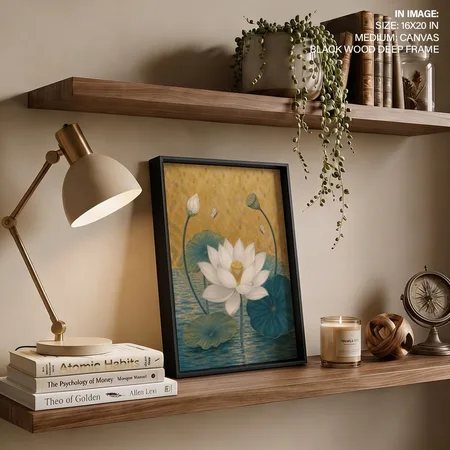
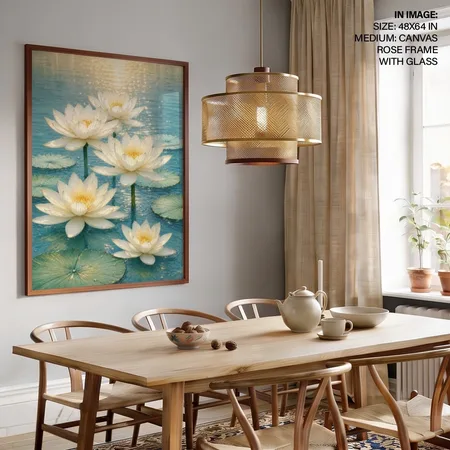
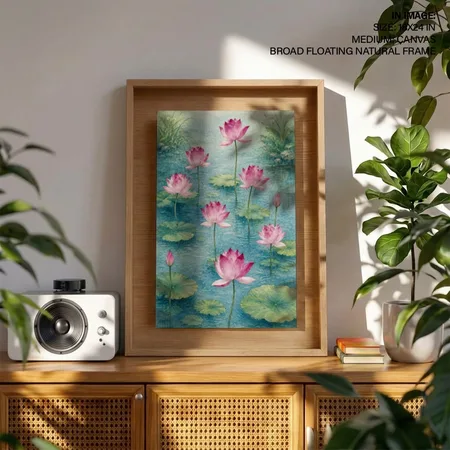
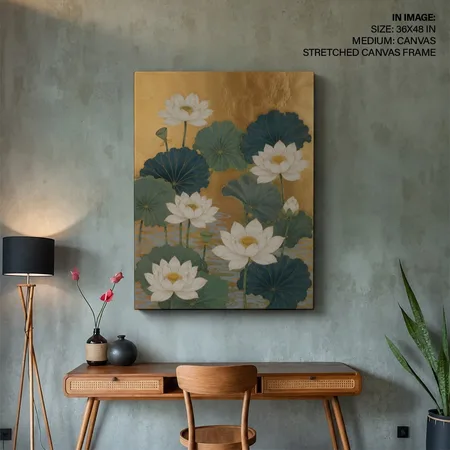
The 25 artworks here draw on India's oldest symbols of awakening. White lotus elegance pieces lead the collection: the opening lotus, petal by petal, has stood for consciousness unfolding since the earliest devotional art. Softer lotus blooms carry the same idea in warmer, more domestic palettes that sit easily outside a formal prayer space. Dawn light artworks complete the set — first light over water and sky, echoing the brahma muhurta, the pre-dawn hour that tradition sets aside for meditation. Together they make a quiet, luminous family of images: nothing dramatic, nothing loud, simply subjects that reward a long look.
The north-east is the natural home for every piece in this collection, and most carry that placement in their titles. Tradition favours the pooja room first, then a meditation or yoga corner, a study, or the east wall of a room used for morning practice. If the space is used seated on the floor, classical guidance suggests hanging the artwork a little lower, at seated eye level, so the image meets the practitioner rather than looming above. Keep the corner light, ventilated and sparsely furnished. Practitioners generally reserve the south-west for heavier, more grounding themes, so these luminous subjects are best kept to the north and east of the home.
Let the room's use decide. A dedicated prayer space suits the most formal white lotus artwork you like; a bedroom or study corner may prefer the softer blooms and dawn skies. Pale, cool palettes recede and calm a small room, while warmer dawn tones bring gentle life to a dim corner. One well-placed piece is very much in the spirit of this collection — the tradition it draws on values a single point of focus over a crowded wall. Every artwork arrives as an archival print, hand-framed, delivered ready to hang, and made in India.