Free Shipping across India
What can we help you find?
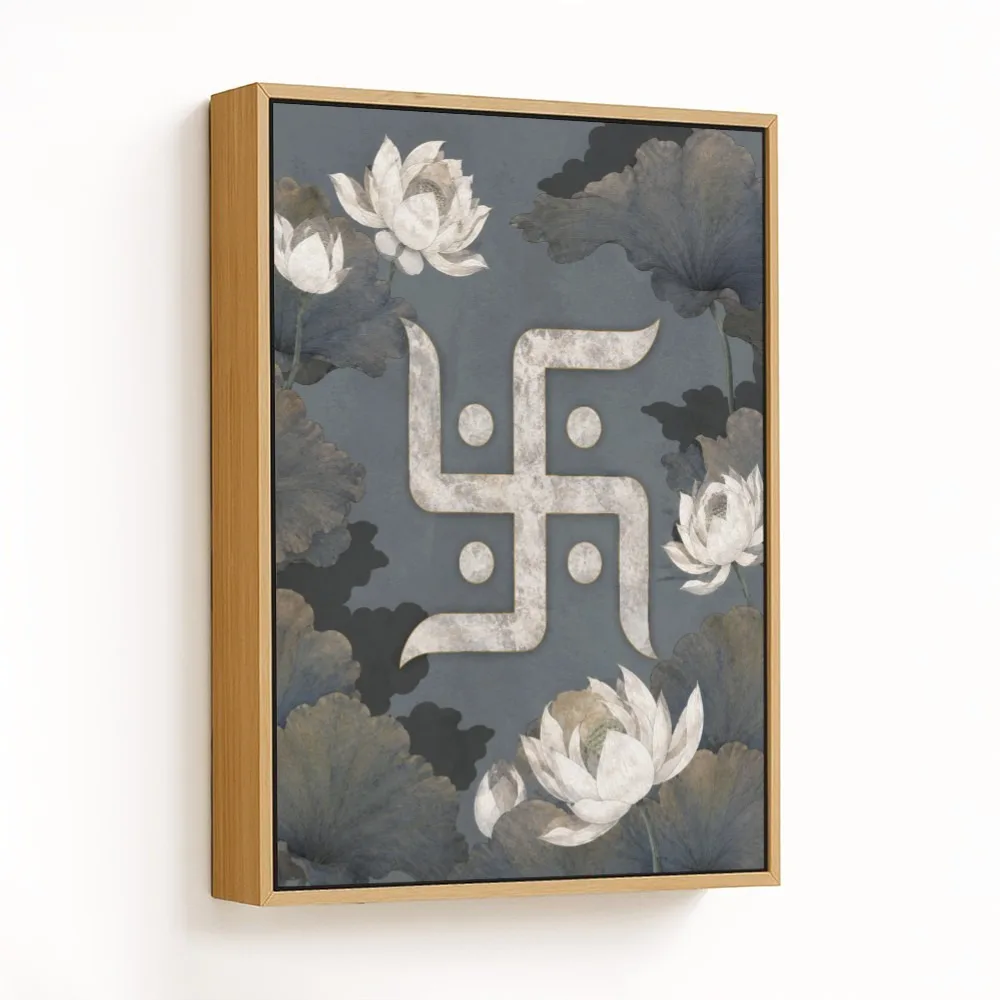
The Swastik is one of India's oldest marks of auspiciousness — drawn at doorways and beginnings for millennia as a wish for well-being. In Vastu tradition, the north-east is the direction of clarity and spiritual growth, and this collection of golden Swastik mandalas and soaring cranes is composed with that corner in mind. Each piece honours the symbol in its sacred Hindu context.
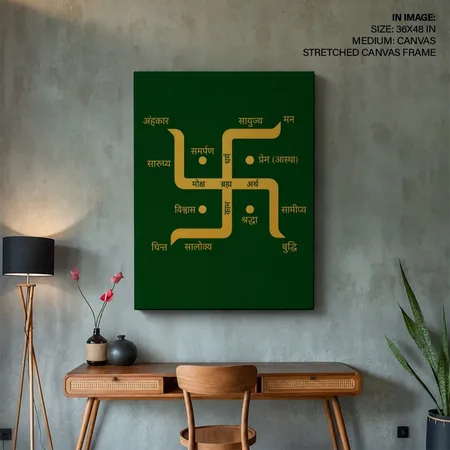
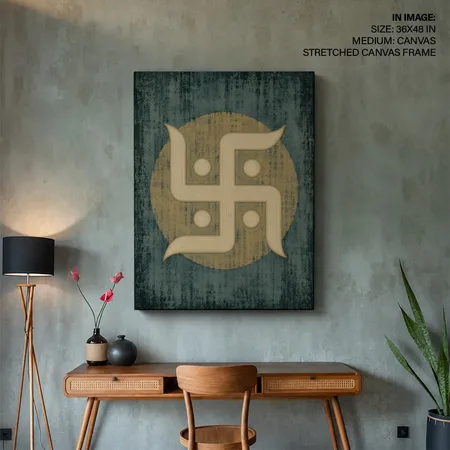
The Swastik is one of the most ancient symbols in Hindu tradition, its name drawn from the Sanskrit svasti — 'may all be well'. For thousands of years it has been traced at doorways, painted at weddings and housewarmings, and drawn wherever something good is about to begin. In Vastu Shastra it is treated as a mark of auspicious energy and balance, its four arms often read as the four directions held in harmony. This collection honours the Swastik in that sacred Hindu context, alongside the crane — a bird admired in tradition for its patience, stillness and effortless rise, and a gentle emblem of the spiritual growth this page is named for. These are inherited beliefs rather than guarantees: a way of keeping an old blessing in daily view.
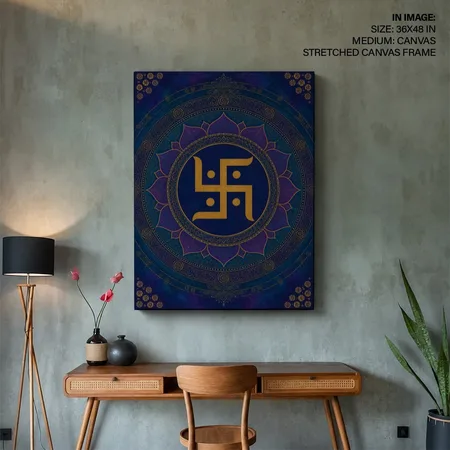
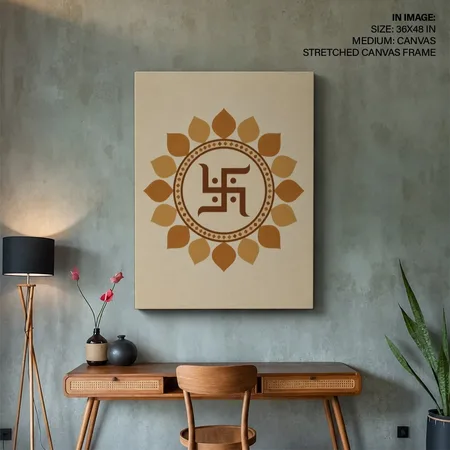
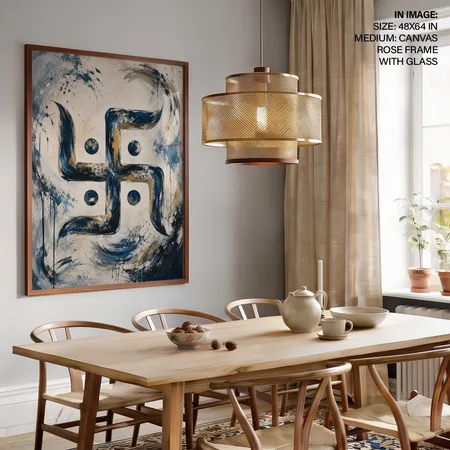
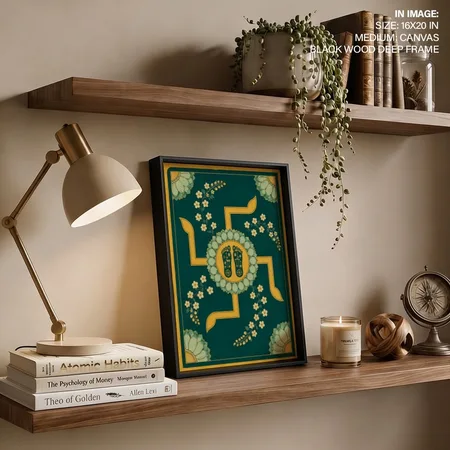
The heart of the collection is the golden Swastik mandala — the sacred symbol set within concentric rings of pattern, worked in warm gold so it reads as both devotion and design. An amber Swastik sunburst takes the same symbol and surrounds it with radiating light, a bolder piece for walls that can carry it. Alongside these sit crane flight artworks, wings spread mid-rise, for those who prefer the theme of growth expressed through the natural world. The three sit comfortably together: symbol, sun and sky.
In Vastu tradition the north-east, or Ishanya, is held to be the most sacred quarter of the home — the direction of clarity, prayer and spiritual growth. The artworks in this collection are composed with that corner in mind: a north-east wall in the living room, the approach to a pooja space, or a quiet study corner where the day begins. Swastik pieces also carry a long association with entrances, echoing the hand-drawn symbol at countless Indian doorways. Hang them at eye level, keep the surrounding wall uncluttered, and let the symbol breathe — tradition favours reverence over crowding.
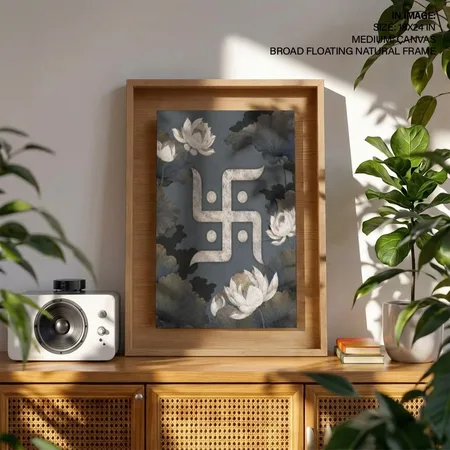
Because the Swastik is sacred, choose its place with the same care you would give any devotional image — a respectful height, a clean stretch of wall, never an afterthought. The golden mandala and amber sunburst glow warmest against deep greens, blues and soft whites, while crane artworks suit lighter, airier schemes. In a pooja corner, let the piece accompany the shrine rather than compete with it; in a living room, give it pride of place. Every artwork here is an archival print, hand-framed, delivered ready to hang, and made in India.