You have the keys, the pandit has given you a date, and the flat still smells of paint. On the day, griha pravesh decoration has one job: making an unfinished home feel ready for its first puja and its first guests. It has a second job that most checklists forget, which is leaving something on the walls once the marigolds have gone.
Three things outlast the day: a pooja-corner backdrop, Ganesha art for the mandir wall, and one large piece for the wall behind the sofa. If your puja is this week, go straight to the day-of checklist at the end.
Before you decorate: check the date, and the time
Drik Panchang lists eight griha pravesh dates in December 2026 (timings for New Delhi): the 2nd, 3rd, 4th, 11th, 12th, 18th, 19th and 30th. Astroyogi and VedicFeed carry the same list. Here are the timings, because three of them fall at night:
| Date | Muhurat (New Delhi) | Note |
|---|---|---|
| 2 Dec | 10:51 PM to sunrise on 3 Dec | Night |
| 3 Dec | 6:58 AM to 9:23 AM | Daytime |
| 4 Dec | 10:22 AM to 11:44 PM | Day into night |
| 11 Dec | 3:04 AM to 7:04 AM on 12 Dec | Before dawn |
| 12 Dec | 7:04 AM to 2:06 PM | Daytime |
| 18 Dec | 11:14 PM to 7:09 AM on 19 Dec | Night; in Kharmas |
| 19 Dec | 7:09 AM to 3:58 PM | Daytime; in Kharmas |
| 30 Dec | 7:13 AM to 12:36 PM | Daytime; in Kharmas |
Where families differ is Kharmas, the month the Sun spends in Dhanu (Sagittarius). Drik Panchang puts Dhanu Sankranti on 16 December 2026 and Makar Sankranti on 15 January 2027. Bhakti Bharat’s Kharmas entry lists house warming among the ceremonies not performed during this month. Yet the same panchangs still show muhurats on 18, 19 and 30 December, and Drik Panchang lists one on 1 January 2027 but nothing more that month. In February 2027 the first muhurat falls before dawn on 11 February.
- This week? Drik Panchang still lists 25 November (sunrise to sunrise) and 26 November (6:52 AM to 5:47 PM).
- If your family observes Kharmas, or avoids new beginnings in this month under another name, choose from 2–4 and 11–12 December; if not, 18, 19 and 30 December are open too.
Timings vary by city, so ask your pandit exactly which date and hour he means before you order flowers.
For decorating, wall pieces go up well before the puja; fresh flowers, the rangoli and the kalash belong to the hours just before the muhurat.
The entrance: toran, rangoli, kalash, nameplate and diyas
The ceremony begins at the threshold, so most of your flowers belong here. In a flat that often means one door in a shared corridor: keep everything within your own door frame and doormat so that neighbours can still pass.
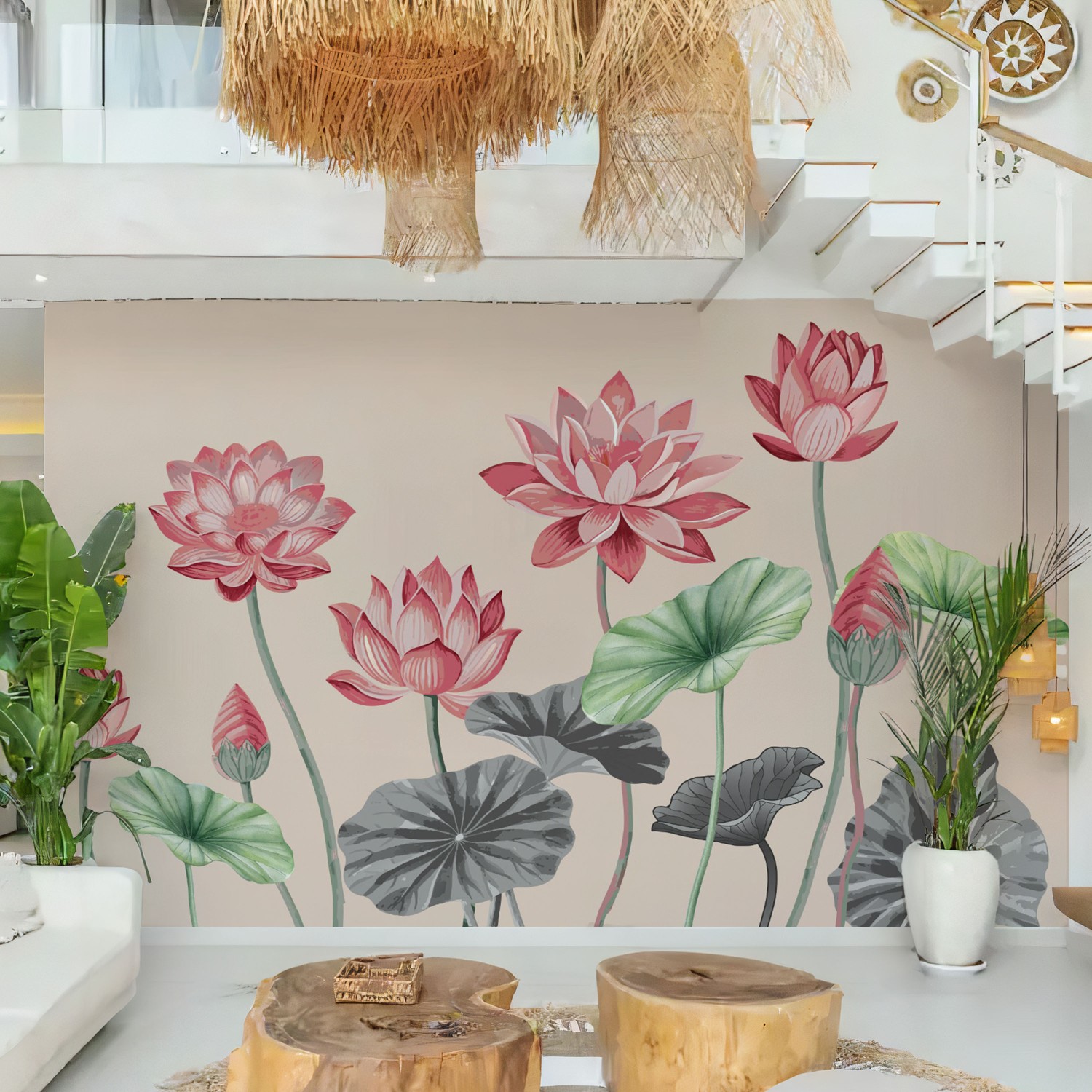
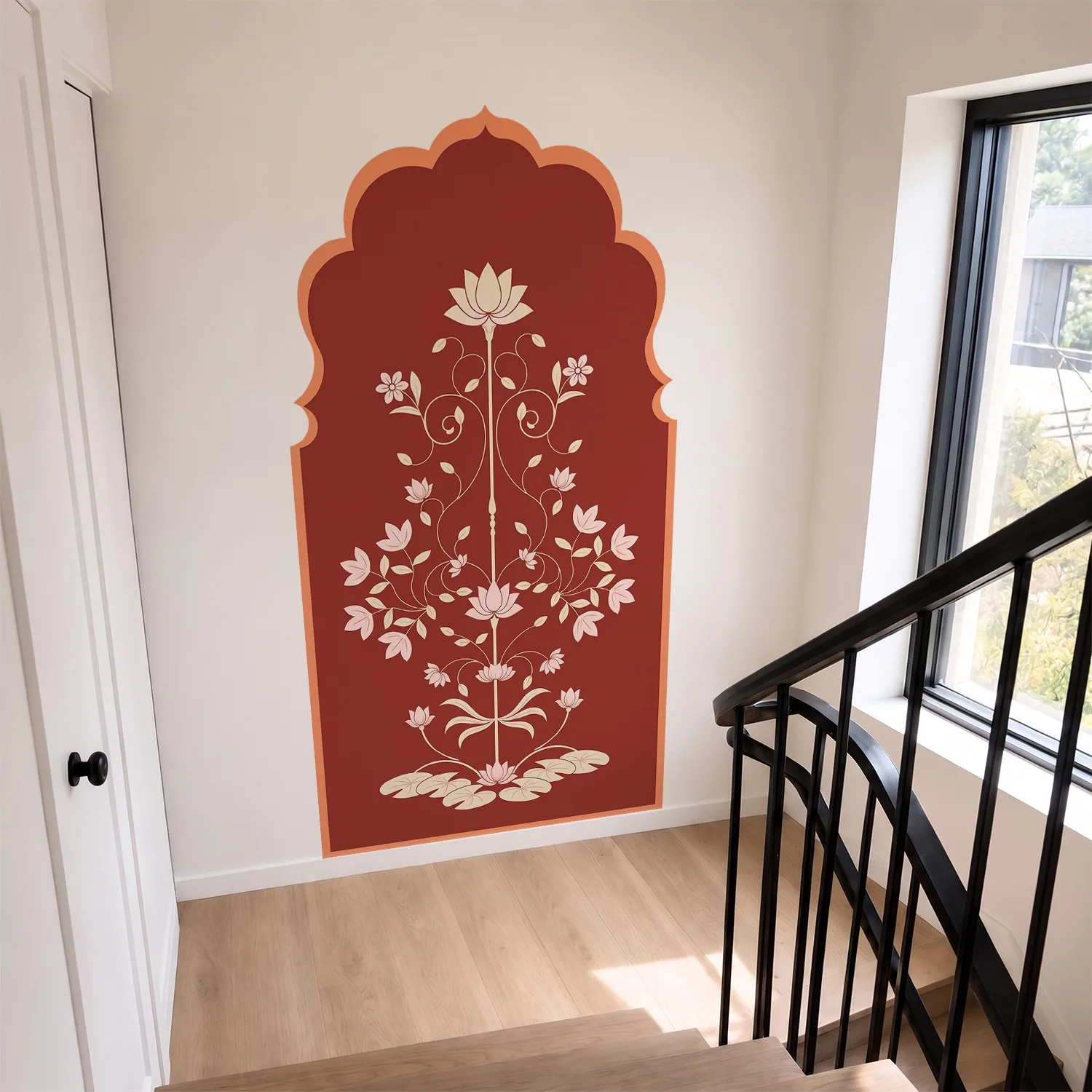 A lotus archway decal turns a bare landing or foyer wall into a welcome, and it peels off if you move.
Toran. Just before the puja, string fresh leaves and marigolds across the top of the door frame. Use what your family uses: mango leaves in much of the country, asopalav (ashoka) leaves in many Gujarati homes, and in many South Indian homes a young banana plant tied to each side of the door as well. Behind the fresh toran, put up a fabric, beadwork or brass one that can stay. When the fresh one dries, dispose of it the way your family disposes of puja flowers.
Rangoli or kolam. IGNCA’s inventory of intangible cultural heritage describes kolam as a ritual design drawn at the threshold of homes and temples, laid on a dotted grid. Other regions have parallel floor-art traditions with their own names and their own designs, as Sahapedia’s essay on kolam lists: alpana in West Bengal, muggu in Andhra Pradesh, sathiya in Gujarat, mandana in Rajasthan, pookalam in Kerala and chowkpurna in Uttar Pradesh. Draw the one your family draws. Keep it about as wide as the door, and leave a clear path in for elders and for the family member carrying the kalash.
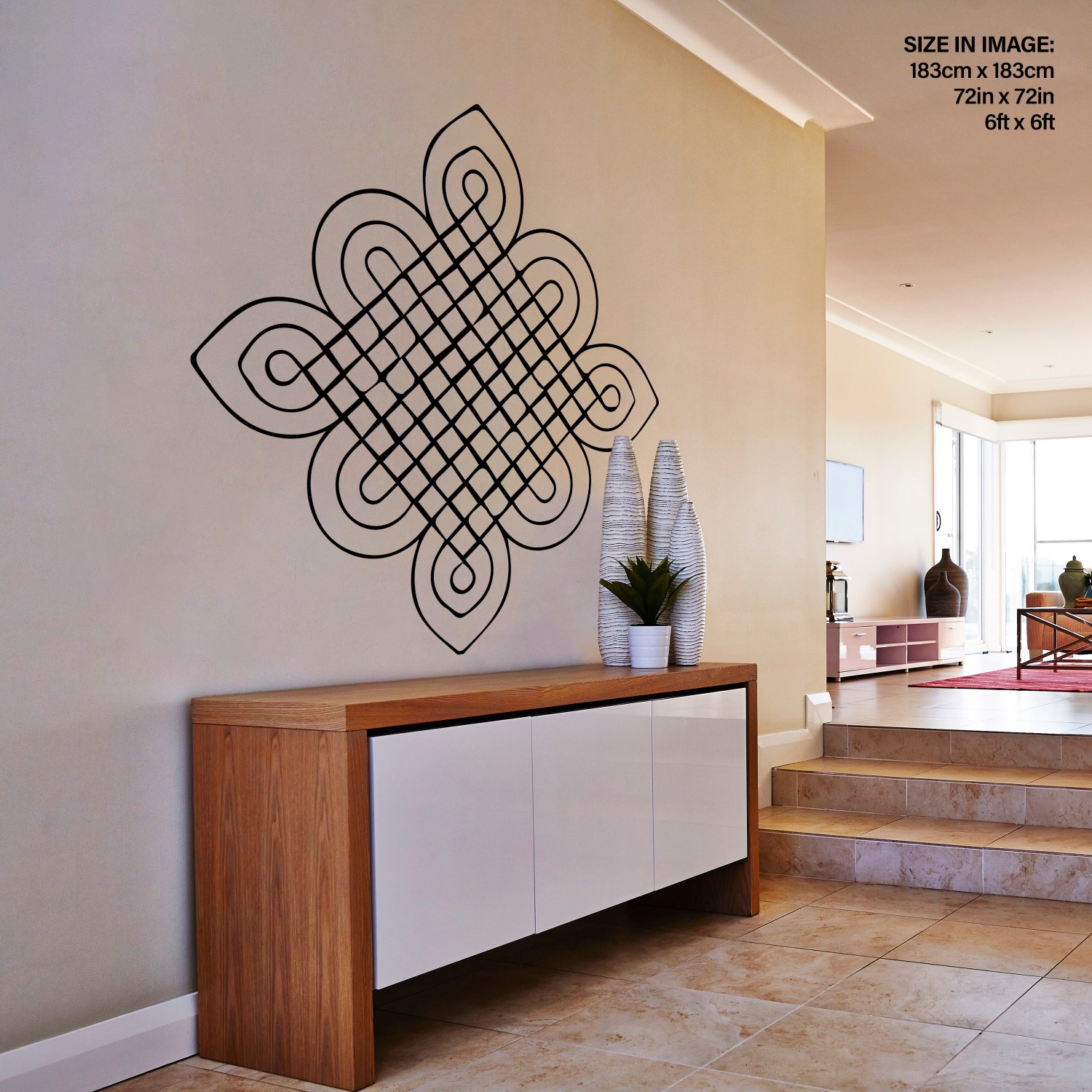 Inside the entrance, a kolam knot decal above a console greets guests on the way in, and peels off later.
Kalash. The kalash, a pot of water topped with mango leaves and a coconut, is part of the ritual itself, so your pandit decides where it sits and who carries it in. The décor’s only job is to have a clean, steady base ready wherever he asks for it: a brass plate or a low wooden chowki, with a handful of rice to seat the pot, and a clear path from the door to that spot.
Nameplate. This is the one entrance piece that stays. Fix it beside the door at eye level, with the drilling done before the puja rather than on the day.
Diyas. Put a pair on either side of the door, on a brass or steel tray so the oil doesn’t mark the floor, and keep them clear of the toran’s hanging ends. Wherever a flame would sit near a curtain or a wooden door, use LED diyas instead.
Shoes. Before the first guest arrives, decide where shoes will go: a mat or rack to one side of the door, well away from the rangoli, the kalash and any image of a deity. If you hang a Ganesha at the entrance, keep the shoe rack off that wall.
The pooja corner: the backdrop first, then the deity
If your new 2BHK has no pooja room, the griha pravesh puja will happen in a corner of the living room or in front of a wall-mounted mandir. The wall behind it will be in every photo of the puja, and you’ll stand in front of it for every aarti after.
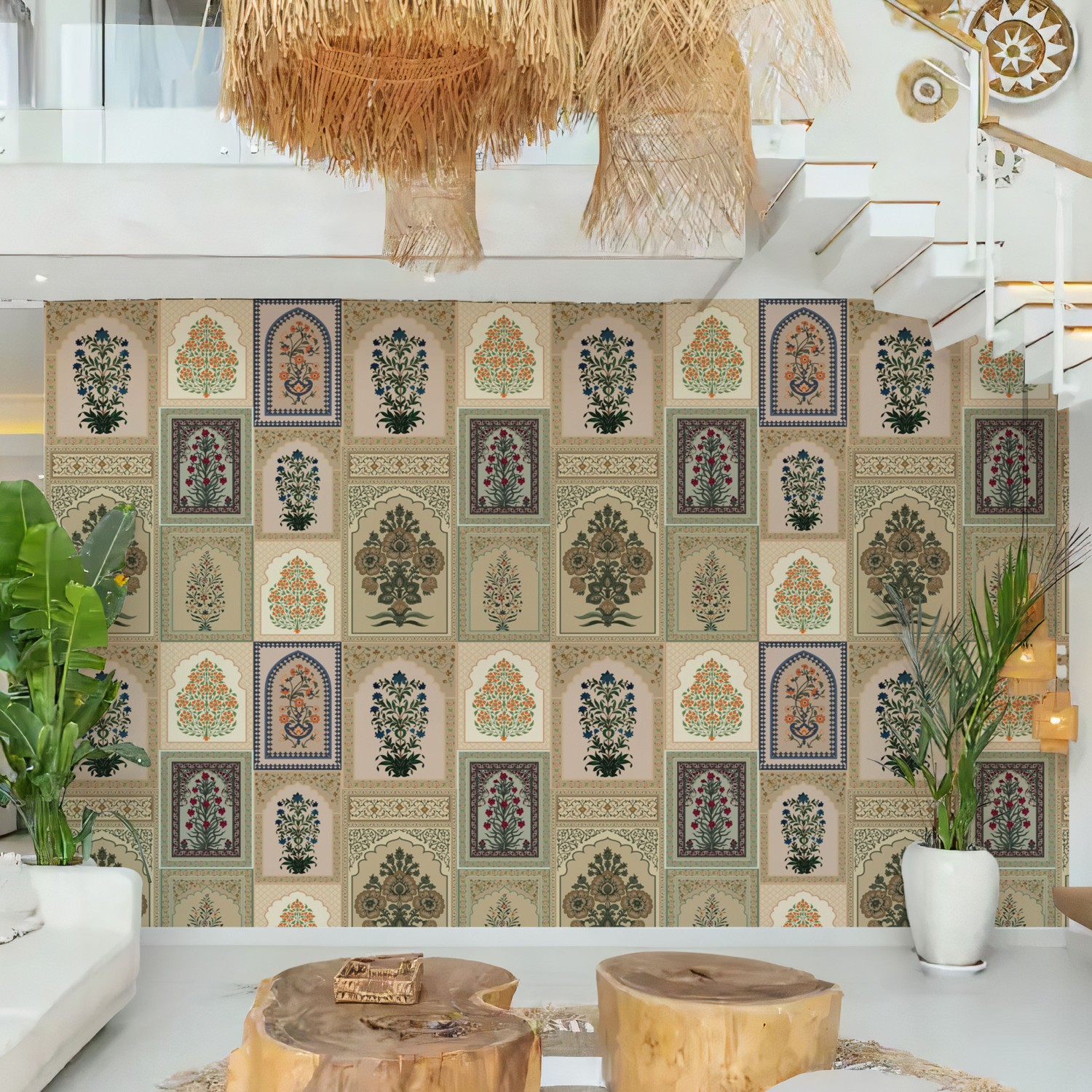
The backdrop. Wallpaper is the most lasting answer. Our pooja room wallpaper collection is built around lotus, pichwai cow and kolam designs. It costs ₹129 per sq ft for Sleek (shipping and taxes included), or ₹169 per sq ft for faux leather or non-woven. Designs from the website have a 30 sq ft minimum, which comes to ₹3,870 in Sleek. Order the ₹99 Wallpaper Sampling Kit first and check the swatch under the bulb you’ll use for aarti. Installation is available.
If a havan is planned, keep the kund away from the wallpapered wall and close to an open window. Stand the kund on a metal tray over a layer of bricks or sand so the heat doesn’t mark new tiles, and if your building has smoke detectors, tell the society office beforehand.
The deity. A few rules keep the corner respectful from the first day:
- Hang deity art on the wall, or stand it upright on the mandir shelf or a side table. Never lean it on the floor, not even for the ten minutes it takes to find the hammer.
- Place it so that the deity’s face is at or above your eye level when you sit in front of it.
- Keep the corner away from the shoe rack and from the bathroom door.
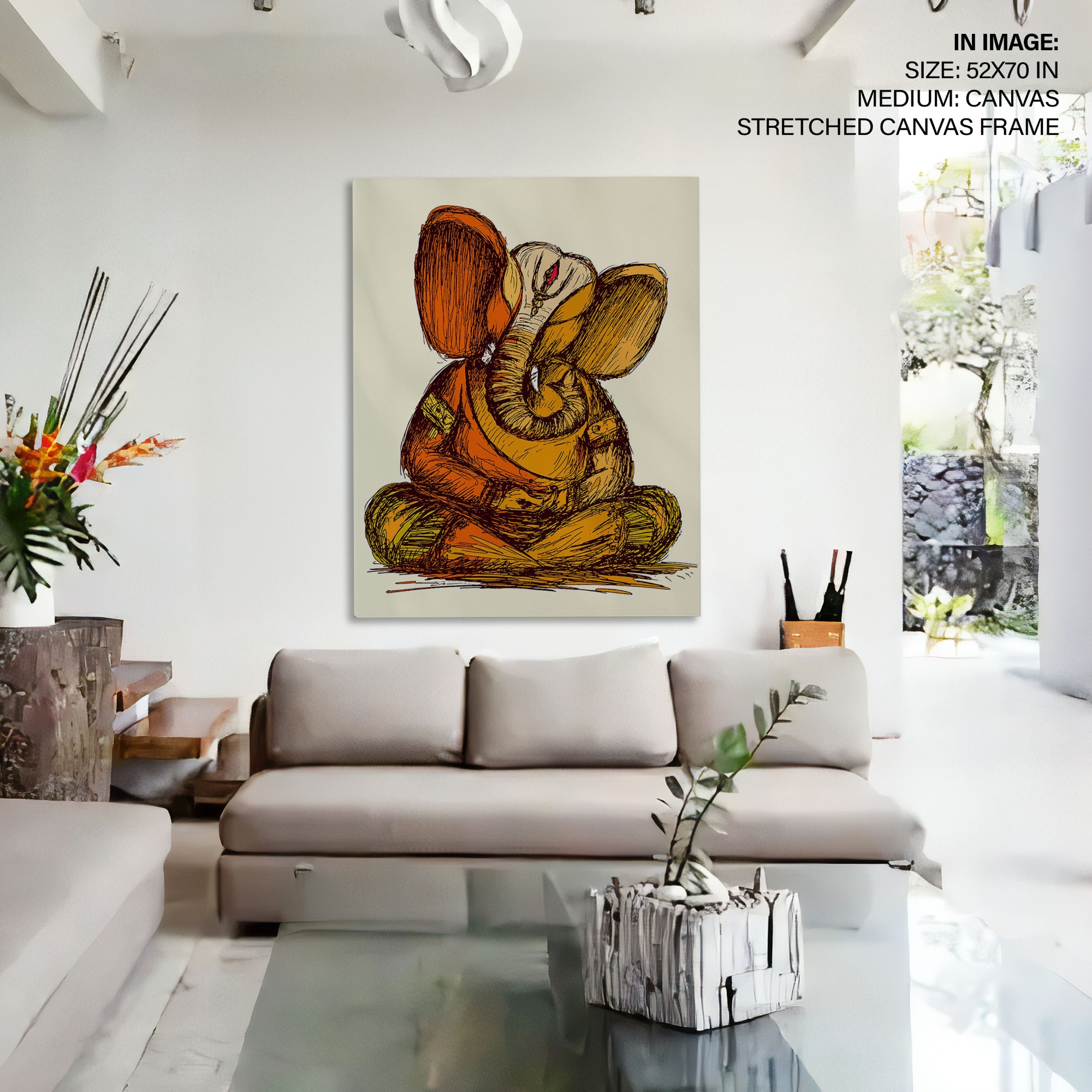
If Ganesha leads your family’s puja, our guide to placing a Ganesha painting covers the wall and the direction, and the Ganesha paintings collection has the options. A pair of lotus paintings on either side of the mandir frames it like a temple doorway.
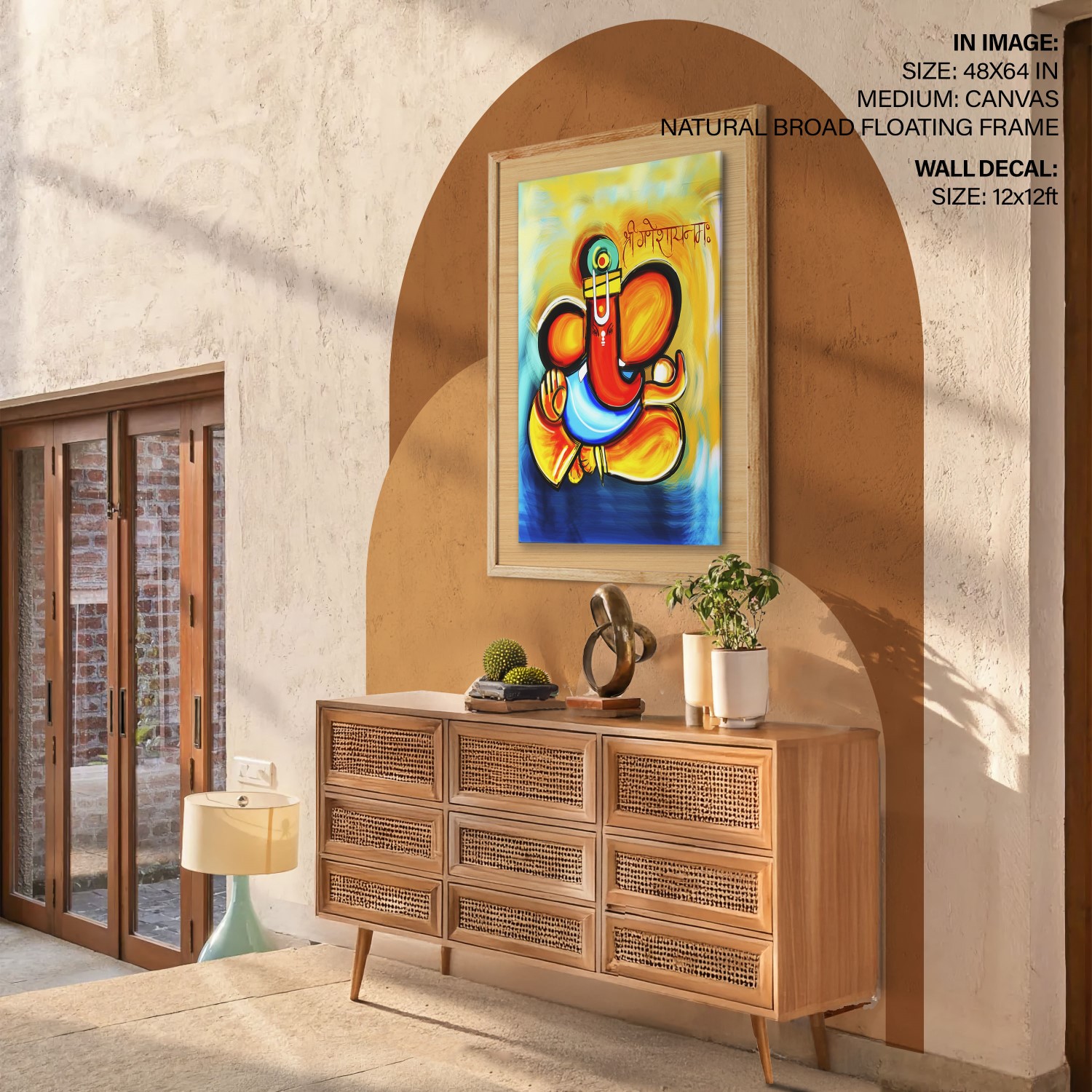 No pooja room? A wall-hung Shri Ganeshaya Namah painting above a clean sideboard makes the corner.
The kitchen. In many families the first thing cooked in the new home is milk, boiled on the new stove until it rises. Keep that counter bare and clean, with a few flowers by the stove, well away from the flame.
Vastu, briefly
If your family follows vastu, the pooja goes in the north-east (ishan) corner if the layout allows it, the entrance stays clear and well lit, and nothing heavy blocks the main door. For the walls themselves, our north-east wall guide covers the pooja corner, and the vastu paintings guide goes room by room.
The first wall your guests see
After the puja, everyone sits down for prasad facing one wall of the living room. In a new flat it’s often bare, and it’s behind every family photo that day.
- On day one, one large piece beats five small ones. A set of three can come later.
- Choose a subject that suits a full house. A tree of life, lotuses, or pichwai-style cows among lotuses feel warm and auspicious without turning the sofa into a shrine. Keep images of deities for the pooja corner, where they’re treated as such, rather than behind a sofa where people lean their heads.
- Hang it at the right height. Put the centre at about the eye level of a standing adult, high enough above the sofa back that nobody’s head touches the frame.
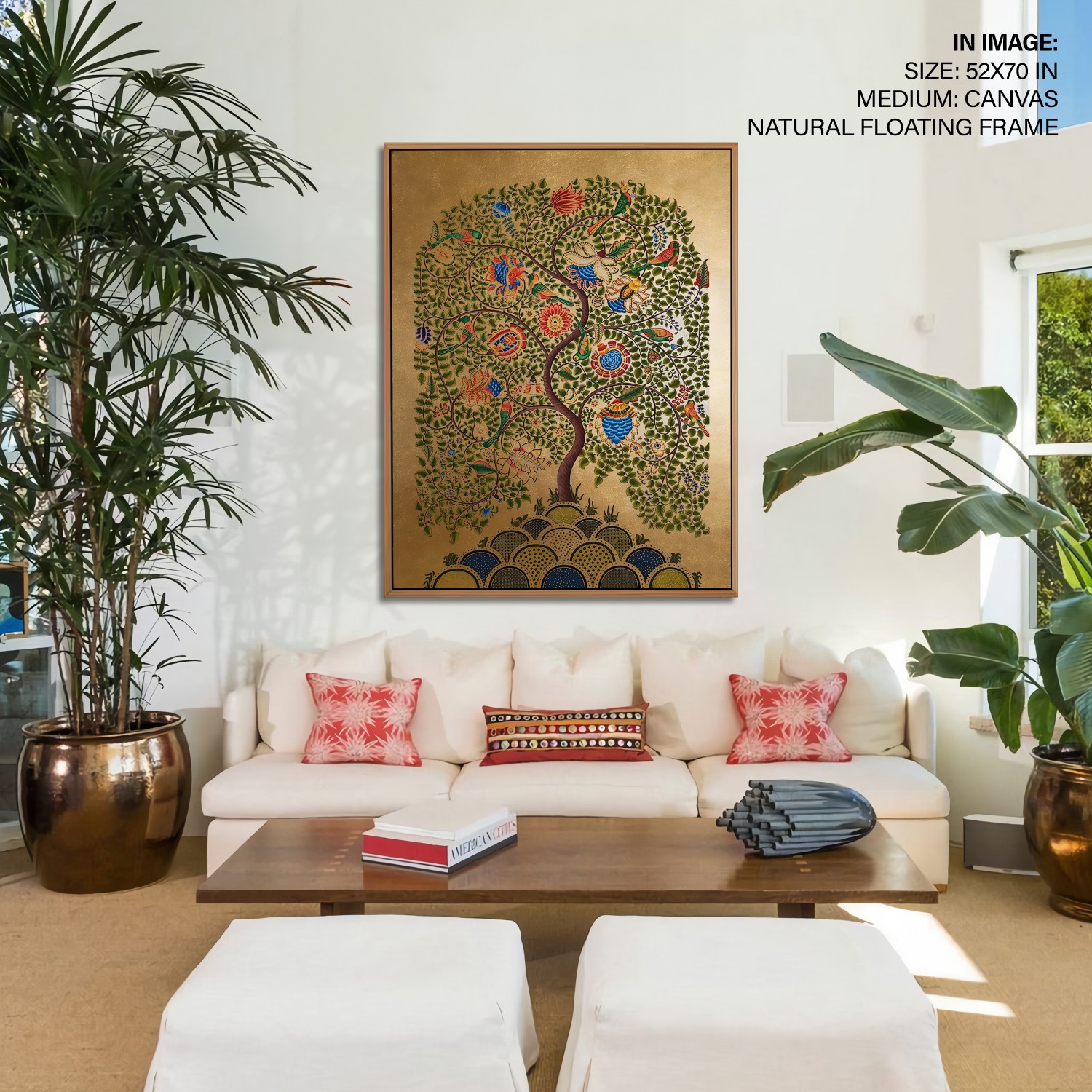 A single large Kalamkari tree of life fills the wall behind the sofa.
Relatives asking what to bring? Send them our griha pravesh gift ideas.
Light and flowers
Before the day, swap the cold builder’s tube light for warm white bulbs in the living room and the pooja corner. For flowers, use two or three kinds rather than ten: marigold as the base, one fragrant flower (mogra, rajnigandha or roses) and leaves. Put them where the photos happen: the door, the pooja backdrop and the first wall. Tie garlands on with cotton thread, not tape on fresh paint.
Griha pravesh in a rented flat: decorating without drilling
Our no-drill decorating guide for renters was written for Diwali; most of it applies here.
- Adhesive hooks for the toran, fairy lights and lighter frames. Test one on a hidden patch first, and follow the packet’s advice on freshly painted walls.
- Peel-off decals. A lotus arch or a kolam-pattern decal on the wall behind a wall-mounted mandir frames it like a niche, and it comes off when you move out. Keep the deity himself as a framed piece that moves with you. Sahapedia notes that stick-on kolam decals are already common on the thresholds of modern apartments.
- Lean instead of hanging. Stand a framed piece upright on a console, the mandir shelf or a sideboard. This works for deity art too, as long as it stands upright on furniture and never on the floor.
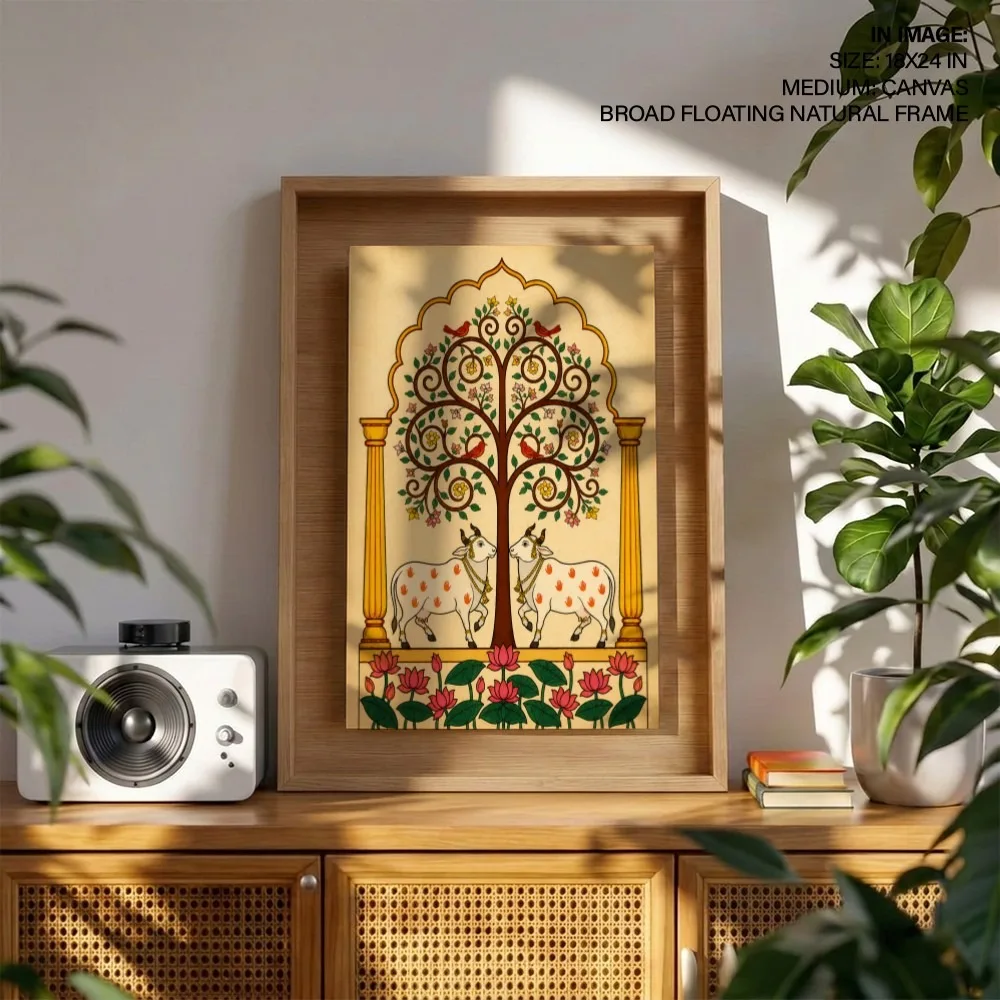 No drilling needed: a framed Pichwai Kamdhenu and Kalpavriksha painting stands upright on a sideboard.
What stays after the ceremony and what goes
Ceremony décor is meant to last a day. Put your money into the right-hand column.
| Item | On the day | After the ceremony |
|---|---|---|
| Fresh toran | Main door | Disposed of as your family does with puja flowers; a fabric or brass toran stays up |
| Rangoli or kolam | Doorstep | Swept away; keep the pattern on a wall instead |
| Flowers and garlands | Door, pooja, first wall | Gone in days; lotus art or wallpaper keeps the theme |
| Diyas | Door and pooja | Brass diyas join the daily aarti |
| Kalash | Where your pandit places it | As your pandit and family custom advise |
| Deity art | Pooja corner | Stays, hung or upright in the mandir |
| First-wall art or wallpaper | Behind the seating | Stays as the living room’s main wall |
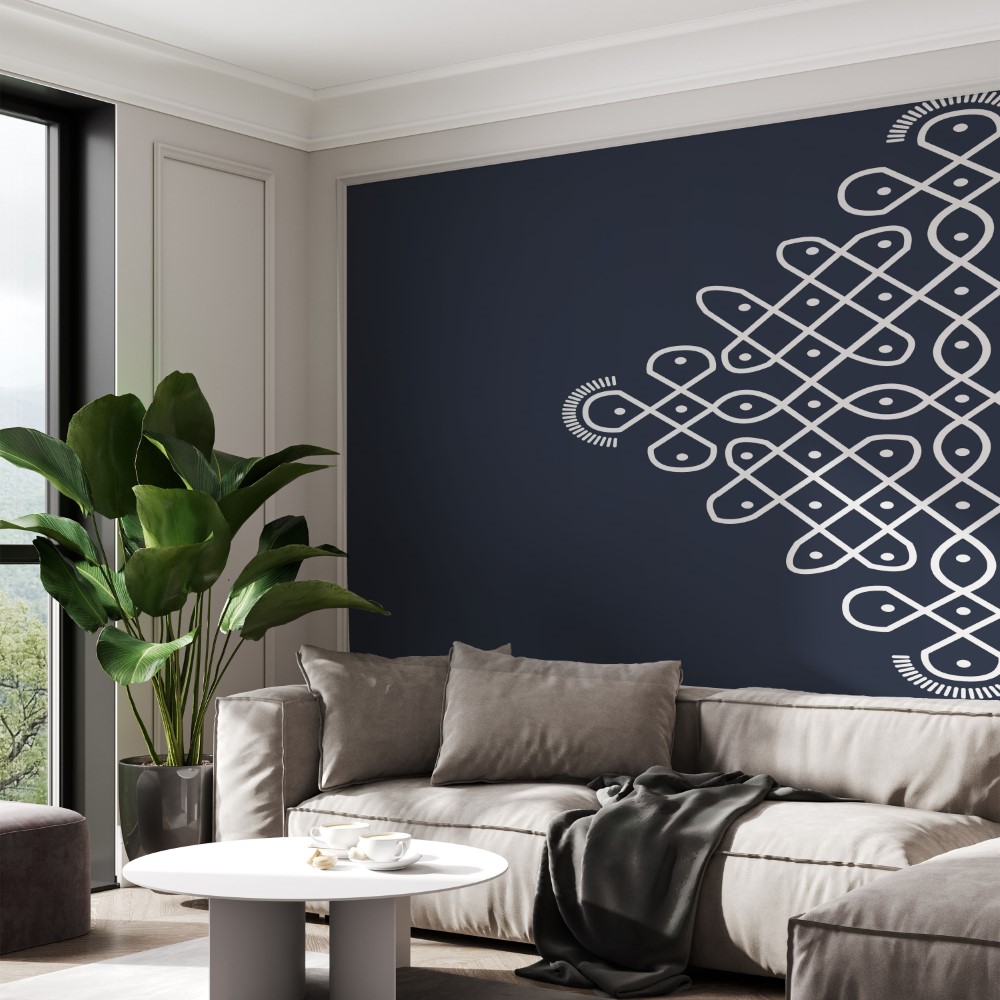 The kolam at the door is swept away by evening. A kolam rangoli wallpaper keeps the pattern on the wall.
Day-of checklist
The day before
- Art, wallpaper, nameplate and decals are up, and the hooks for the toran are tested.
- The pooja corner is cleared and dusted, with deity images standing upright or hung.
- The stove and kitchen counter are clear and wiped.
- A clear square of floor is ready for the puja (and the havan, if there is one) near a window that opens.
- Flowers are ordered for pick-up a few hours before the muhurat, even if that means before dawn.
Just before the muhurat
- The fresh toran goes up, the rangoli goes down and the diyas sit on their trays.
- The kalash base and puja items are wherever your pandit wants them.
- Walk slowly from the door to the pooja corner, as an elder would, and clear anything at ankle height.
When the flowers have gone, the walls stay: start with a pooja room wallpaper backdrop and a Ganesha painting for the mandir wall.
Frequently Asked Questions
Griha pravesh me ghar ko kaise sajaye?
Start at the entrance with a toran of fresh leaves and marigolds, a rangoli and a pair of diyas. Then set up the pooja corner, with deity art hung on the wall or standing upright on the mandir shelf, and dress the living room wall guests will face. Wall pieces go up days before, and fresh flowers just before the muhurat.
Griha pravesh me kya lekar jana chahiye?
If you’re a guest, sweets or fruit and a shagun envelope are always right. If you want to add something the home will keep, wall art, a brass diya or a plant work well; our griha pravesh gift ideas guide has more. If you’re the family moving in, carry the kalash and the puja items on your pandit’s list.
Which dates in December 2026 are auspicious for griha pravesh?
Drik Panchang lists 2, 3, 4, 11, 12, 18, 19 and 30 December 2026 (New Delhi), and Astroyogi and VedicFeed carry the same dates. Three are night muhurats: 2 December from 10:51 PM, the “11 December” muhurat at 3:04–7:04 AM on the 12th, and 18 December from 11:14 PM. Families observing Kharmas (from 16 December) use the earlier dates; confirm your city’s timing with your pandit.
Can I decorate for griha pravesh in a rented flat without drilling?
Yes: adhesive hooks for the toran and lights, peel-off arch or kolam decals behind the mandir, framed art upright on a console, and LED diyas near curtains.
Where should a Ganesha painting go for griha pravesh?
In the pooja corner, or on the wall your front door opens onto, facing into the home: hung, or upright on the mandir shelf, never on the floor, near shoes or in a bathroom. Our Ganesha painting vastu guide covers both spots.
How early should wallpaper and wall art go up?
Before the puja, and early enough that you aren’t drilling or chasing an installer the evening before. For wallpaper, order the ₹99 sampling kit first so you have touched and compared the textures early, then choose from the pooja room wallpaper collection.