Free Shipping across India
What can we help you find?
Salvador Dali built his paintings from dream logic: clocks that droop over a branch, a figure dissolving into rock, a rose suspended above a plain. He called the method paranoiac-critical, and used it to paint impossible things with the finish of an old master. The collection carries that precision. Warm ochres and Catalan blue, deep shadow, and small strange details that reward a second look.
Salvador Dali (1904-1989) was a Spanish Surrealist, born in Figueres in Catalonia. He trained in Madrid, joined the Surrealists in Paris, and stayed famous for the rest of his life. Dali painted with the technique of a Renaissance workshop and the subject matter of a dream. The Persistence of Memory, with its soft watches over a Catalan bay, is the picture everyone knows. He also worked in film, jewellery and stage design, and built his own museum at Figueres.
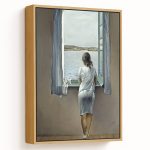
The range leads with the melting clocks, in both The Persistence of Memory and the later Disintegration. Around them sit the stranger figure works: a woman whose head is a bouquet, a ballerina resolving into a skull, a figure at a window looking out to water. The religious and mythological pieces bring The Temptation of Saint Anthony. Palettes run warm, ochre and bone against Mediterranean blue.
One Dali is usually enough for a wall. The images are busy in the mind rather than the eye, so they want plain surroundings: a pale wall, a simple frame, room to stand back. A study or a stair landing suits them, where there is time to look. Pair with mid-century furniture and warm metals. Keep other art on the same wall quiet.
Every artwork here is an archival print, hand-framed to order and delivered ready to hang — made in India.


Wall Art
by Salvador Dali


