BestOfBharat
Free Shipping across India
What can we help you find?
What can we help you find?
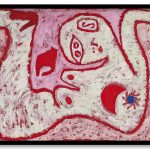
Paul Klee built pictures from small squares of colour, arrows and hand-drawn signs. He taught at the Bauhaus and wrote about art as carefully as he painted. A fortnight in Tunisia in 1914 convinced him that colour and he were one thing. The results are playful and strictly ordered at once: a sun over a block-built castle, a face assembled from tinted tiles. On a wall, Klee brings colour without noise.
Paul Klee was born near Bern in 1879 and died in 1940, Swiss by family and German by training. He trained as a musician before committing to painting, and the discipline shows. His pictures are built in measures, with colour laid out like bars. A short trip to Tunisia in 1914 settled his colour once and for all. Klee then taught at the Bauhaus for ten years, in Weimar and Dessau, alongside Kandinsky. He left Germany in 1933 when the regime declared his work degenerate, and painted with great urgency through his final illness.
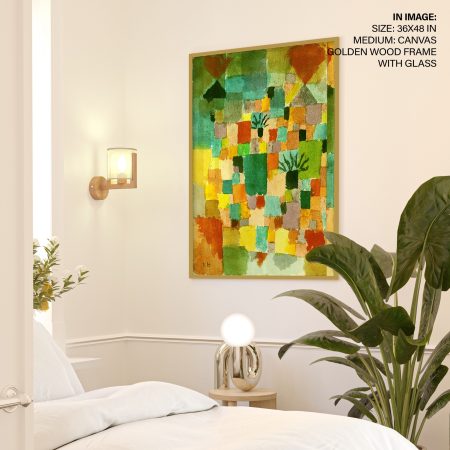
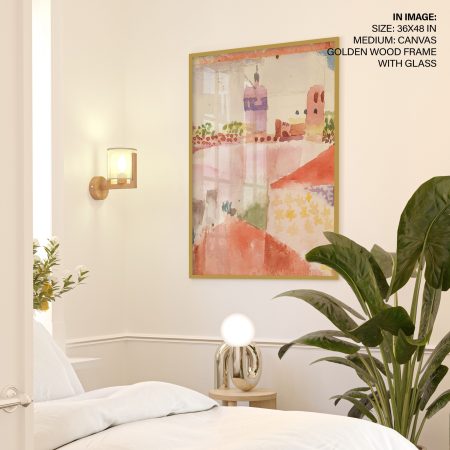
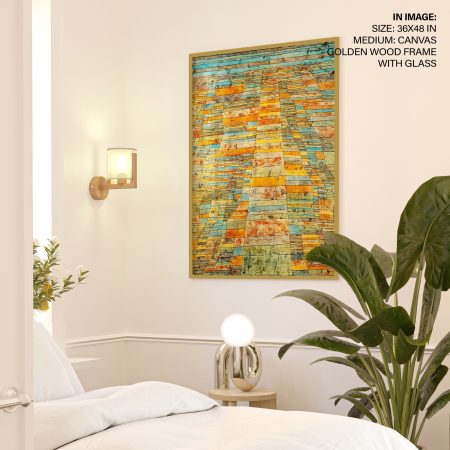
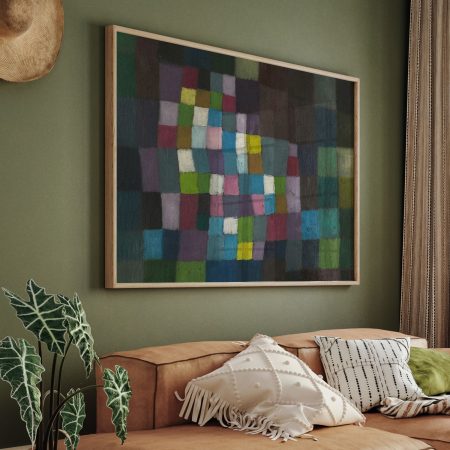
The range takes in the colour-square paintings and the drawn, spidery work in equal measure. Castle and Sun and Hammamet with its Mosque give you architecture reduced to blocks. Senecio is the tile-built portrait most people recognise. Highway and Byways and Ad Parnassum bring the mosaic pictures of his last decade. Southern Tunisian Gardens and Botanical Theatre cover the plant subjects, in pinks, navy and gold.
Klee is a good answer to a plain modern room. The block paintings hold their own on a large white wall and read clearly from across a room. Hang the line drawings closer to seated eye level, where the detail can be found. A grid of four small Klee prints suits a study or a child's room. The shapes are legible and the humour is easy to like. Pair with pale oak, black metal frames and one warm textile.
Every artwork here is an archival print, hand-framed to order and delivered ready to hang — made in India.