BestOfBharat
Free Shipping across India
What can we help you find?
What can we help you find?
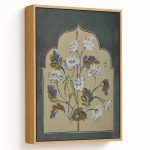
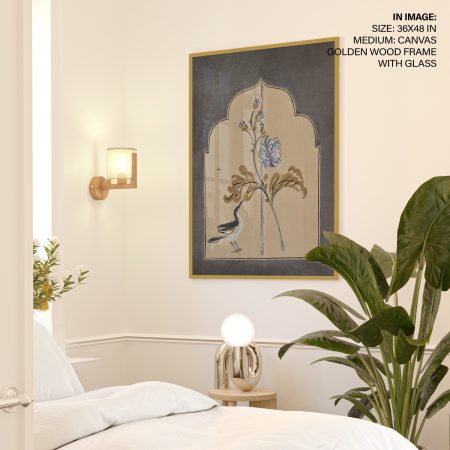
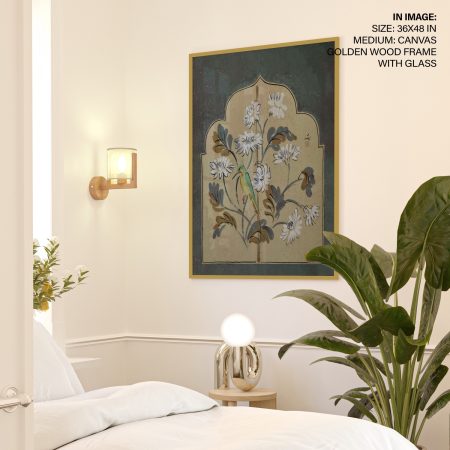
Nandalal Bose gave Indian modern art its own line. He trained under Abanindranath Tagore, taught for decades at Santiniketan and worked in wash, tempera and brush drawing rather than oil. His subjects are close to hand: a bull, a drummer at a festival, a chrysanthemum with a bird beside it. The colour stays soft, the drawing stays confident. On a wall, Bose reads as calm and unmistakably Indian.
Nandalal Bose (1882-1966) was one of the founding figures of Indian modern art. He studied under Abanindranath Tagore in Calcutta and copied the Ajanta murals on a study trip. Most of his working life was spent at Kala Bhavana in Santiniketan, where he taught generations of artists. Gandhi asked him to design the posters for the 1938 Haripura Congress session. Bose also decorated the pages of the original manuscript of the Constitution of India. His line owes something to Ajanta, something to Japanese brushwork, and the rest to close looking at village life in Bengal.
The range holds his flower and bird studies, including the chrysanthemum paintings and the Palas flower. Figure work such as Dhaki, Winnowing and Veena Vadini sits alongside them. Animal drawings of a bull and a lion show the economy of his brush. Musical subjects like the rudra veena carry the same restraint. Colours run to ochre, indigo and muted green, so the prints sit easily beside wood and handloom.
Bose suits rooms that are already quiet. A single flower study above a bedside table is enough. In a pooja room or entrance, Veena Vadini or a festival drummer holds the wall without shouting. The larger figure works pair well with cane, terracotta and unbleached cotton. Group two or three botanical studies in matching frames for a corridor. Keep the mounts generous so the drawing has room to breathe.
Every artwork here is an archival print, hand-framed to order and delivered ready to hang — made in India.