BestOfBharat
Free Shipping across India
What can we help you find?
What can we help you find?

Georges Seurat spent two years placing dots of colour on a single canvas. The result, A Sunday Afternoon on the Island of La Grande Jatte, made him the founder of Neo-Impressionism before he died at thirty-one. His pictures are quiet and exact: bathers on a riverbank, a Paris circus, the Seine on a bright afternoon. On a wall they hold their light well, a pale field of colour that shifts as you step closer.
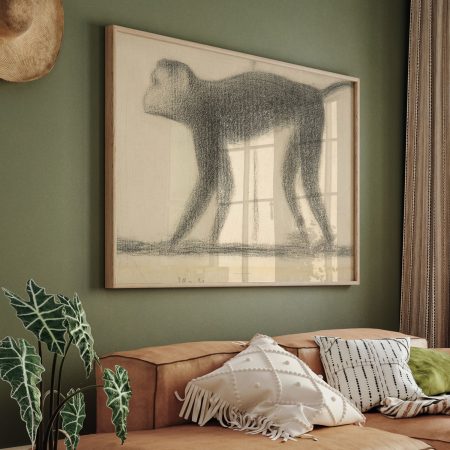
Georges Seurat (1859-1891) was a French painter and the founder of Neo-Impressionism. He died at thirty-one, leaving a small body of work that redirected modern art. Seurat built his pictures from separate dots and dashes of unmixed colour, letting the eye do the blending at a distance. A Sunday Afternoon on the Island of La Grande Jatte took him two years. It is the clearest statement of the method: still figures, flat light, a park held in place like architecture. His conté crayon drawings, dense and velvety, are just as admired.
The range runs from the Grande Jatte paintings to the studies made along the Seine. The later Paris subjects follow, among them Circus Sideshow and The Eiffel Tower, painted while the tower was new. Landscapes, bathers and small figure studies fill out the selection. Seurat's colour depends on the dots staying crisp, so the prints are produced at high resolution on paper with enough texture to carry the stipple.
The palette is light: pale blue, grass green, cream, apricot. That makes these prints easy company in rooms that already have colour of their own. A Grande Jatte print above a sofa reads as calm rather than busy, and the horizontal format suits a long wall. The smaller landscapes work in threes along a corridor. Choose pale oak or a white frame with a generous mount, which gives the surface room before the wall begins.
Every artwork here is an archival print, hand-framed to order and delivered ready to hang — made in India.


Wall Art
by Georges Seurat