BestOfBharat
Free Shipping across India
What can we help you find?
What can we help you find?
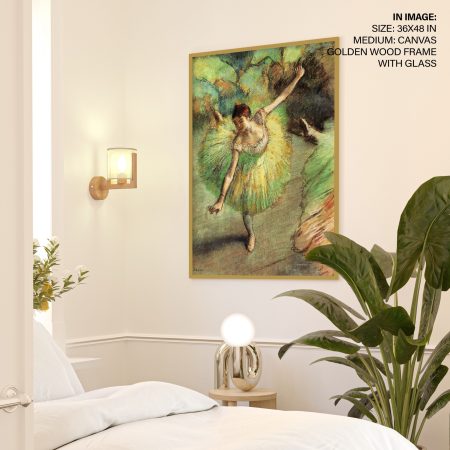
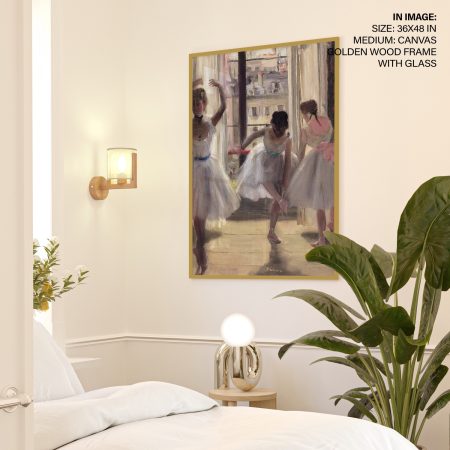
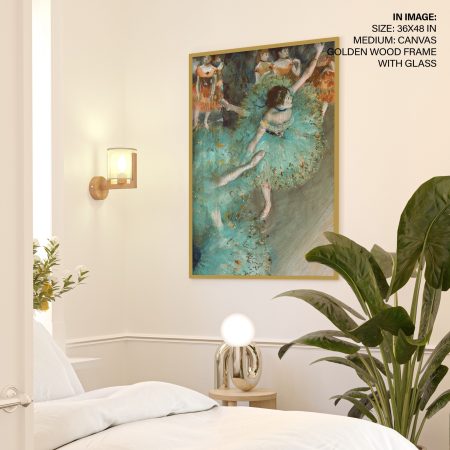
Edgar Degas painted dancers at rest more often than dancers in flight. His pastels catch the moment before the music starts: a strap adjusted, a foot flexed against the barre, light falling flat across a rehearsal floor. The palette runs to chalky green and powder blue, with stage amber behind them. On a wall, Degas brings movement and stillness into the same frame. The work suits a living room as readily as a study.
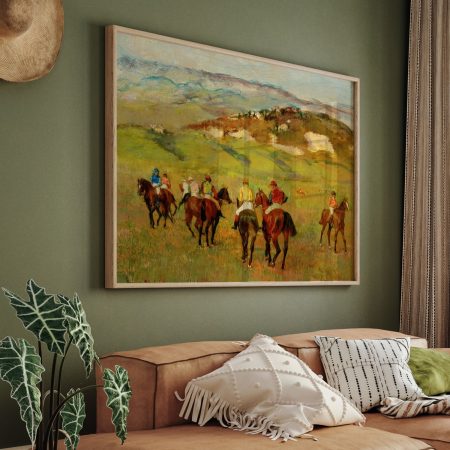
Edgar Degas was French, born in Paris in 1834 and working until his eyesight failed in the 1900s. He exhibited with the Impressionists and disliked the label, preferring to call himself a realist. Ballet gave him his lifelong subject. Roughly half his output shows dancers, and much of it shows them waiting, stretching or listening to a teacher rather than performing. The Rehearsal, The Star and Dance Class at the Opera all come from that world. Degas also painted the racecourse, milliners at work and his family's cotton office in New Orleans.
The range covers the pastels and oils people know: dancers on stage, dancers in the wings, studies of a single figure tilting into a pose. Blue Dancers and The Green Dancer bring saturated colour. The black-and-white studies and line drawings sit at the quieter end. Sizes run from small studies for a shelf ledge to statement pieces for a stairwell, each printed on archival paper.
Degas rewards a wall you pass slowly. A pair of dancer studies works well flanking a doorway or above a console table. The blue and green pastels lift rooms with cool grey or off-white walls; the sepia and charcoal studies suit warmer paint and wooden furniture. In a bedroom, hang a single figure at eye level from a seated position. In a hallway, a run of three small frames at even spacing reads better than one large piece.
Every artwork here is an archival print, hand-framed to order and delivered ready to hang — made in India.

Wall Art
by Edgar Degas