Free Shipping across India
What can we help you find?
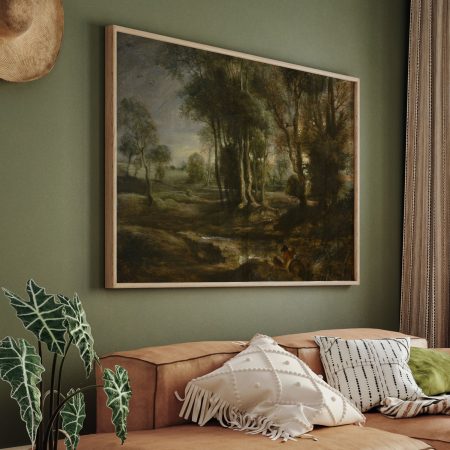
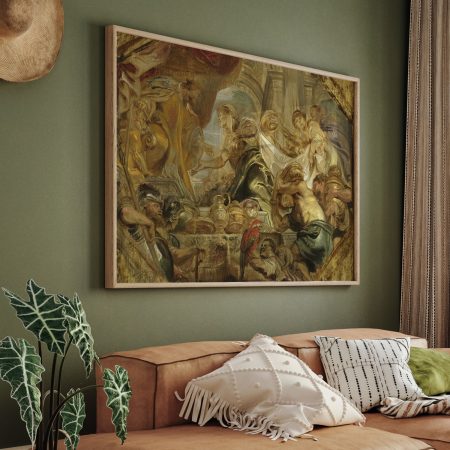
Peter Paul Rubens ran the busiest studio in seventeenth-century Antwerp, painting altarpieces, hunts and mythologies at enormous scale. His figures twist, muscles catch the light, and red drapery pulls the eye across the canvas. He was also a diplomat, knighted by two kings. The collection carries the religious scenes, the hunts and the crowded processions, work that gives a large wall real weight and warmth.
Peter Paul Rubens (1577-1640) was the leading painter of the Flemish Baroque. He trained in Antwerp and spent eight years in Italy studying Titian and Michelangelo. Back home he built a workshop that supplied churches and courts across Europe. Rubens painted movement above all: bodies in mid-fall, horses rearing, cloth caught by wind. His colour is warm, built on reds and golden flesh tones. He was also a diplomat for the Spanish Netherlands, knighted by Philip IV of Spain and by Charles I of England.
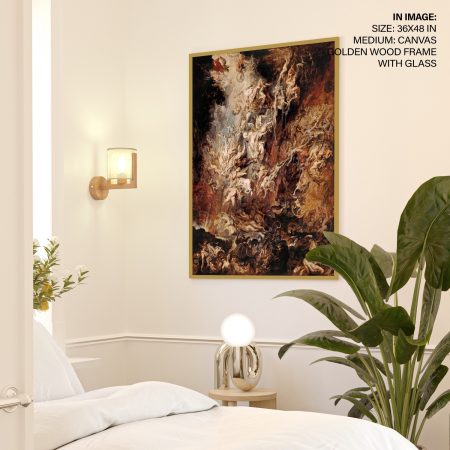
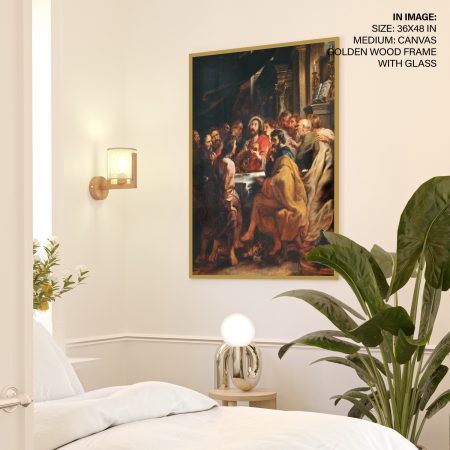
Biblical subjects lead the range: the Last Supper, Christ Giving the Keys to Saint Peter, the Adoration of the Magi. The Betrothal of the Virgin is here too. The Fall of the Damned brings the darker end of Rubens. Saint George and the dragon and the tiger hunts supply the action pieces. Abundantia and the mythological figures sit alongside them in warmer tones.
Rubens works at size. A single large print above a dining sideboard or a stair landing does more than several small ones. The warm reds and golds suit deep walls: olive, oxblood, charcoal. Dark wood frames with a slim gold slip follow the period. The religious scenes are often chosen for a prayer room or a study, where there is time to look at them properly.
Every artwork here is an archival print, hand-framed to order and delivered ready to hang — made in India.

Wall Art
by Peter Paul Rubens