Walk into any hotel lost-and-found after a conference and you’ll find a shelf of them: acrylic shields nobody claimed, diaries still in their cellophane, a shawl folded exactly as it was handed over. A memento for guests only does its job if it survives the trip home and is still wanted six months later — most don’t clear that bar. This page covers what to give a chief guest versus a guest speaker versus two hundred delegates, which formats actually get kept, and how far ahead the order needs to go in.
What a memento is actually for
A memento carries two jobs, and most only do one. The first happens on stage: name announced, object handed over, photograph taken. That part rarely fails — the programme and the photographer see to it. The second happens weeks later, in a cupboard: does the person still want it out where they can see it. That’s the job that fails constantly, and it’s the only one that decides whether a memento for guests was worth the spend. An object clears that bar by being something the recipient would have chosen for themselves — not branded, not sized for a trophy shelf most Indian homes don’t have.
Start with who is receiving it, not what it costs
Before you pick a format, sort your list by who’s actually getting it. A chief guest, a speaker, a delegate and a foreign visitor each need something different — more different than the budget line suggests.
The chief guest
One piece, presented, remembered. A chief guest gets a single item, not a scaled-up version of the delegate gift — they’re introduced by name, seated separately, photographed at the handover, so the piece should feel distinct rather than duplicated. A single framed piece, chosen and sized specifically for them, does this correctly; if you want their name or the occasion noted on it, raise that with us when you brief the order rather than assuming it’s a standard add-on. The same design as everyone else, just bigger, tells the chief guest they got the group present in a larger frame.
Guest speakers and panellists
Flat, light, and it fits in cabin baggage. This tier is usually three to eight people, often flying in and out the same day. Anything that doesn’t lie flat becomes their problem at security and again at the suitcase — let that constraint decide the format. A framed piece up to roughly A3 packs flat and travels in hand luggage without an argument; a trophy or anything with a base doesn’t.
Delegates and all attendees
Fifty to five hundred, at one fixed number per head. At this volume you’re not choosing one distinctive object — you’re choosing one design that has to look right five hundred times over without blowing the budget on unit four-fifty-one. Consistency matters more than individuality: everyone getting a slightly different piece reads as leftover stock, not thoughtfulness. Pick one design, one size, and order past your headcount for late registrations.
Visiting foreign delegates
This gift has to speak for the country, not just mark the event. A tradition with a real, nameable region and technique behind it does that better than anything generic. The short version: know the name of the tradition you’re giving, and say it out loud when you hand the piece over.
The formats, and what each one signals
Once you know who’s receiving it, the format mostly picks itself — by elimination as much as by preference.
The trophy or acrylic shield
Good at the handover, useless afterward. It reads as an award from the back row and photographs well on stage. The trouble starts the next morning: a trophy has no real place in an Indian home unless it joins every other trophy that household owns, out of sight within a week. Not a poor choice at handover — a poor choice for what happens after.
The framed piece
Goes on a wall, and stays there. It solves the after-the-handover problem directly — somewhere to go the day the recipient gets home. If you’d like the recipient’s name or the occasion added, raise it with us at enquiry rather than assuming it ships as standard. For something that has to survive travel, keep it roughly 16x20 to 24x30 inches: large enough to read as a real piece, small enough to pack flat.
The shawl, coconut and bouquet
A courtesy, not a keepsake. This ceremonial layer is what a guest expects on stage, and skipping it can read as a slight — there’s no reason to drop it. But none of it survives past the airport. Treat it as the formal welcome, and pair it with a framed piece as the thing actually meant to be kept, not a stand-in for one.
The utility gift
Used constantly, remembered by no one. Pens, diaries, bottles and desk sets get used — a genuine point in their favour. But nobody opens a drawer eight months later and recalls which seminar the pen came from. A utility gift works as an addition to a framed piece. It’s a weak choice as the only thing you give.
Choosing the artwork itself
This is the part only BoB can really help with — the artwork itself, and what an organiser can say out loud when handing it over.
Madhubani, Warli, Gond and Pattachitra
Each carries a real region and technique, which is what makes these work as mementos — there’s something specific to say when you present one.
Madhubani comes from Bihar’s Mithila region, traditionally painted by women on home walls and floors for festivals and weddings, using natural pigments and a double-line border filled with fish, peacocks, the sun and moon, and figures from the Ramayana. Browse the full Madhubani range — particularly deep, which suits a chief-guest piece well; a few are further down this page.
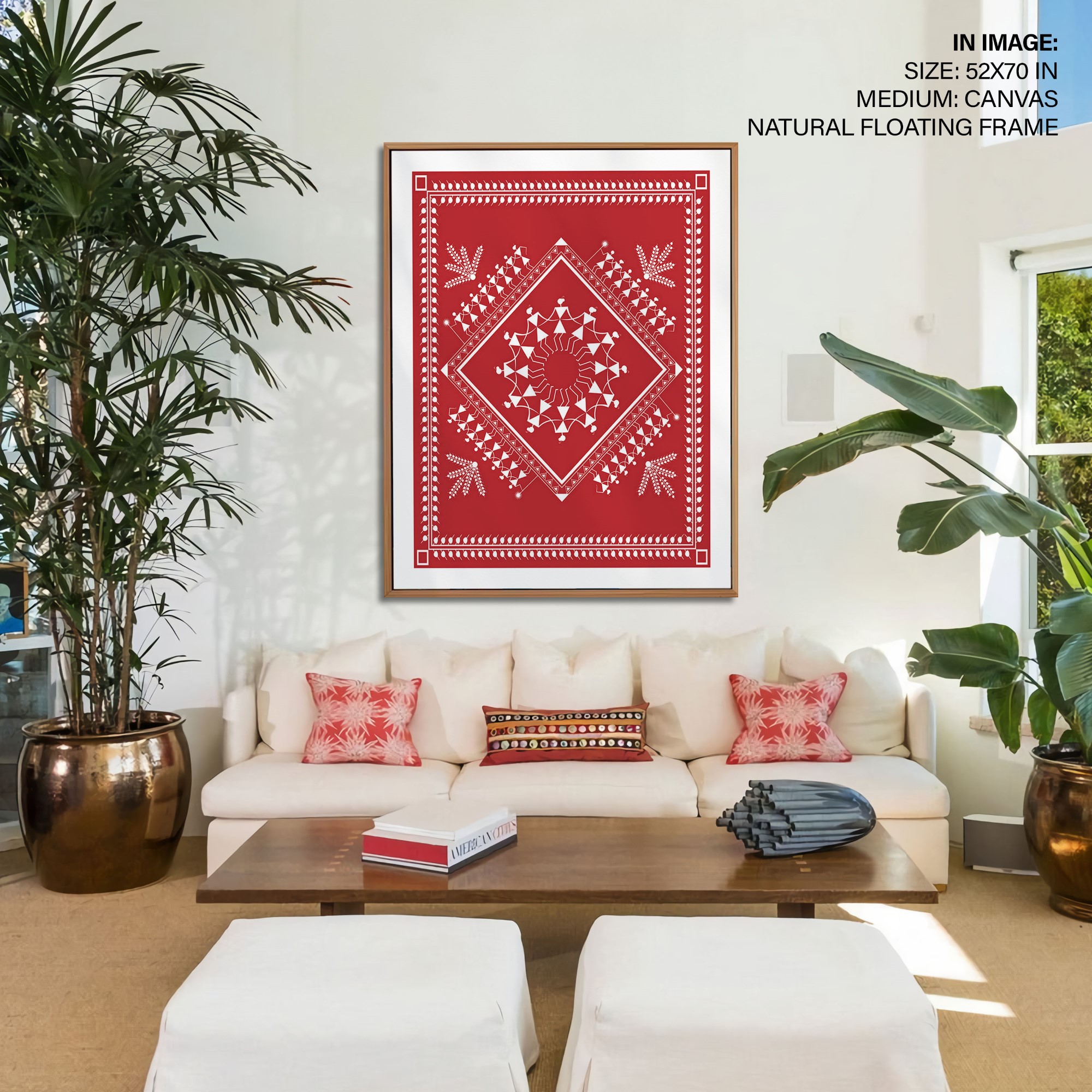
Warli comes from the tribal belt of Maharashtra, built in white rice paste on a mud-red ground from circles, triangles and lines standing in for the human figure, farming and the harvest dance — the plainest of the four to explain, and the easiest to defend to a mixed audience. Browse the full Warli-by-design range, with a few pieces further down this page.
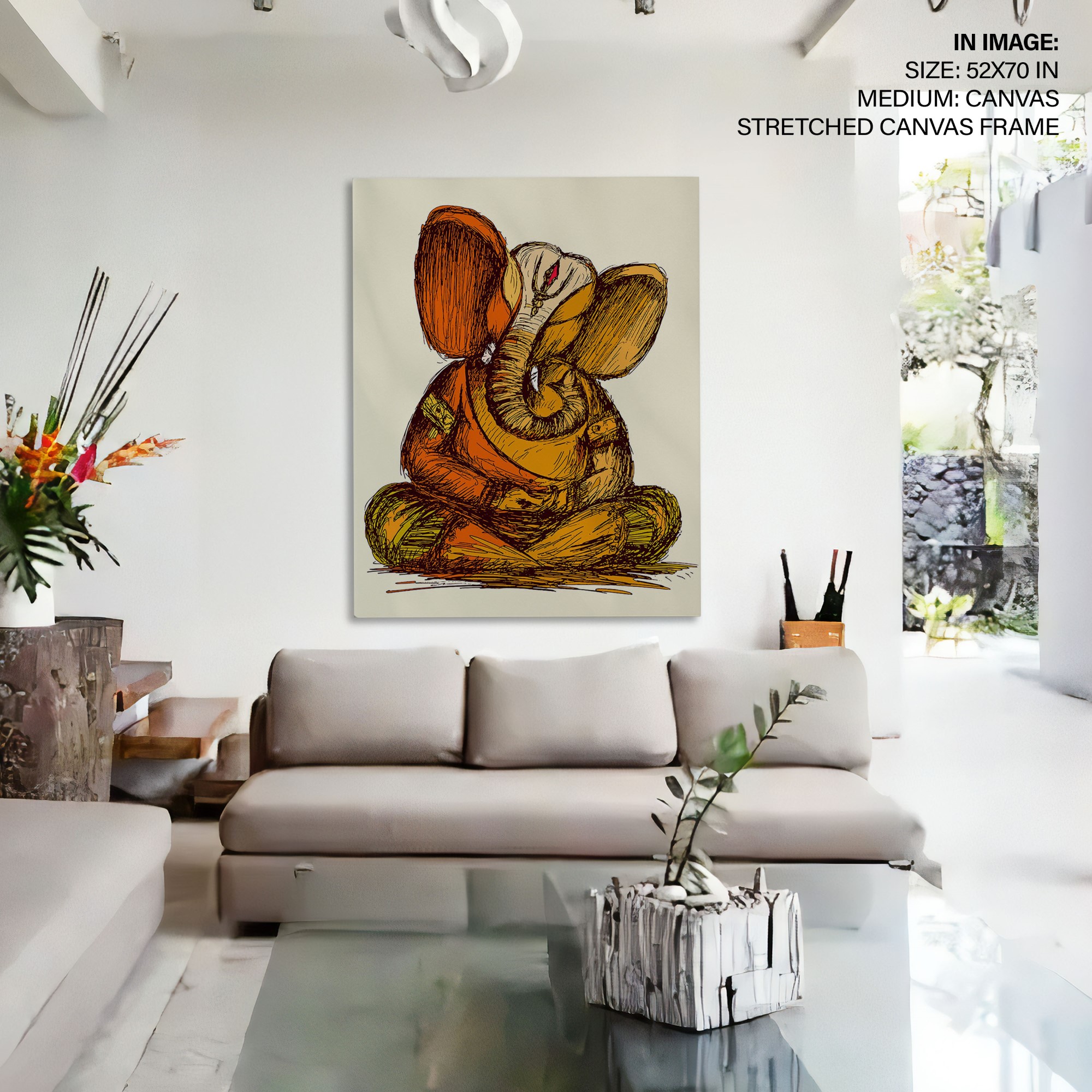
Gond comes from the Gond communities of Madhya Pradesh, built from tight dot-and-line strokes filling the outline of an animal, tree or figure — it photographs well on stage because the detail holds from the back row. Browse the Gond collection.
Pattachitra comes from Odisha and West Bengal, painted on treated cloth or palm leaf in a narrative style telling the Jagannath and Krishna stories panel by panel — the most overtly devotional of the four, worth a second look before a mixed-faith audience, more on that below. See the Pattachitra-by-design range.
Raja Ravi Varma and Indian miniature
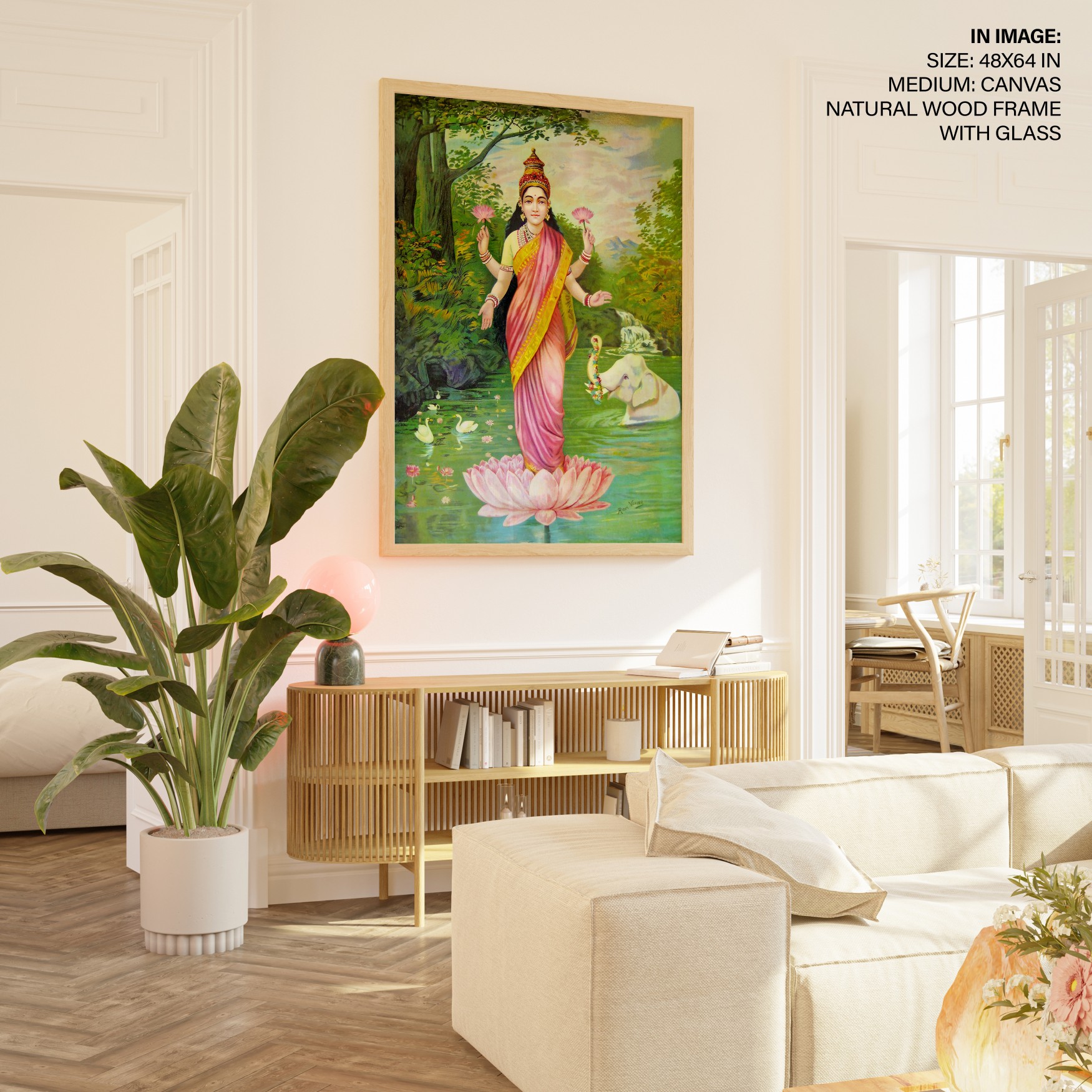
Raja Ravi Varma’s paintings, and Indian miniature more broadly, read differently to an older or classically-minded audience than the folk traditions above. Ravi Varma popularised mythological genre painting in the late nineteenth century — Saraswati, Lakshmi, scenes from the Ramayana and Mahabharata in an academic, oil-painting style most Indians over fifty grew up seeing in calendars and school textbooks. Handing this to a retired vice-chancellor signals you know the difference between decorative art and the canon they were raised on. Indian miniature painting carries similar weight without the mythological subject, useful where the room is mixed-faith. Browse the Raja Ravi Varma range — a few pieces for a formal chief guest are further down this page.
Subjects to be careful with
Three things are worth checking before you commit. Devotional imagery — Pattachitra especially, and anything built around a specific deity — reads differently in a mixed-faith audience than a temple committee meeting; where you’re unsure of the room, a landscape or non-devotional Madhubani or Warli piece is the safer default. A motif specific to one region can feel arbitrary outside it — Kalamkari sits naturally at an event in Andhra Pradesh and out of place in Punjab, unless chosen deliberately to represent that region. And resist choosing the piece you like best: a memento for guests speaks for the institution, not the taste of whoever picked it.
For a design built around the institution’s own crest, that conversation starts with our custom work range — more on briefing that below.
The practical decisions that actually decide the order
Everything above decides what to give. This section decides how many, by when, and at what cost — the part that determines whether the order gets placed on time.
How many, and by when
Count the dais and the floor separately, then add a buffer. The dais list is usually fixed weeks out: chief guest, guests of honour, speakers, senior staff. The floor list — delegates, attendees, alumni — keeps moving right up to the day. Order the dais quantity as known, and add roughly ten percent to the floor quantity for last-week additions. Then work backwards from the event date: framing and packing take real time, so the order date is the event date minus that full window — not the date someone remembers to ask.
Budget per head, honestly
The number changes sharply above roughly a hundred units. A single chief-guest piece sits in a different bracket than two hundred identical delegate pieces, where per-unit cost drops as the run gets longer. Rather than working off a figure seen elsewhere, tell us your format, size and headcount and we’ll price it against the order you’re actually placing.
If you want a name, citation or crest included
Some institutions want the recipient’s name, designation, the event and the date noted on the piece, or the institution’s crest reproduced on it. Don’t assume this is a standard, off-the-shelf add-on — raise it at enquiry so we can confirm whether it’s possible for your chosen format, size and quantity, and what it does to your timeline. If a crest needs to appear, send it as a vector file or a high-resolution image, not a photo of a printed letterhead, so we can judge whether it will reproduce cleanly. Keep any wording short — name, designation, the event and the date is plenty — and confirm it with us in writing before the order goes into production. A longer citation usually reads better on a certificate handed over alongside the piece than crammed onto it.
Packing, and the hand-baggage problem
Specify it at enquiry — it decides whether the memento survives the flight home. A piece that can’t fit in cabin baggage gets checked, and a checked frame might not arrive intact. If recipients are flying out the same day, say so when you enquire, and we’ll talk through size, protective packing, and whether shipping direct to the venue makes more sense than handing everything over in person — decide this before the order is placed, not after.
How to brief us
The fastest way to get an accurate quote is one message, not back and forth. Tell us: how many mementos and in which tiers, your event date, a rough budget per tier, whether you want a name, citation or crest included, and the delivery city. We’ll come back with format options, a real per-unit price, and a timeline against your date — including whether the personalisation you want is workable for your format.
Message us on WhatsApp, call +91 79868 38784 and ask for Extension 11 (Bulk Inquiries, B2B / Trade), email hello@bestofbharat.com, or find all three on our Contact page. We don’t run a separate enquiry form on the site — one of these three is genuinely the fastest way to reach us.
A few pieces to start from
Browsing before you enquire helps you brief us faster. A Warli range that works well for a mixed, non-devotional audience:
Madhubani’s deeper inventory, useful for a chief-guest piece:
And Raja Ravi Varma pieces for a more formal, classically-minded chief guest:
Common questions
What is a good memento for guests at an event?
Choose by who’s receiving it, not by what’s cheapest at your headcount. For most tiers, a framed traditional artwork — Madhubani, Warli, or a Raja Ravi Varma piece — works cleanly, with a name or citation added if you’ve confirmed that’s possible with us in advance. For a chief guest specifically, pick one distinctive piece rather than a bigger version of the group gift.
What should you give a guest speaker?
Guest speakers are usually flying in and out the same day, so the memento has to fit in cabin baggage without an argument at security. A flat framed piece around A3 size, packed flat, travels cleanly and reads as a proper gift rather than something grabbed at the airport.
What is a good memento for a chief guest?
One piece, not a bigger version of what everyone else receives. It gets presented on stage and photographed, and can carry the recipient’s name, designation and the date if you’ve arranged that with us ahead of time. A framed traditional painting does this correctly; a trophy or shield handles the presentation moment but gets left behind afterward.
How much should a memento cost?
It depends heavily on quantity — a single chief-guest piece sits in a different bracket than two hundred identical delegate pieces, where the per-unit number falls sharply. Rather than working off a figure seen elsewhere, tell us your format, size and headcount and we’ll quote against the real order.
Is a painting a good memento?
Yes, for most recipient tiers — it goes on a wall and doesn’t need a cupboard the way a trophy does. It’s the wrong choice mainly where the audience is strictly mixed-faith and every option on the table reads as devotional, which is rarer than organisers usually assume.
What can we give instead of a trophy?
A framed traditional painting is the most direct swap — it goes on a wall instead of into a cupboard. For a formal audience, a Raja Ravi Varma or miniature piece signals a cultural literacy a trophy shape can’t. If the ceremonial handover still matters, keep the shawl and give the framed piece as the actual keepsake.
How far in advance should mementos be ordered?
Order as soon as your recipient list and event date are confirmed — framing and any personalisation work take real production time. Count backwards from the event date by your full production and shipping window, not from the date someone remembers to ask, and confirm the exact timeline for your quantity at enquiry.
Can a memento carry our institution’s emblem?
Ask us at enquiry stage — send the crest as a vector file or high-resolution image if you have one, not a photograph of a printed letterhead. Whether it can be reproduced cleanly on your chosen format is something we’ll confirm with you before the order goes into production, so raise it early rather than after you’ve placed the order.
What do you give foreign delegates as a memento?
The gift’s job changes slightly — it needs to represent India to someone who isn’t from here, not just mark the event. A traditional piece with a real, nameable region and technique behind it does that better than anything generic.
Something they take home and keep
The test that runs through every choice on this page is simple: will this still be on a wall in five years, or in a box the next time someone moves house. Choose by who’s receiving it, choose a format that survives the trip home, and choose art with a real story behind it — that’s what turns a memento for guests into something actually kept. Tell us your quantity, tiers and event date on WhatsApp, on Extension 11 at +91 79868 38784, or at hello@bestofbharat.com, and we’ll quote against your real order.