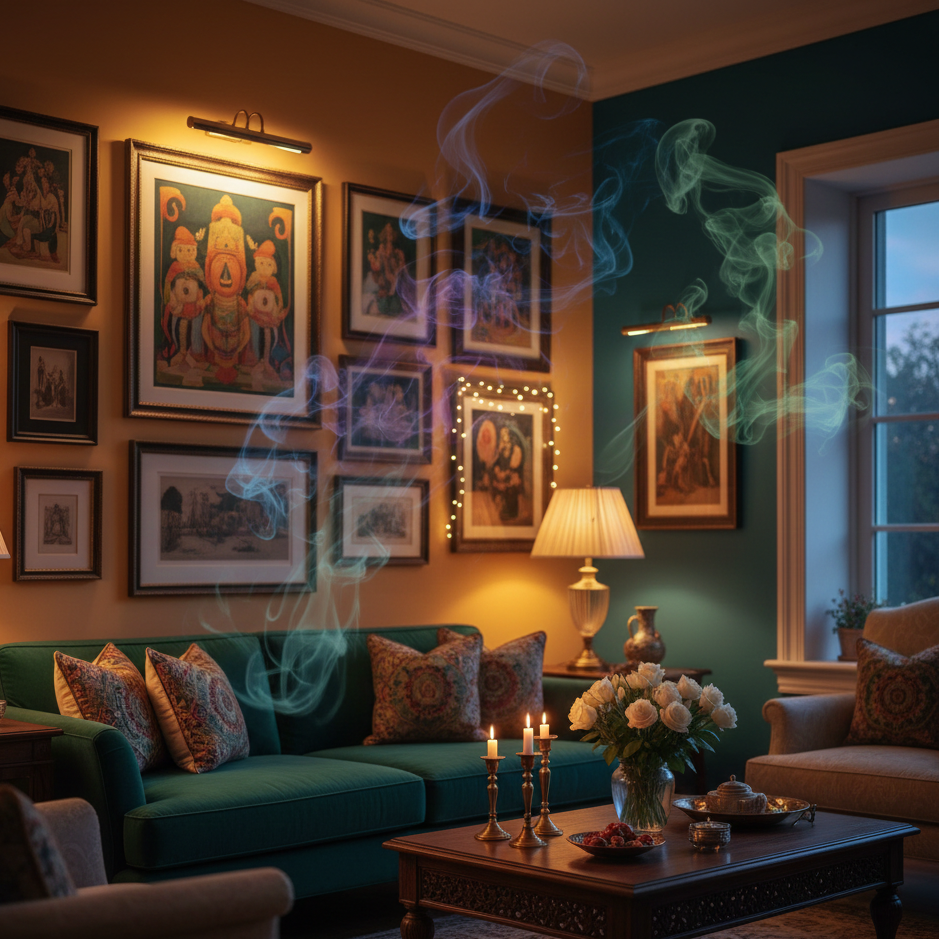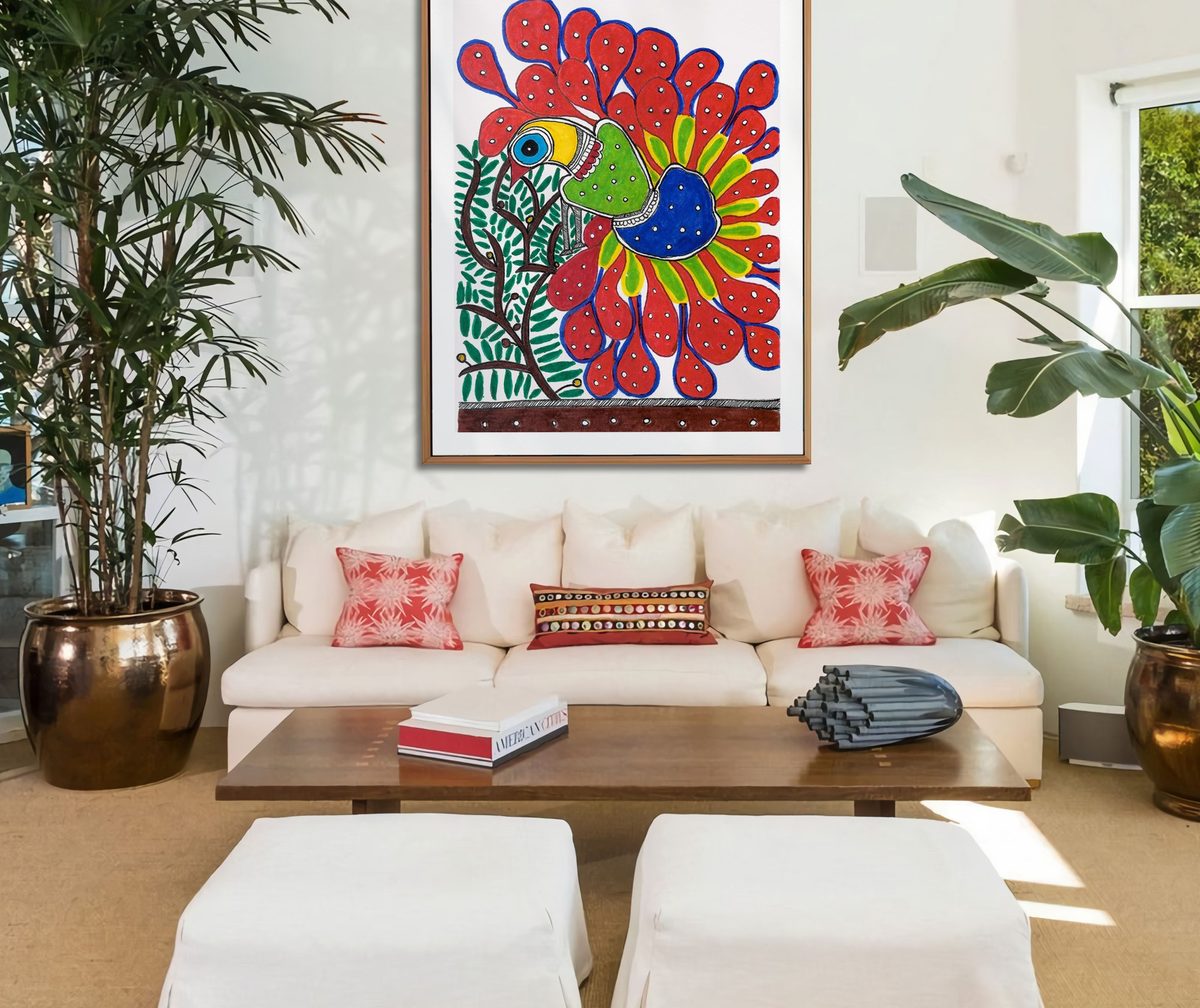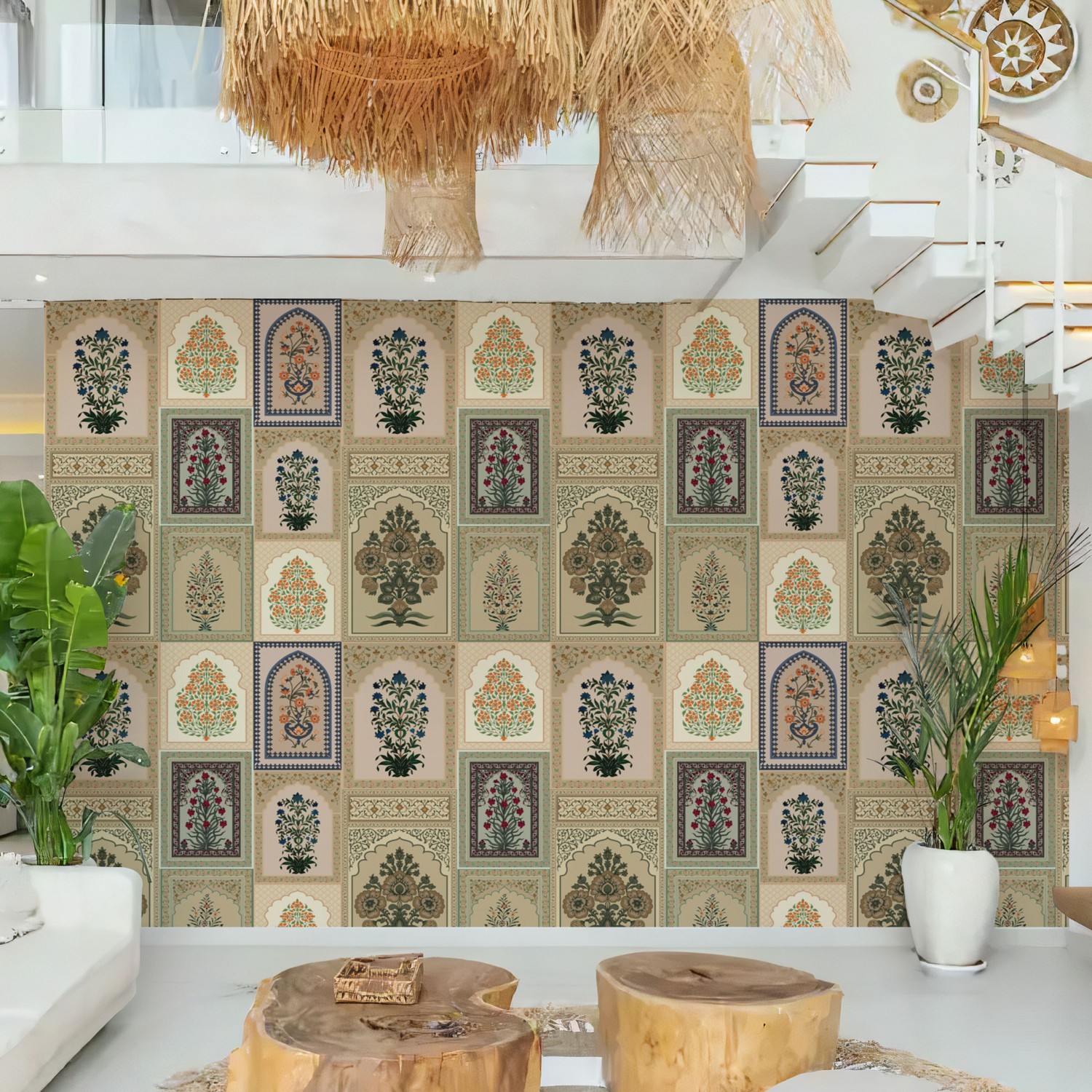
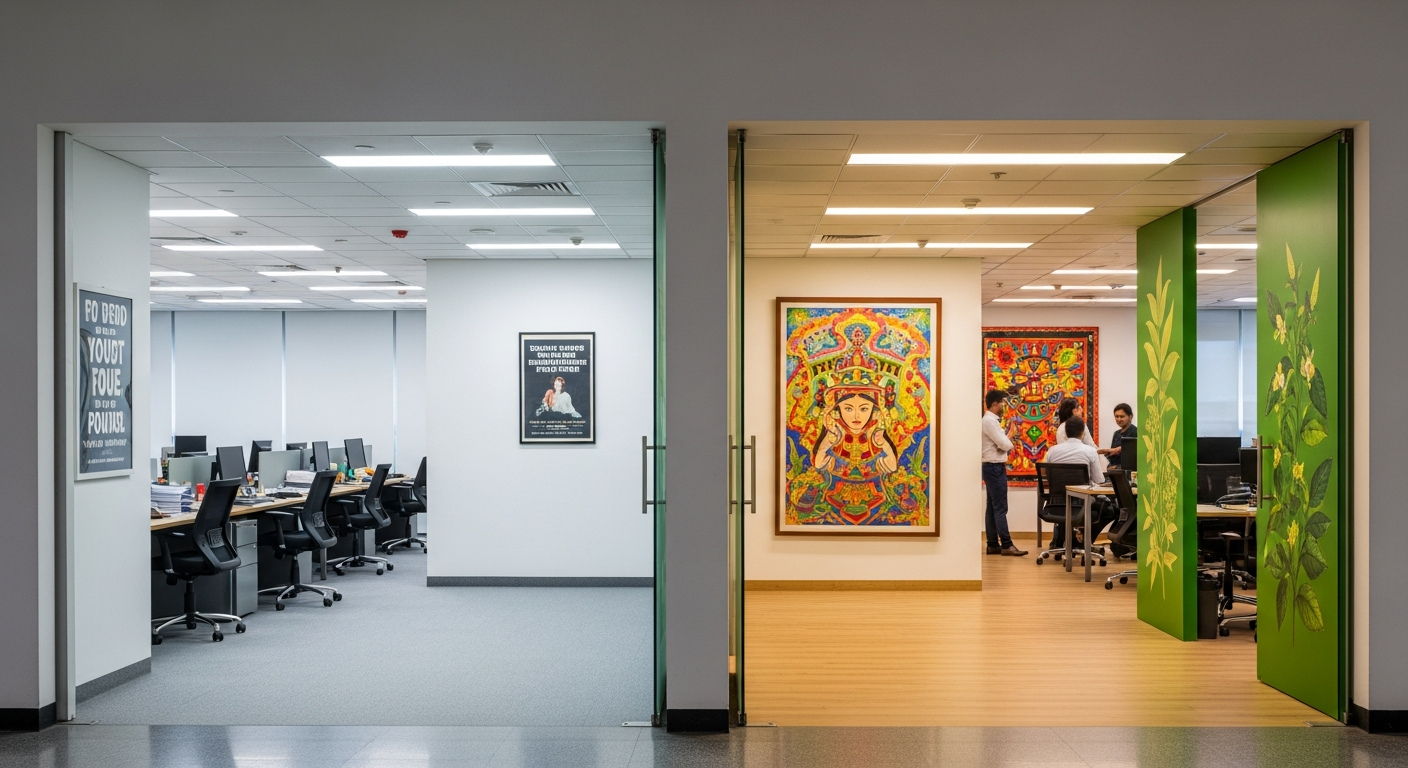
Two offices. Same floor of a building in Andheri. Same rent. Same furniture budget.
OFFICE A — White walls, tube lights, a dusty "TEAMWORK" poster nobody's looked at since 2019. People eat lunch at their desks and leave at 6:01.
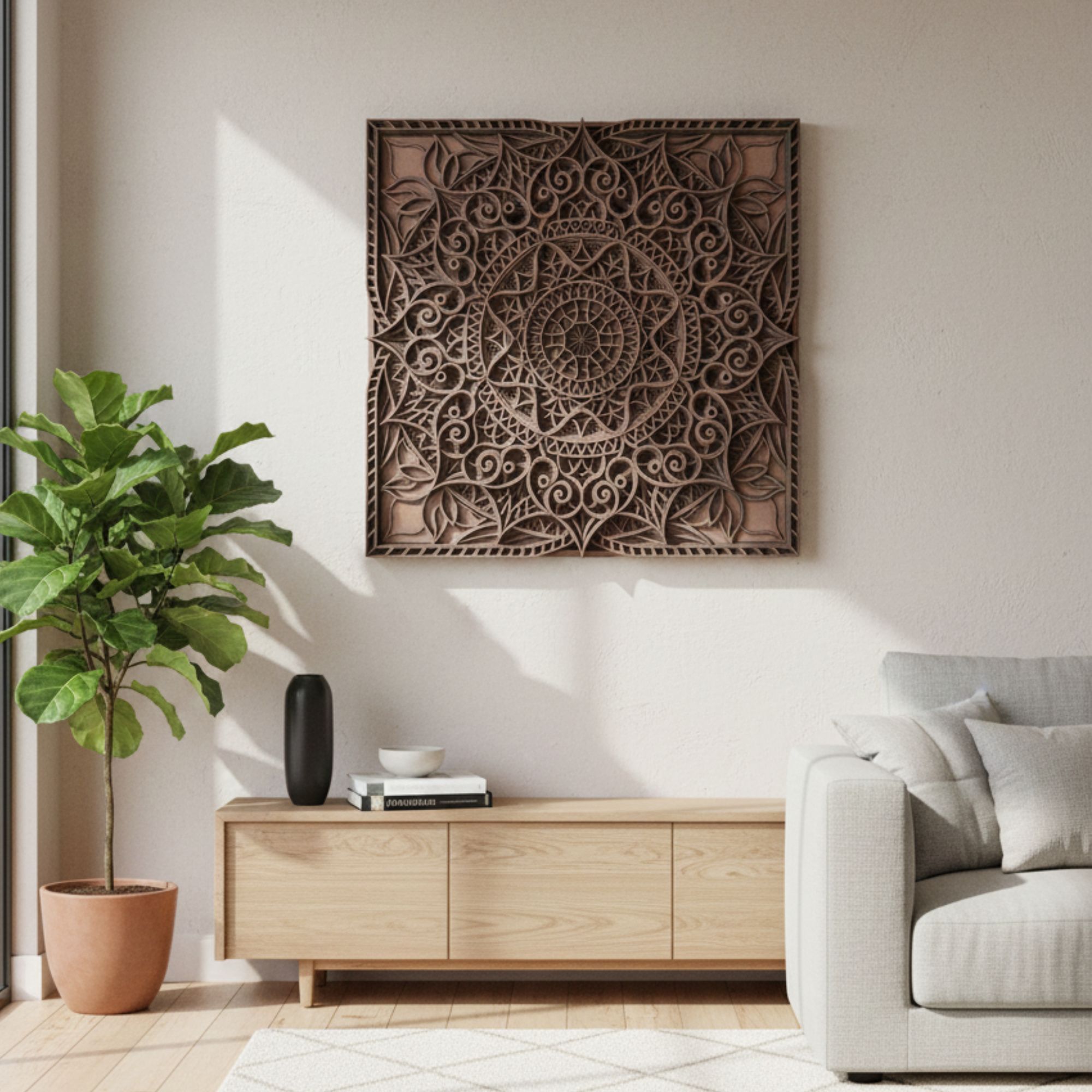
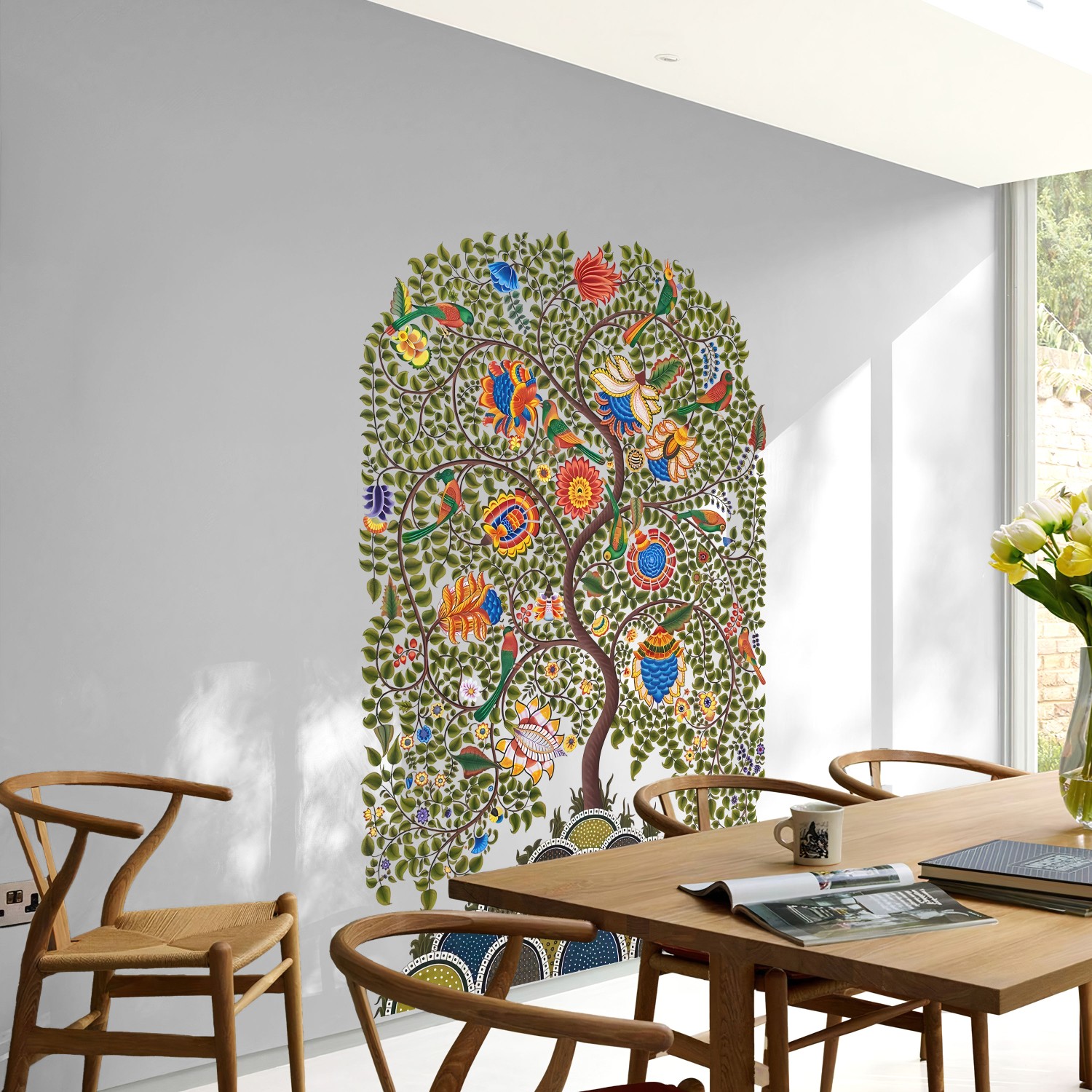
OFFICE B — A carved wooden Tree of Life sculpture in the reception that catches every visitor's eye. A botanical wallpaper accent wall down the corridor that makes the walk to the meeting room feel like a garden. A bright, colourful folk art canvas in the break room. Peel-off floral wall stickers in the phone booths. Patterned cushions on the break room sofa. People linger. New hires comment on it in their first week.
By every measure that matters — stress, output, retention — Office B is outperforming Office A. Same people. Some of them used to work next door.
The difference started with one person. The office manager — let's call her Priya — who got tired of hearing "this place feels so dead" in every exit interview. She didn't have a design budget or approval from leadership. She had a hunch, a few thousand rupees from the office supplies line item, and something to prove.
What she did to the walls — a mix of art, wallpaper, wall sculptures, and peel-off stickers that cost less than a month of office chai — changed everything. But not in the way you'd expect.
The Office Productivity Experiment That Changed Everything
Priya didn't start with a gut feeling. She started with a Google search at 11 pm on a Tuesday — the kind of search you do when you're tired of being the only one who cares about a problem nobody takes seriously.
What she found was a psychologist named Dr. Craig Knight at the University of Exeter, who'd asked the same question she had: does the look of an office actually matter, or do people just say it does?
He set up identical workspaces — same desks, same chairs, same tasks — and randomly assigned different volunteers to each. One group got bare, functional offices. Another got a room the researchers had decorated with plants and pictures. A third got to choose their own arrangement. A fourth chose, then watched an experimenter rearrange it.
The bare group performed worst. No surprise. But the gap between "bare" and "decorated" wasn't small — and that's what gave Priya her ammunition.
Two honest caveats, because they change what you should take from this. The "art" in the study was photographs of plants printed on canvas, not artwork you would buy. And the researchers put the larger gain down to having a say rather than to the amount of decoration: among people who arranged the room themselves, those who chose a sparse layout did no worse than those who used everything on offer. The lesson is about participation, not about filling walls.
Read that again. Same people. Same work. Same hours. A different-looking room — and office productivity jumped by almost a third. That's the difference between finishing a project on Thursday or pushing it to next Monday.
The British Council for Offices ran a survey across thousands of workplaces and confirmed it at scale: 6 out of 10 workers said visual elements like artwork made their office more welcoming. Half said it directly improved how much they got done.
For Priya, this was the moment the hunch turned into a plan. Not because she suddenly had budget — she didn't. But because now she had numbers. Numbers that someone in leadership couldn't wave away with "that's just a nice-to-have."
Office Stress Relief: What Bare Walls Are Actually Doing to Your Team
When you're stressed, your body releases a hormone that doctors can measure in your saliva. Think of it as your body's "stress meter" — the higher it goes, the more wound up you are. It's the same thing that spikes when you're stuck in traffic, fighting a deadline, or sitting through a meeting that should have been an email.
Researchers at the University of Westminster decided to test what happens to that stress meter when people spend time around art. They measured saliva samples before and after 35–40 minutes in a gallery setting.
There is early evidence that time spent with art shows up in the body's stress signals. It is worth being precise about how early.
The researchers also note they cannot separate the paintings from the gallery around them — the light, the architecture, the quiet. An earlier and much-quoted study of London office workers on a lunchtime gallery visit found self-reported stress and salivary cortisol both fell, but it had 25 participants and no control group at all (Clow & Fredhoi, 2006).
Now here's the part that should bother you if you run an office.
That stress response isn't a one-time thing. It's happening every single day your team sits in a bare, sterile room. Five days a week. Fifty weeks a year. The stress meter stays high. The inflammation builds. Focus drops. People burn out faster. They take more sick days. They leave. And the irony is that office stress relief was hanging on a wall — they just never put anything on it.
And the whole time, the fix was literally staring at them from a blank wall.
This is the data Priya screenshot and put into a one-page email to her director. Subject line: "The cheapest thing we're not doing." She didn't ask for a design overhaul. She asked for permission to spend Rs. 15,000 on three walls — a wallpaper accent wall in the corridor, a canvas in the break room, and wall stickers in the phone booths. That's it. A low-risk experiment with research behind it.
If you're reading this and thinking "I'd need to convince my boss first" — that email is basically what you need. The numbers above are your pitch. We'll give you the full version later.
The Three Office Wall Decor Strategies That Changed Office B
Priya didn't hire an interior designer. She didn't repaint. She made three deliberate choices — mixing wall art, wallpaper, sculptures, and stickers — and each one works for a reason backed by research she'd already found.
1. Nature art where people need to focus
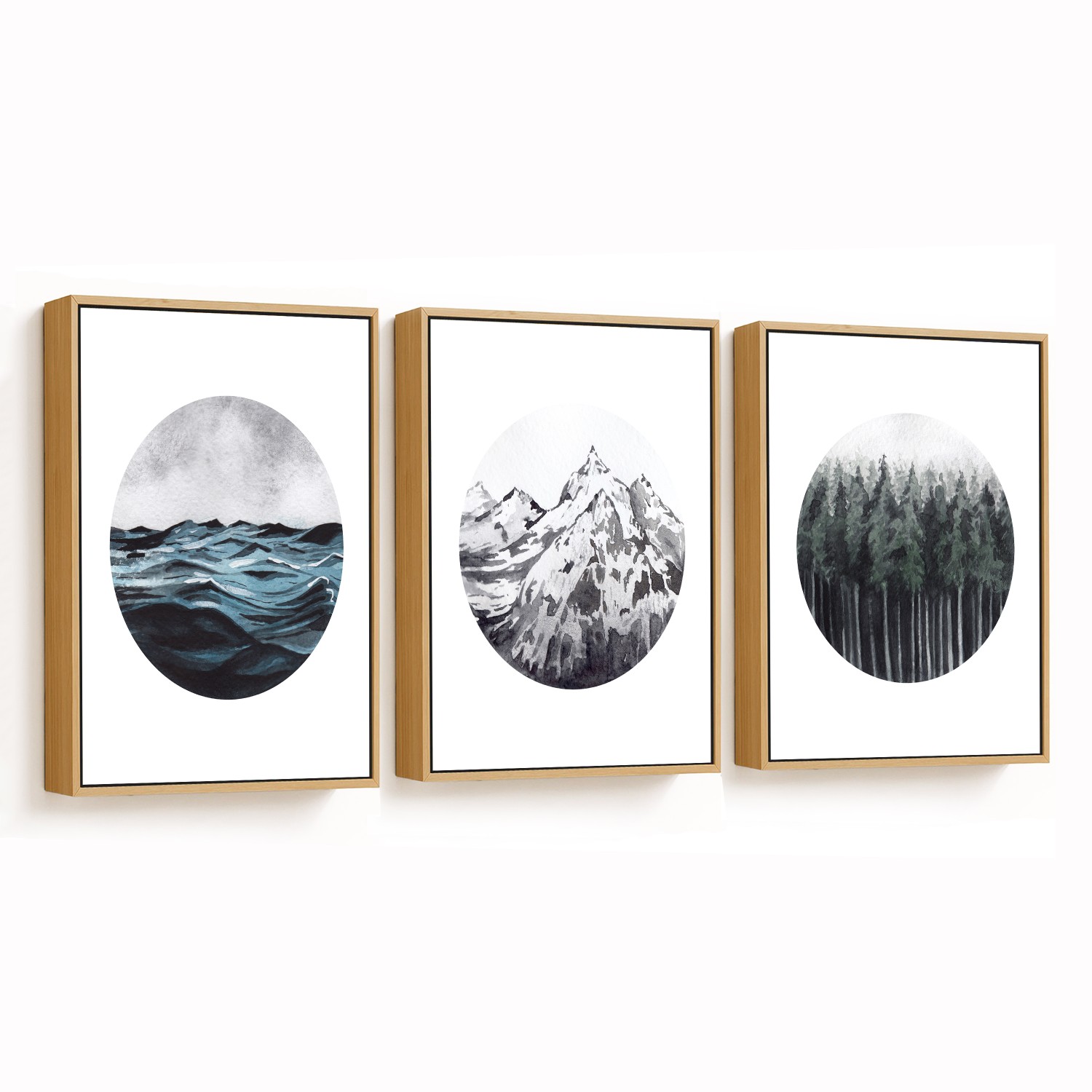
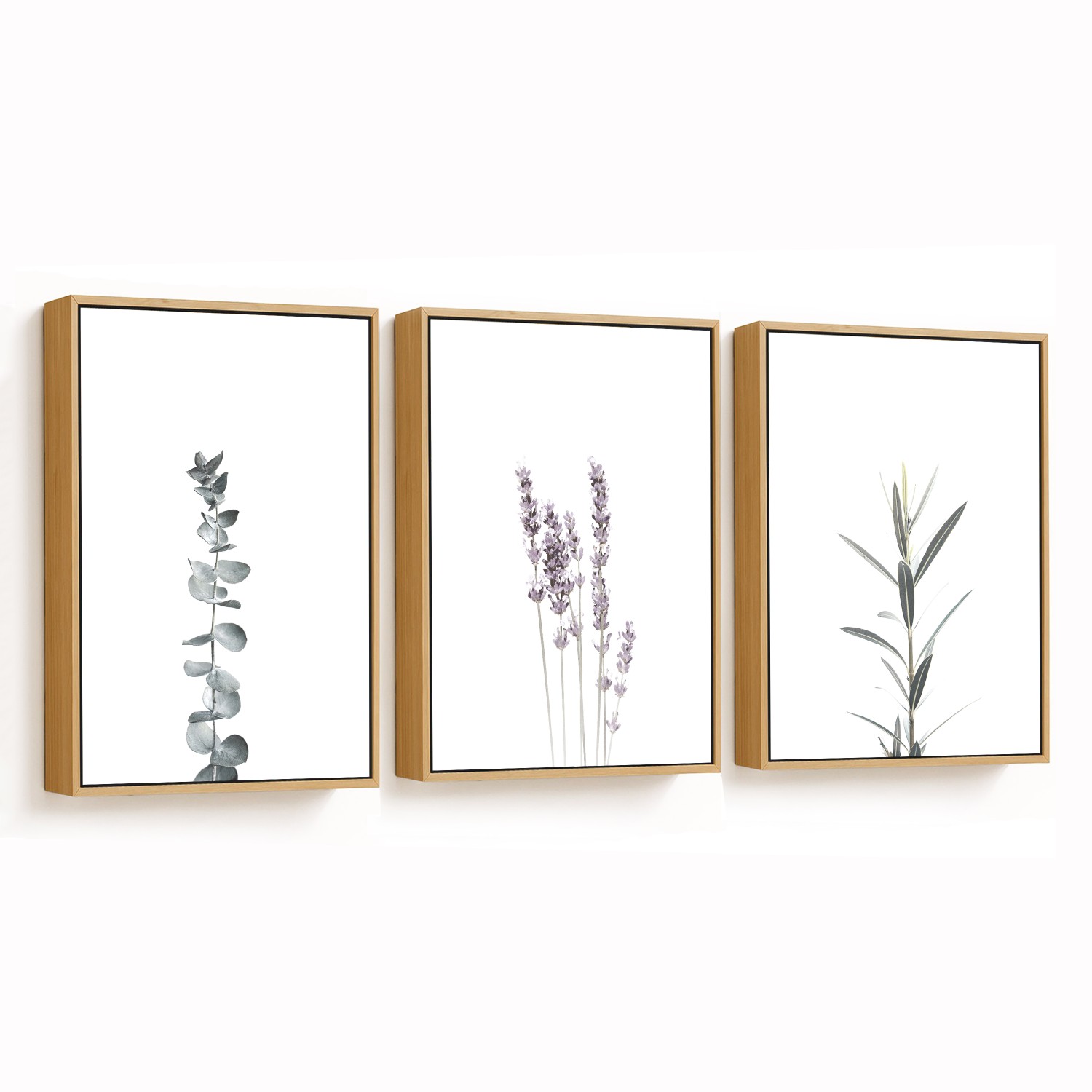
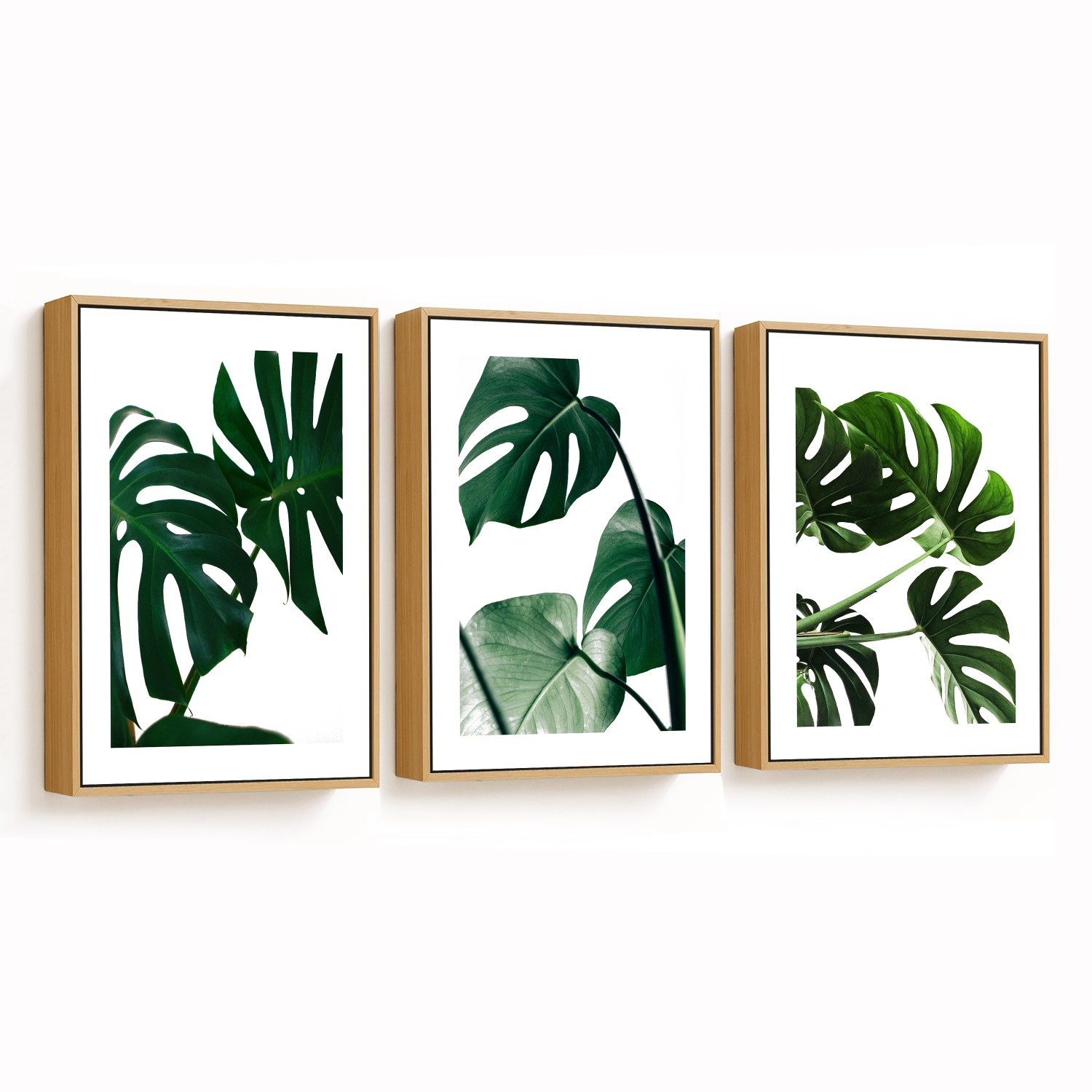
Priya's first purchase: a set of green botanical prints for the corridor between the workstations and the meeting rooms — the stretch everyone walks through six times a day. Not random — though the research here is thinner than it is usually made to sound. A 2021 BMJ Open scoping review of 14 studies on viewing artwork found two that compared nature images directly against abstract images, and in both, participants reported lower stress with the nature images (Law, Karulkar & Broadbent, 2021). One of those two ran in a simulated office with 210 students and reached statistical significance only among the male participants. Two studies, not a settled science — but they point the same way, and the downside of a green corridor is nil.
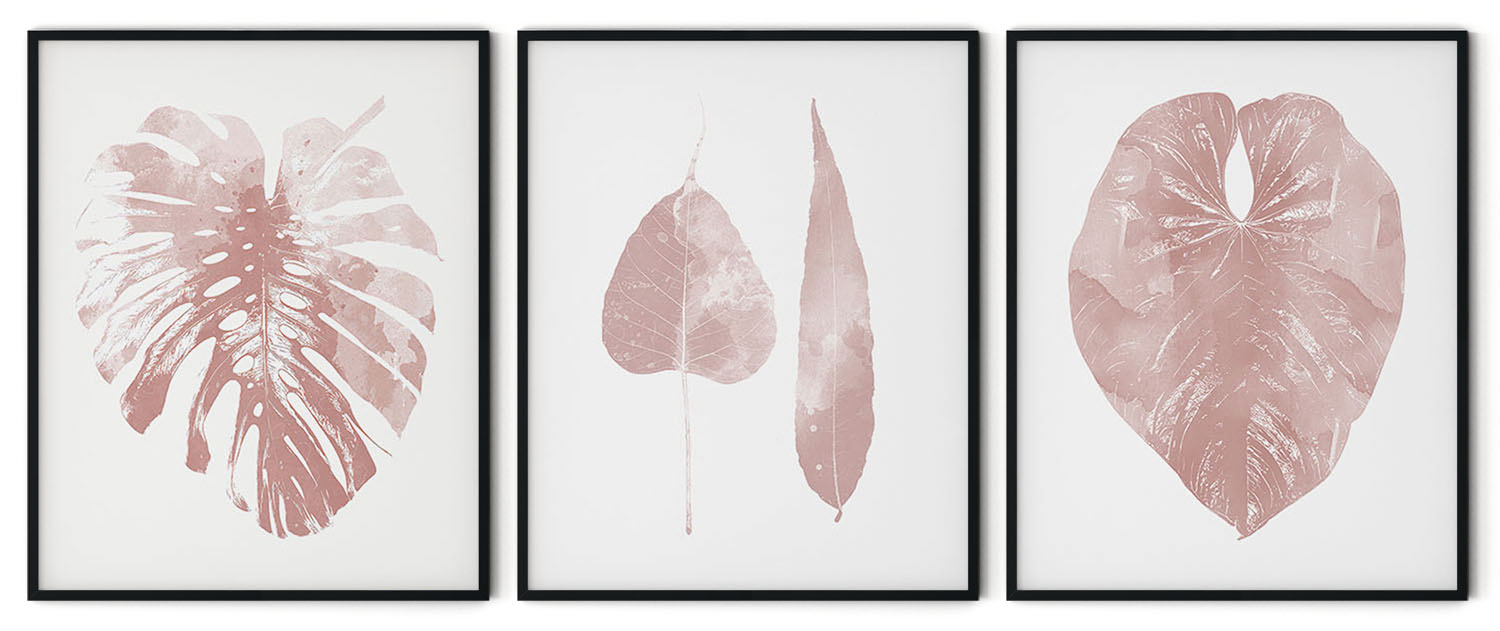
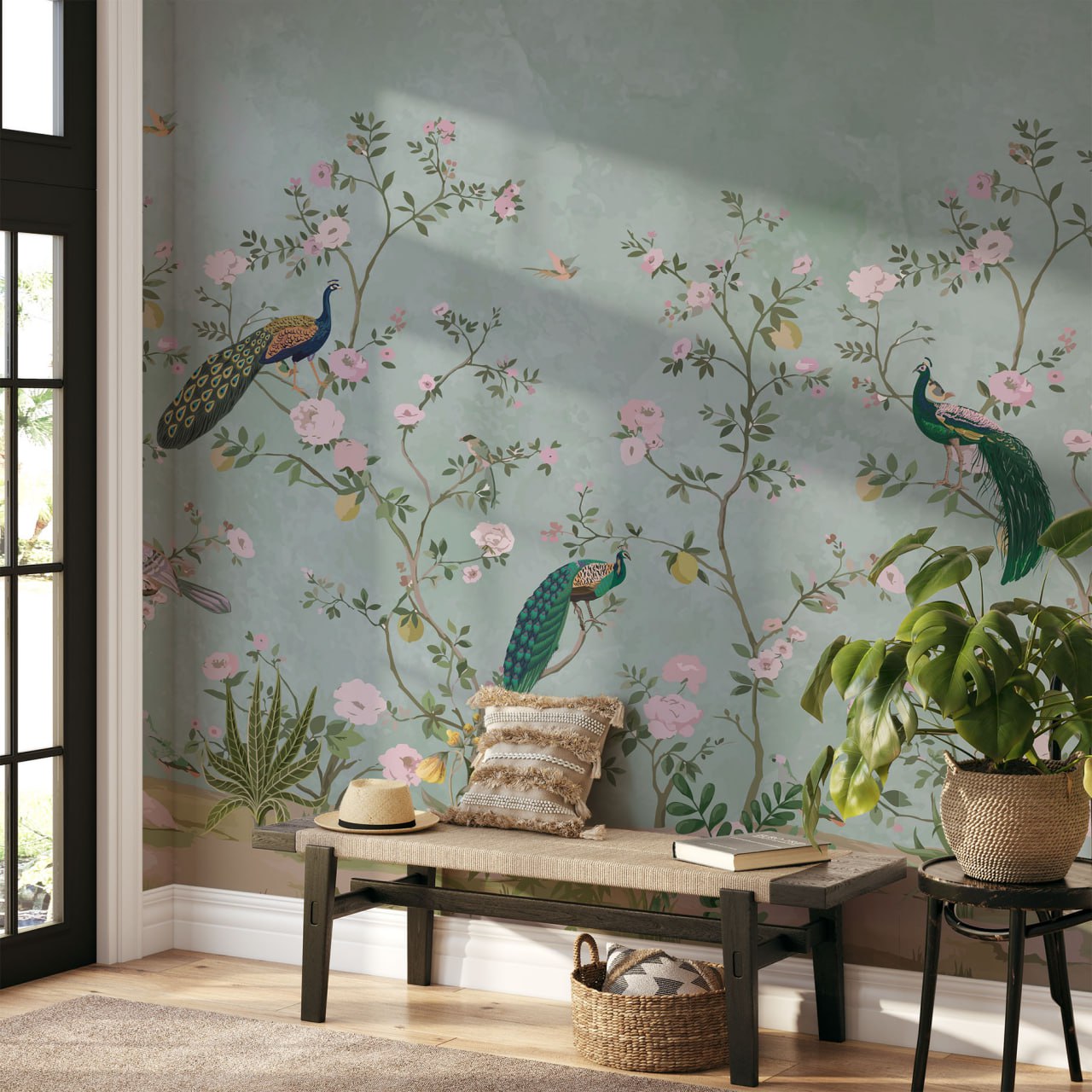
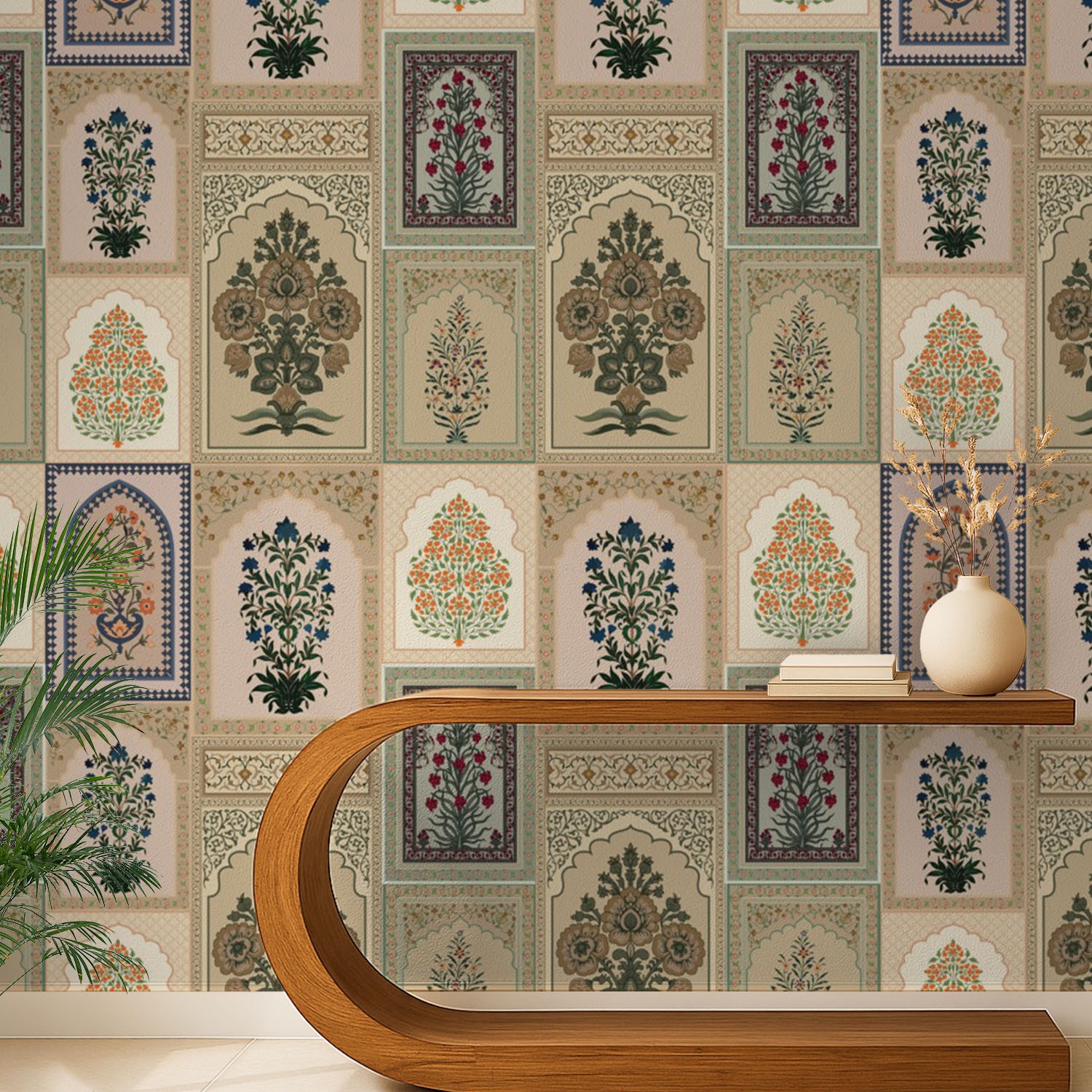
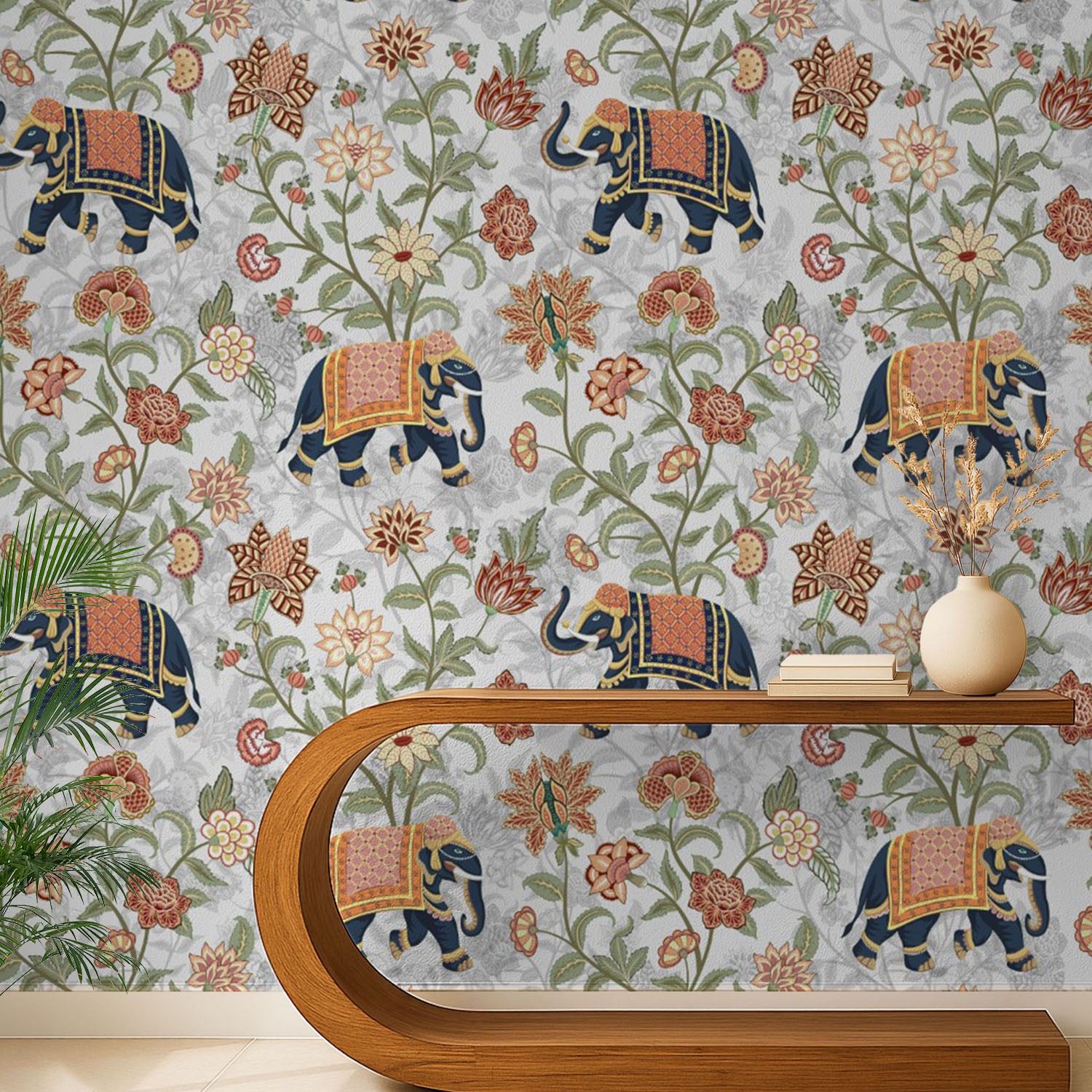
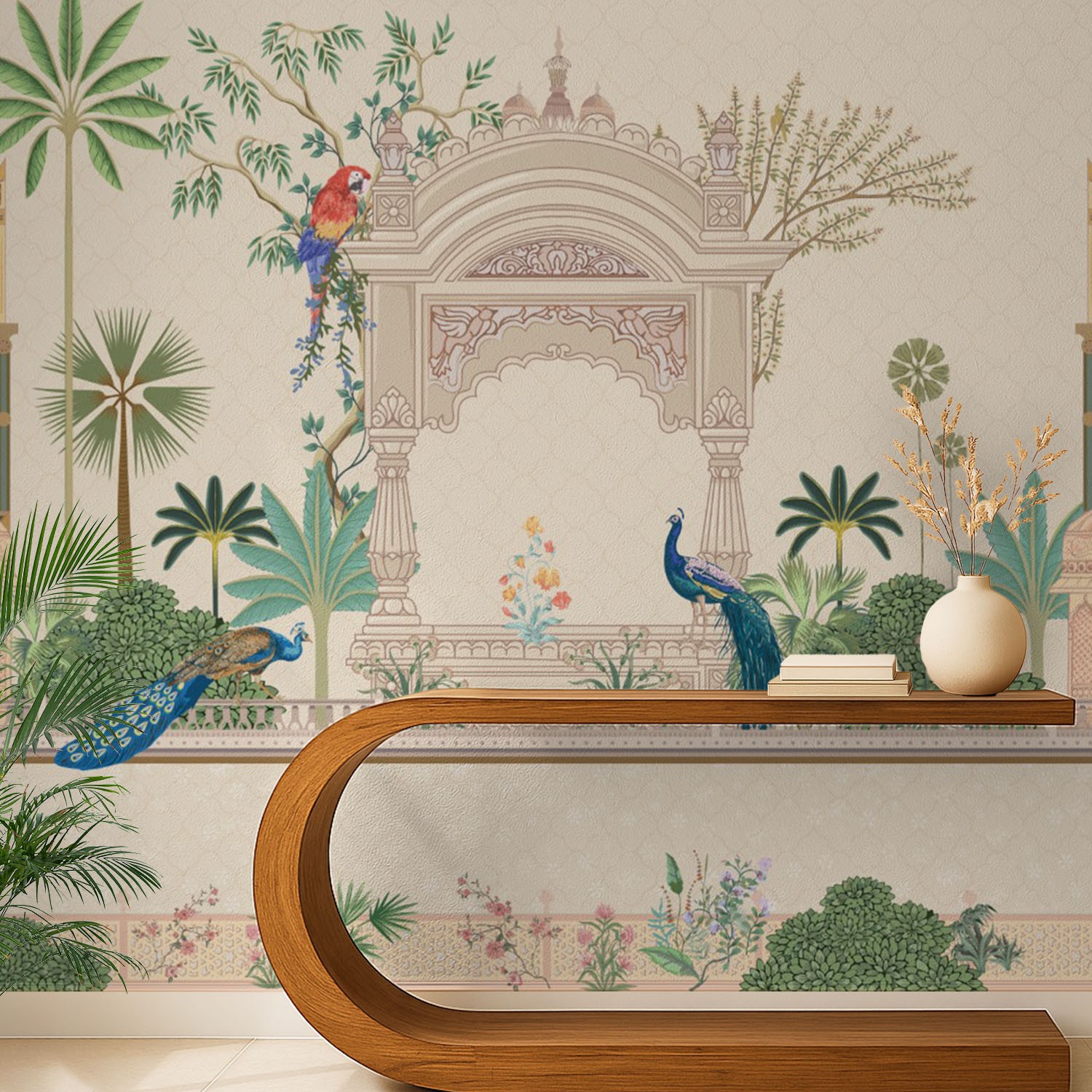
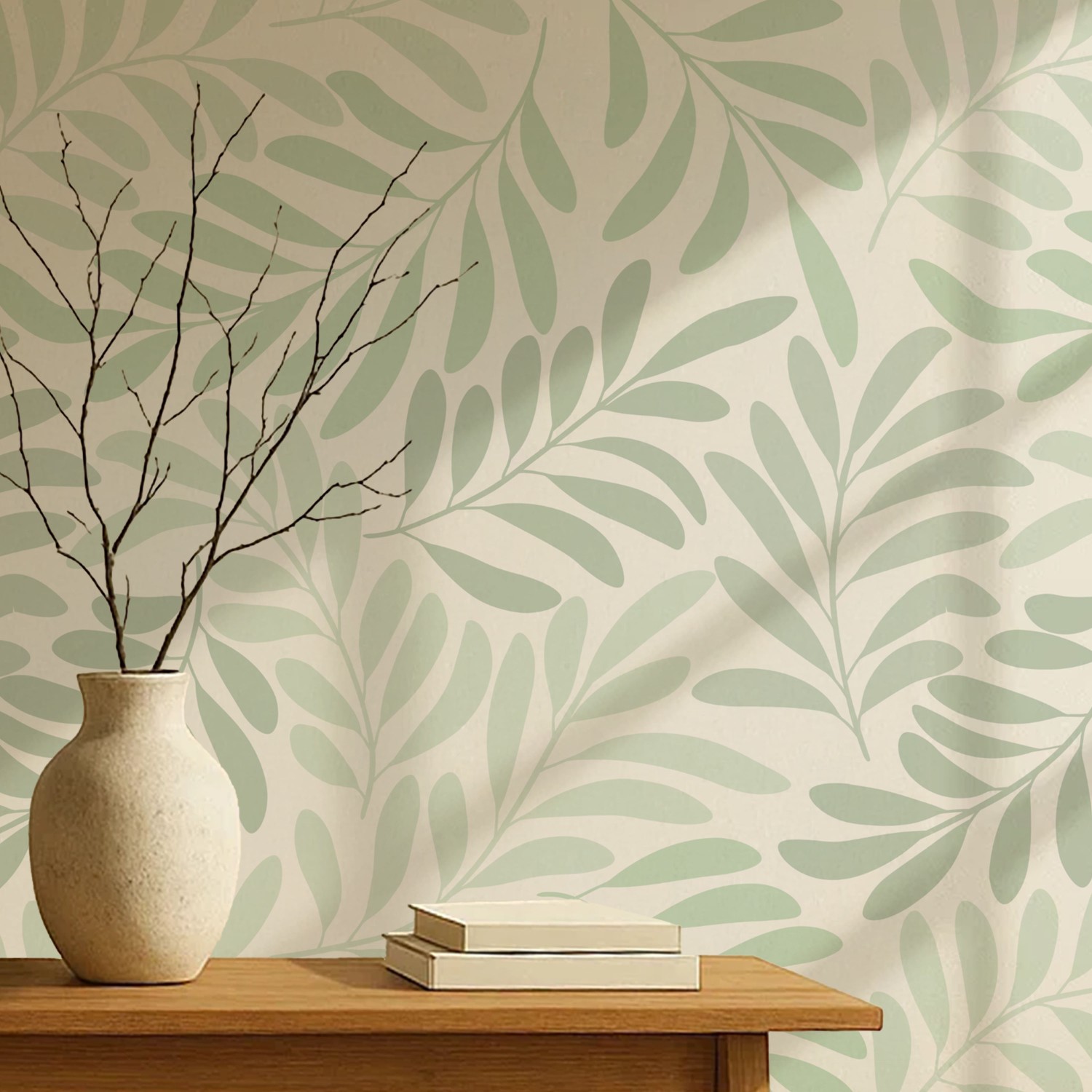
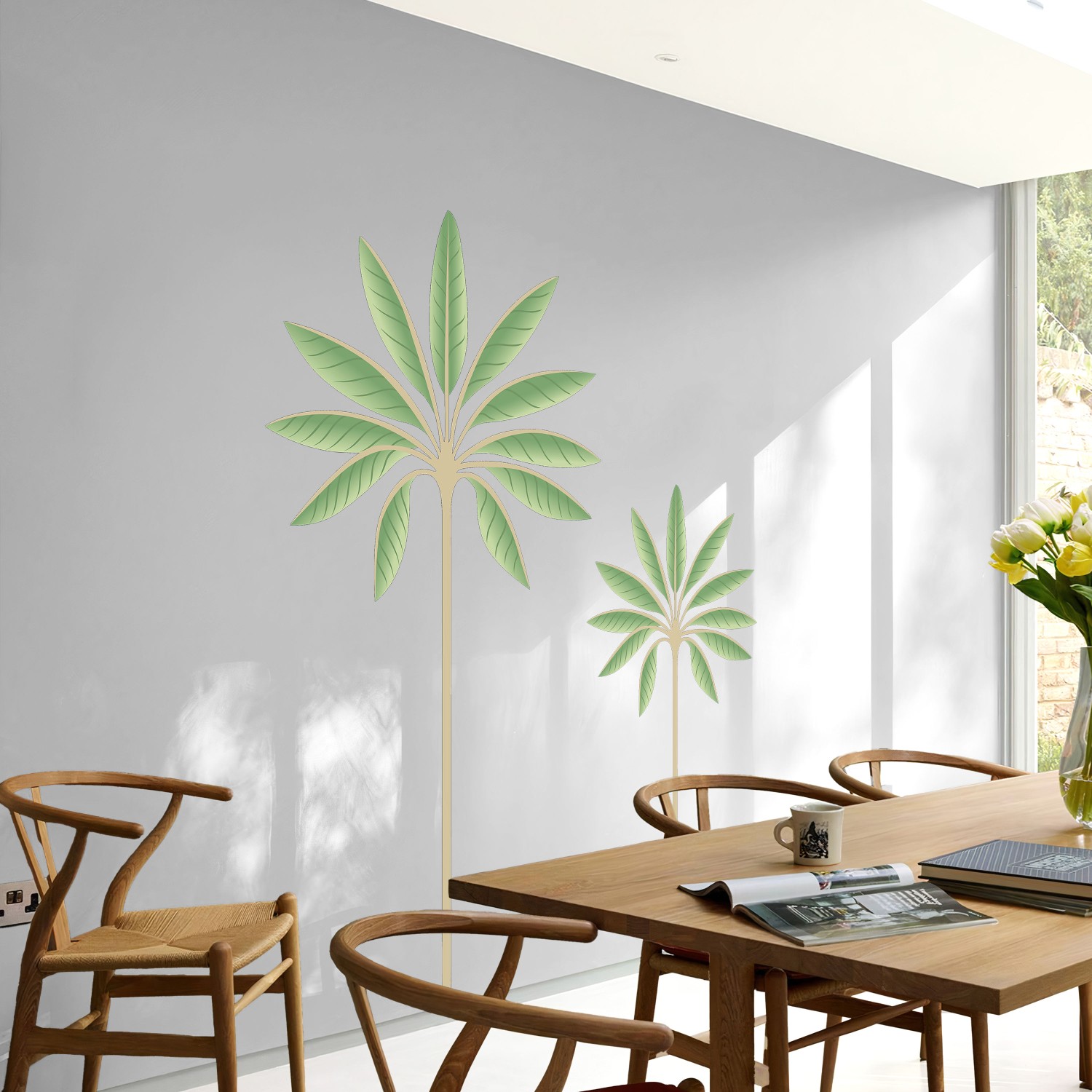
You don't need framed National Geographic photos. You don't even need frames at all. A botanical wallpaper on a single accent wall — lush green leaves, tropical patterns, soft florals — transforms an entire corridor without a single nail hole. Peel-and-stick options mean you can change it when the lease ends. A botanical wall decal sticker on a meeting room wall adds the same calming greenery with zero commitment. And yes, a classic framed botanical canvas or leaf-pattern print works beautifully too. The key is organic shapes and natural colours — however you get them onto the wall.
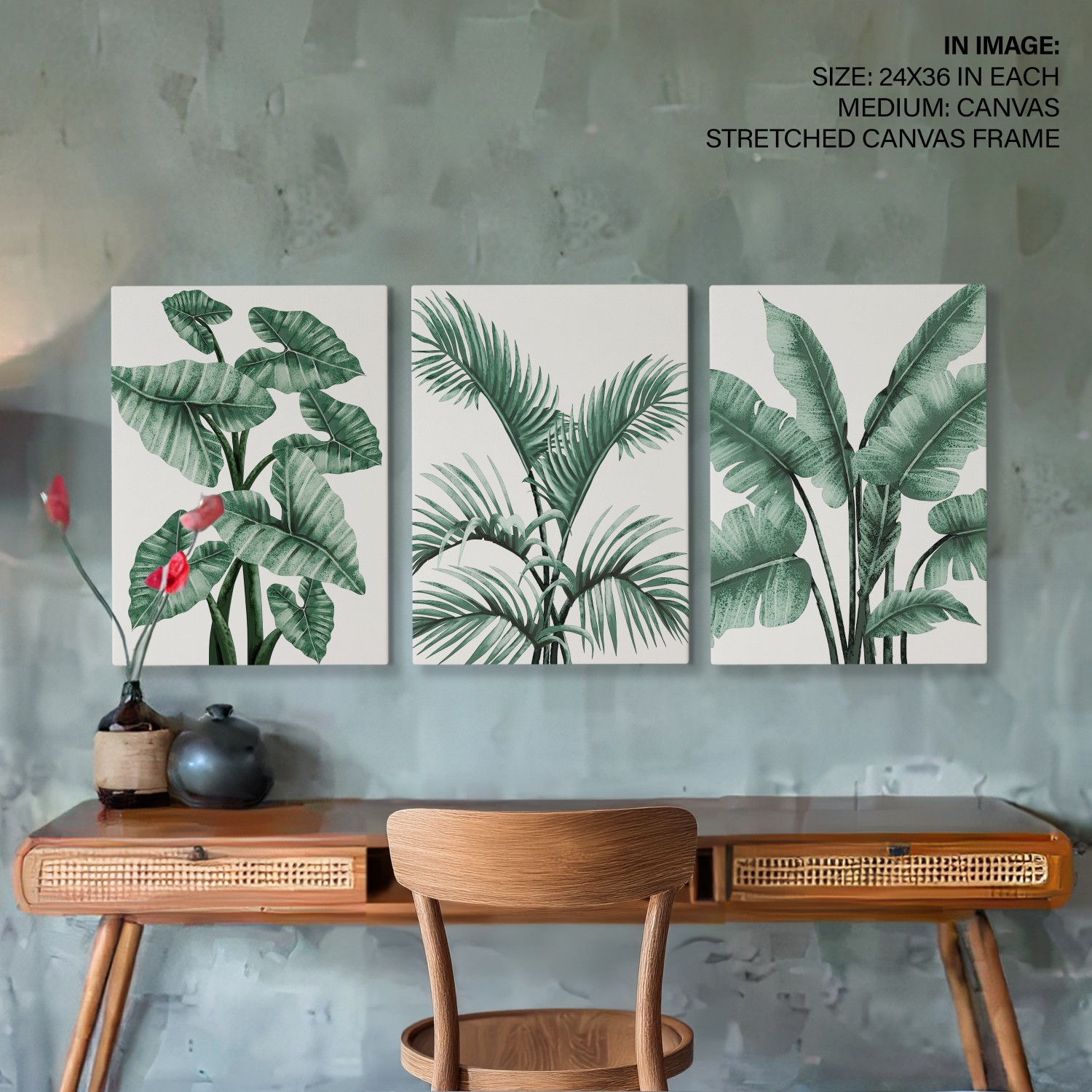
Corridors and shared walkways: a botanical wallpaper accent wall (from Rs. 99/sq ft) or a set of framed botanical prints. Workstations and cabins: smaller canvases (12×16 to 18×24) or nature wall stickers. Meeting rooms: one large landscape or botanical piece (24×36 or bigger). Mix formats — wallpaper on one wall, framed art on another.

2. Office colours for productivity — matched to each room's purpose
Here's something most people miss: the dominant colours in your office — walls, art, decor — are actively pushing your team's mood one way or the other. All day. Every day.
Colour is where workplace writing overreaches most, so here is what the evidence actually supports:
Two concrete results survive that review, and they are less tidy than the usual advice. In one experiment, office workers spent four consecutive days working in a white, a red, or a blue-green office; those in the white office made the most errors and those in the red office made the fewest (Kwallek, Soon & Lewis, 2007, n=90). And when researchers ran real team meetings in red, blue and neutral rooms, participants reported no difference in cohesion, wellbeing or productivity (Bakker et al., 2013, n=52). Treat colour as something that shapes how a room feels to the people in it, which is worth doing — not as a lever with a predictable output.
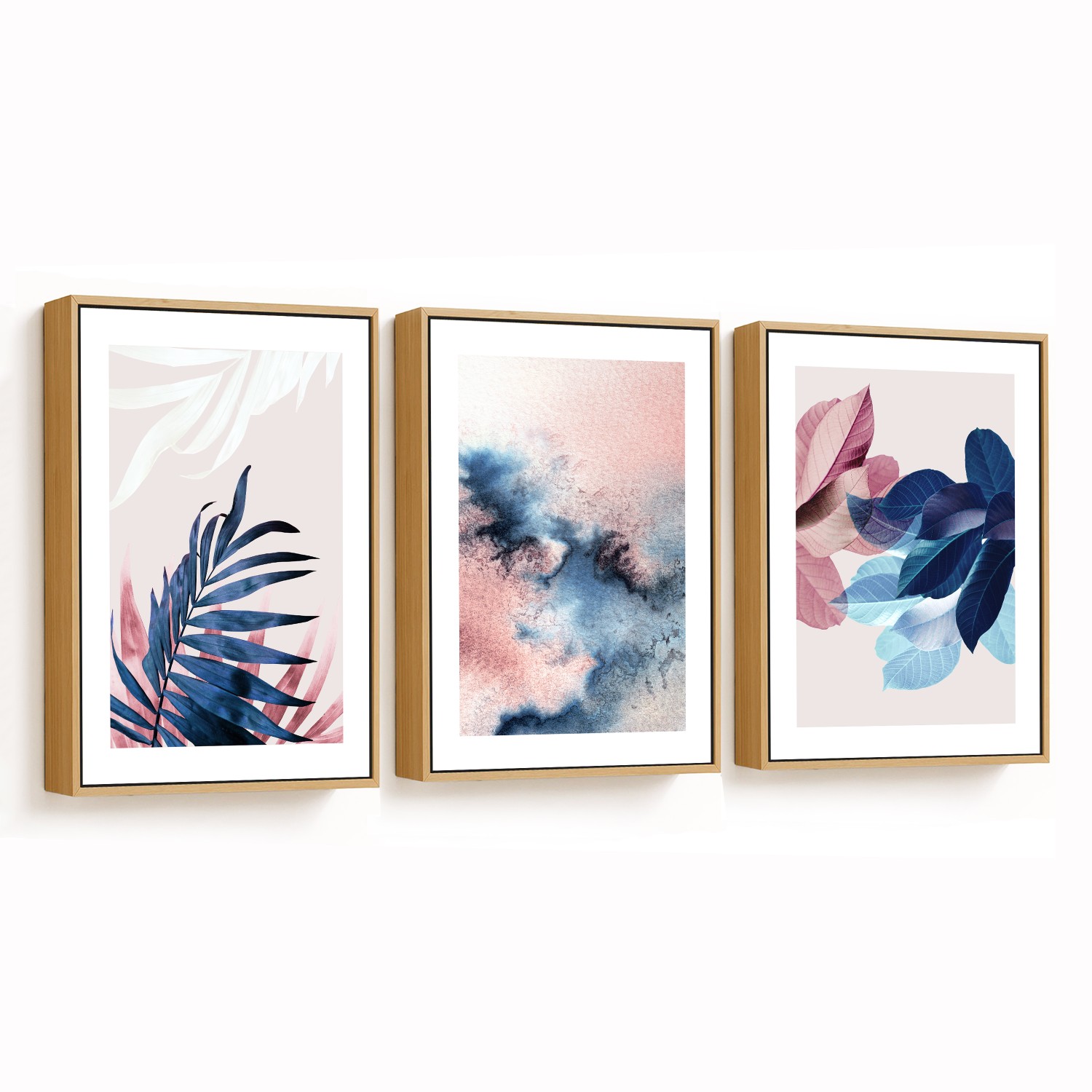
Priya used this research like a cheat code. The corridor wallpaper — a lush botanical pattern in cool greens — set the calm tone before anyone reached their desk. The folk art canvas in the break room, full of warm reds and yellows, did the opposite — energised, invited conversation. She even stuck a geometric-pattern wall decal behind the pantry counter to add visual warmth without paint. It looked like a design choice. It was actually a mood strategy — and she figured it out from the same research you're reading now.
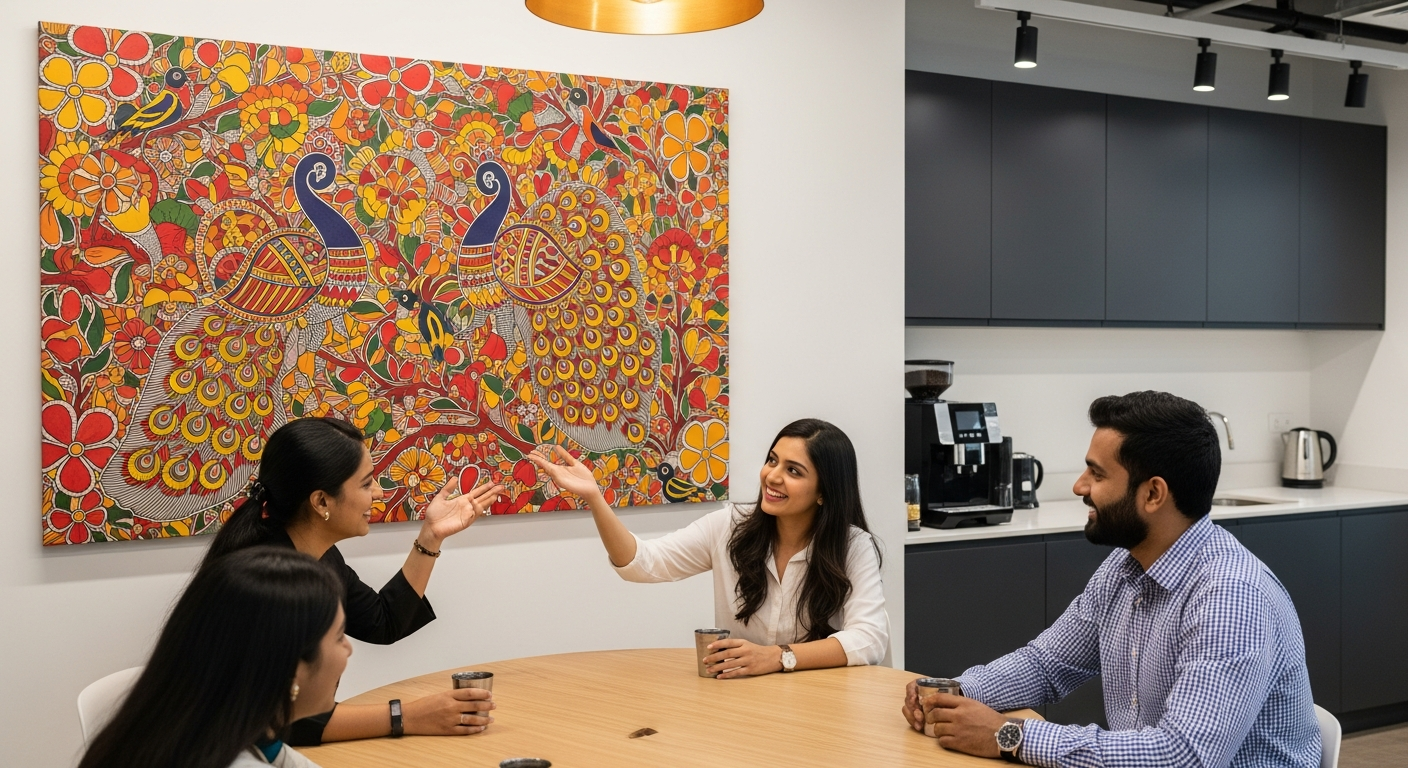
Cool tones (blues, teals, sage greens) in focused areas — cabins, conference rooms. Warm tones (terracotta, gold, coral) in break rooms, reception, collaborative zones. The fastest way to set colour mood: a patterned wallpaper accent wall (from Rs. 99/sq ft — cheaper than paint). For smaller touches, a colourful wall sticker or a bold wall sculpture adds warmth without covering an entire surface. Stay away from heavy red in high-pressure spaces — it raises heart rate.
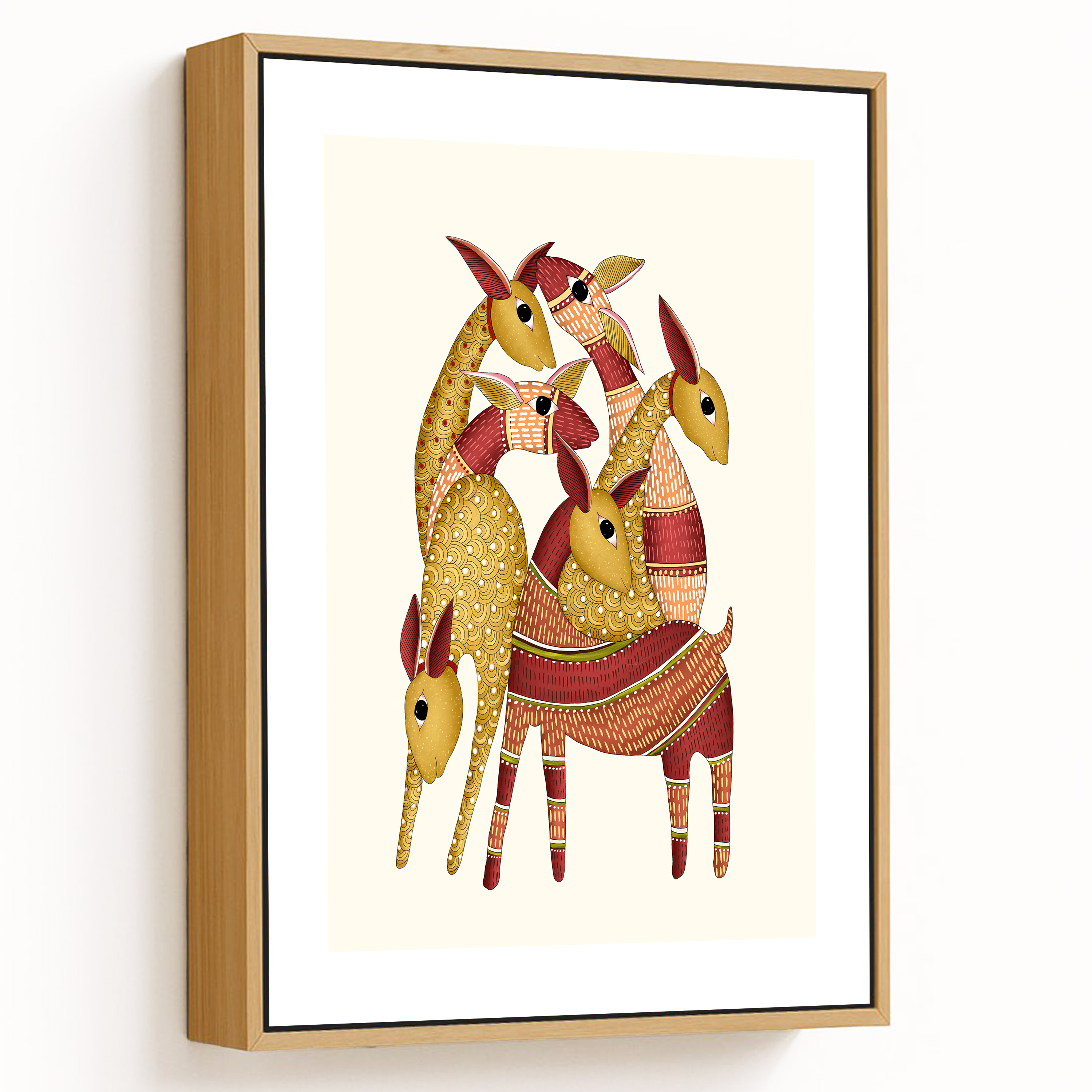
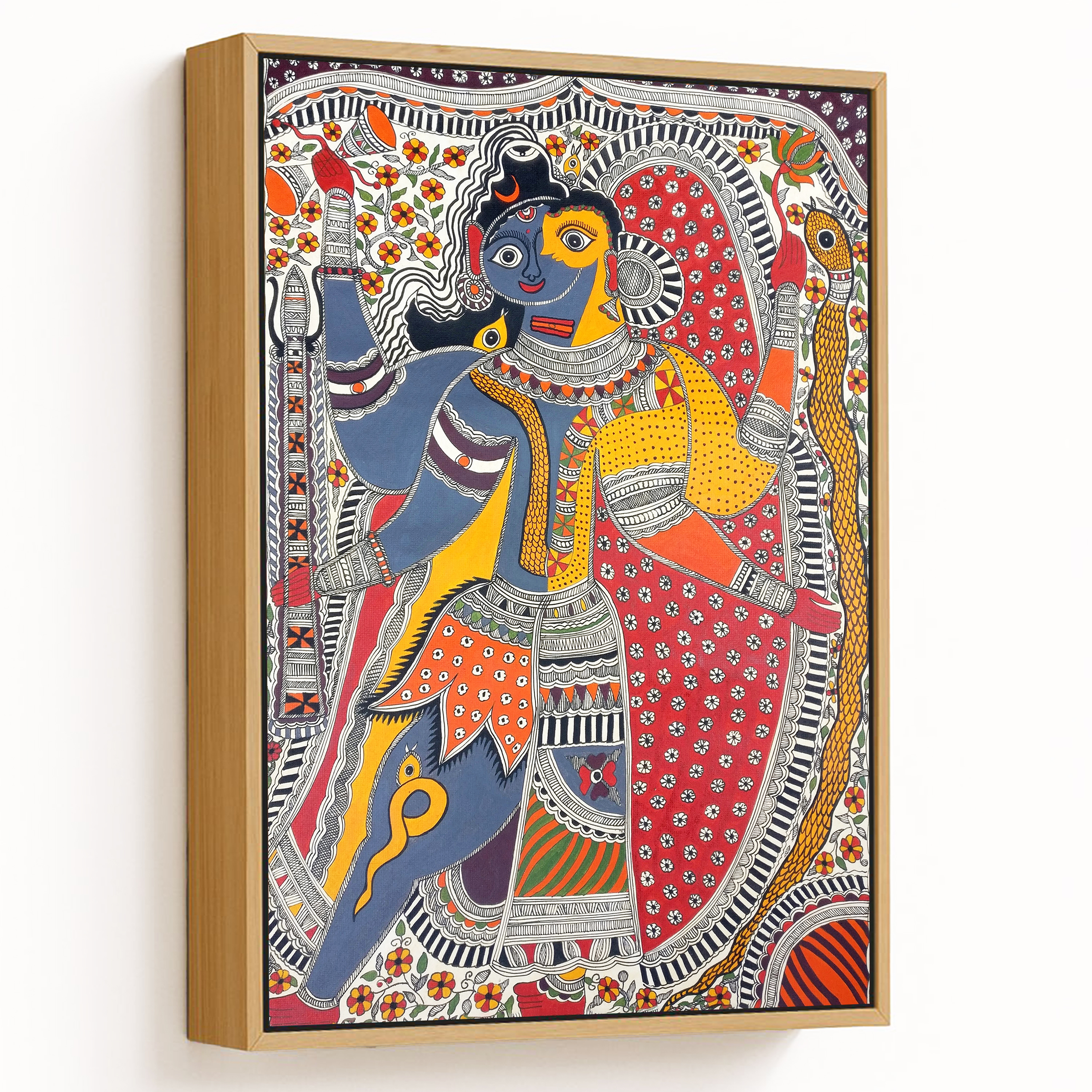
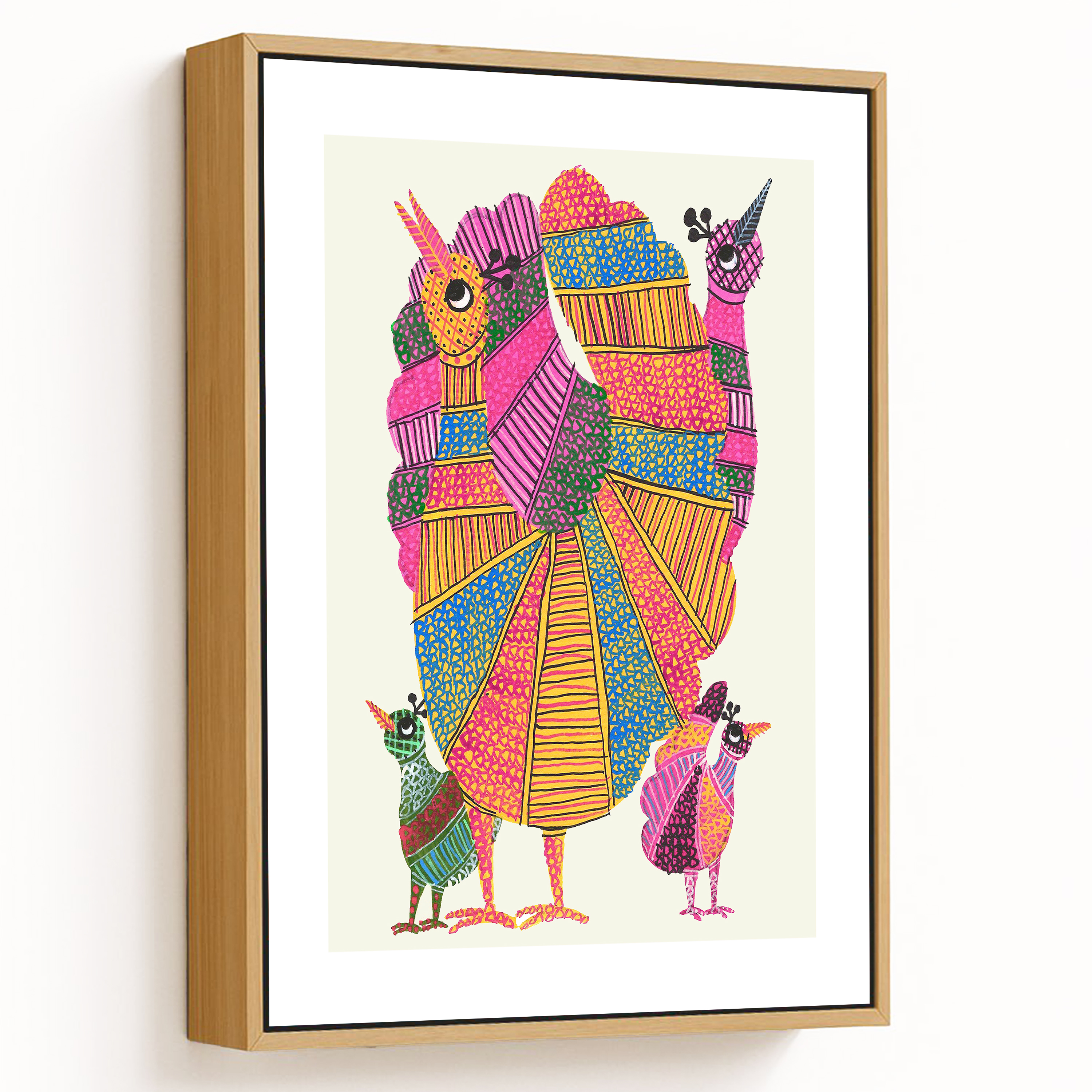
3. Art for the office that the team actually connected with
This is it. This is the part that separates an office that's "nicely decorated" from one that actually changes how people feel.
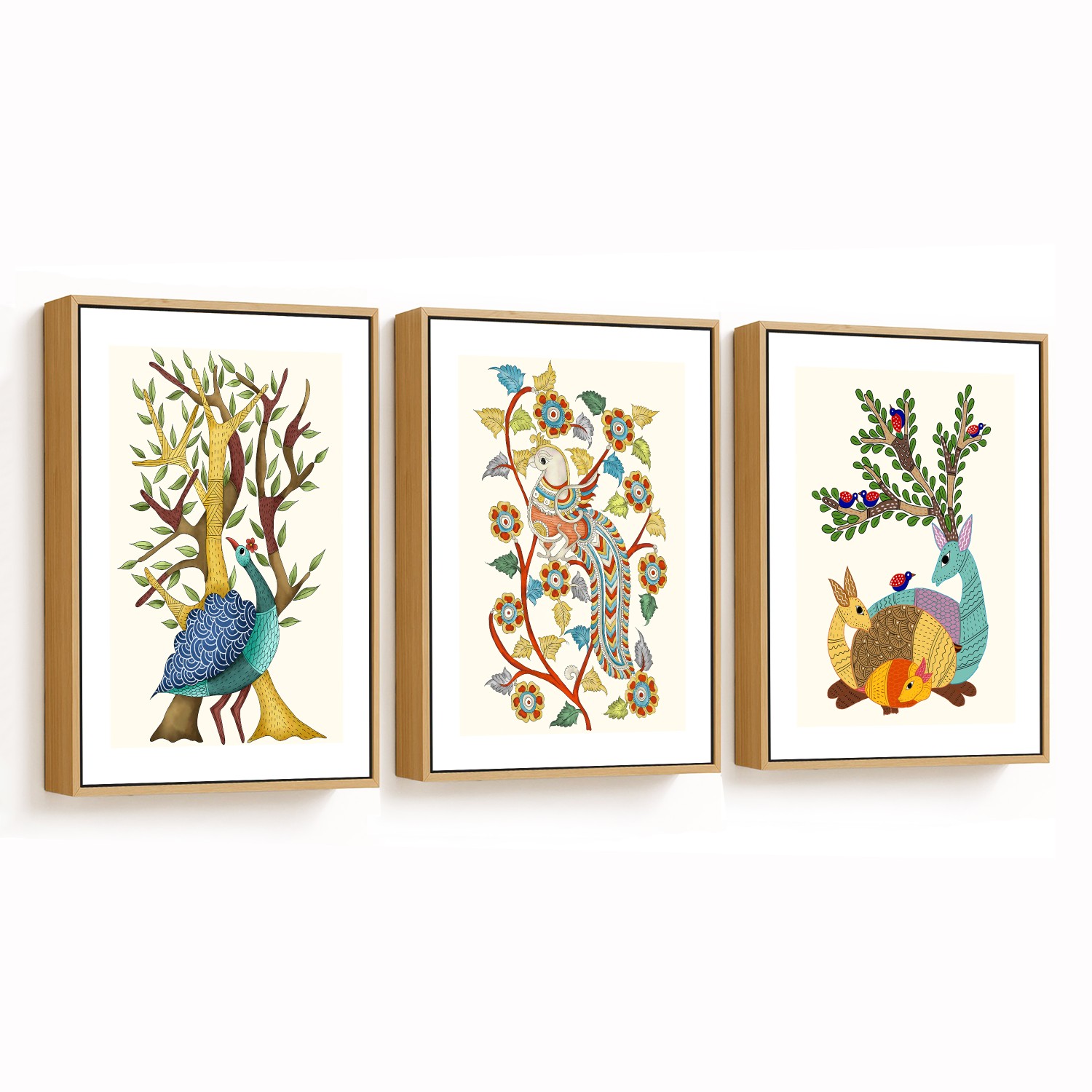
Generic corporate office art — the kind that looks like it came free with the building — does a little. But art that people connect with personally? Something from a tradition they recognise, a style that reminds them of home? That does a lot more.
Brain-imaging work on art viewing points at something more useful than "art makes you feel good": which art moves a person is intensely individual, and the pieces that move them most engage networks tied to self-reflection.
That 0.13 is the practical finding. It means there is no piece of art that works on everybody, and choosing on someone else's behalf is close to guesswork — which is exactly what the Exeter result implies too.
And this is where Indian offices have an edge that nobody talks about.
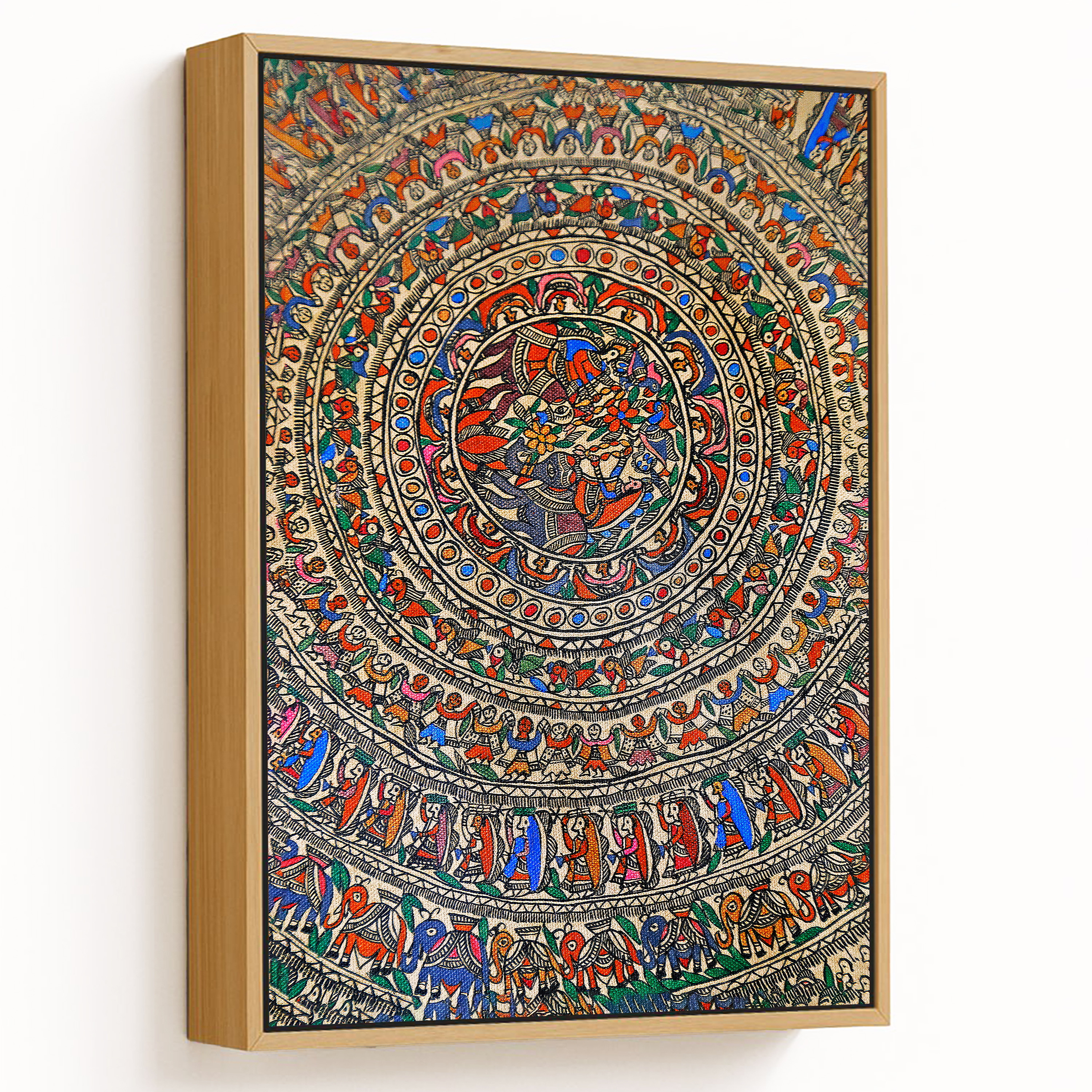
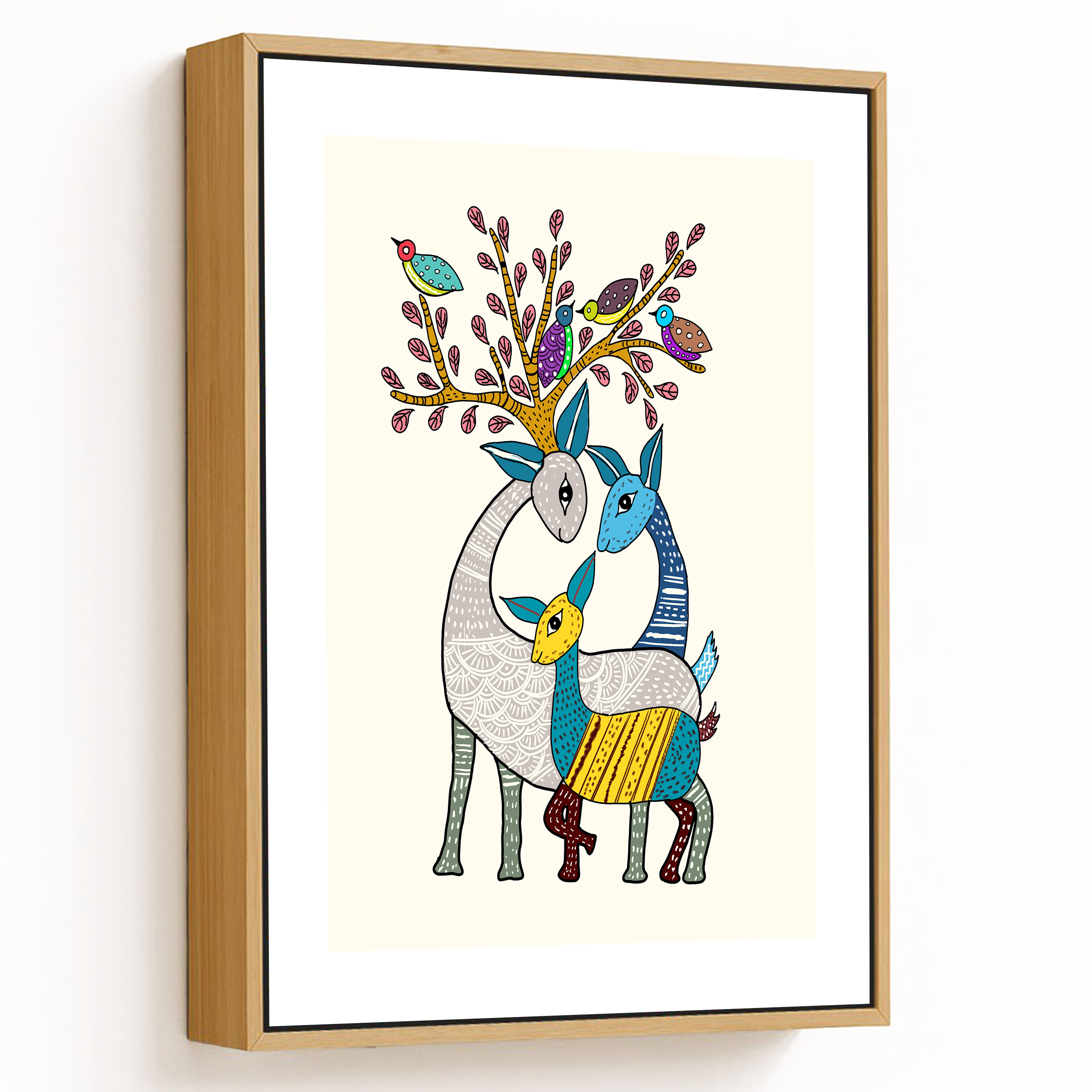
India has something most countries don't: living art traditions that are visually rich, narratively deep, and still being made by hand. And they don't just come as flat prints.
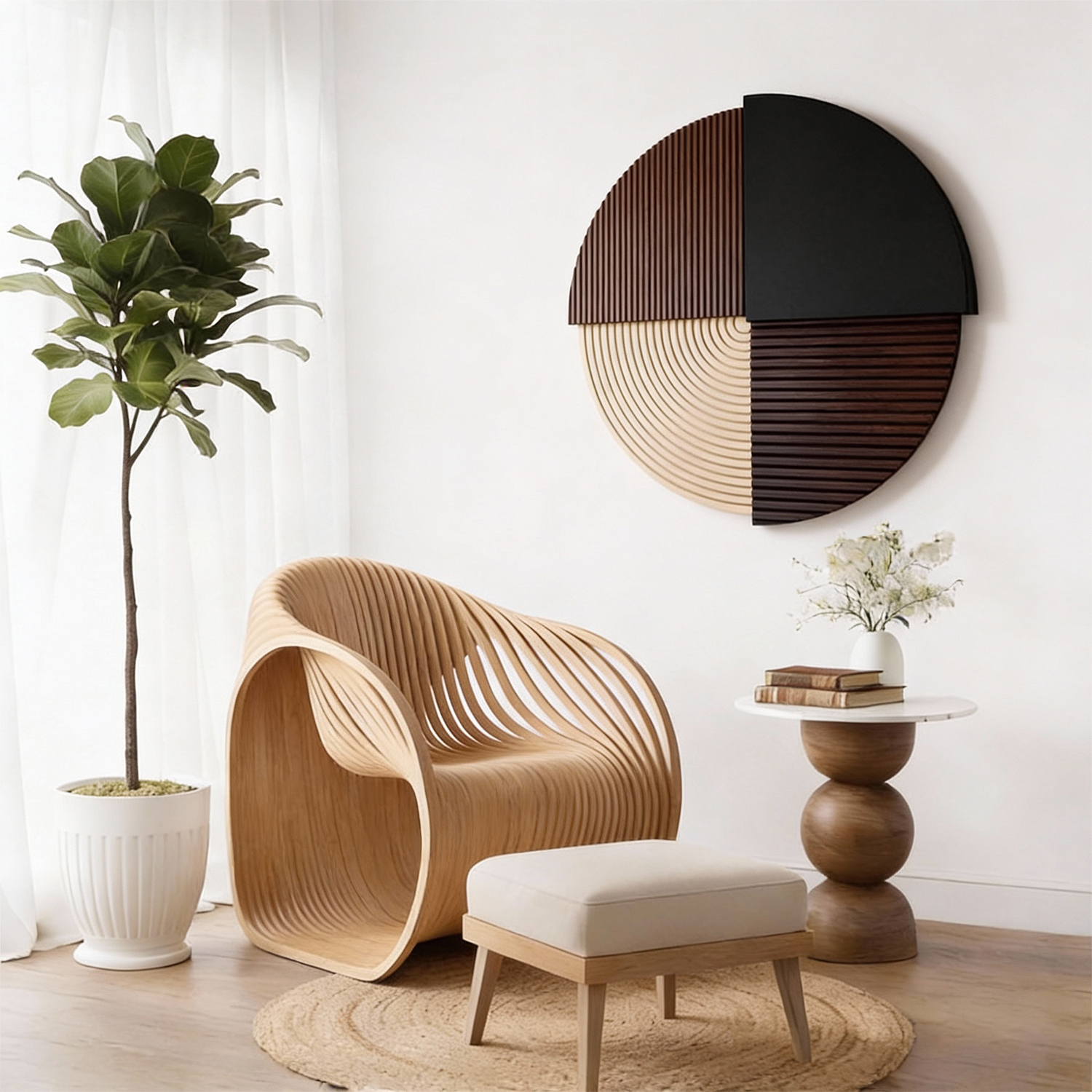
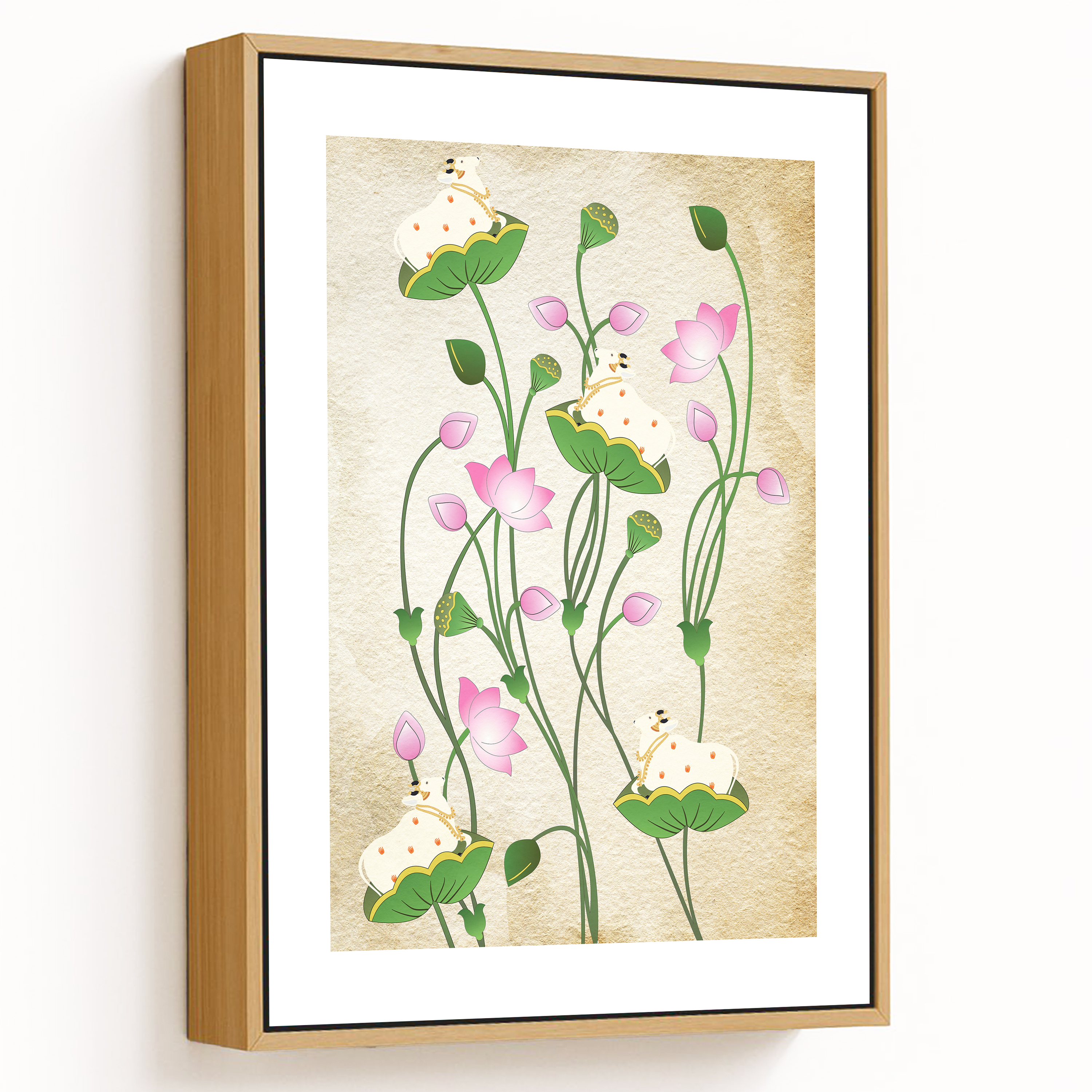
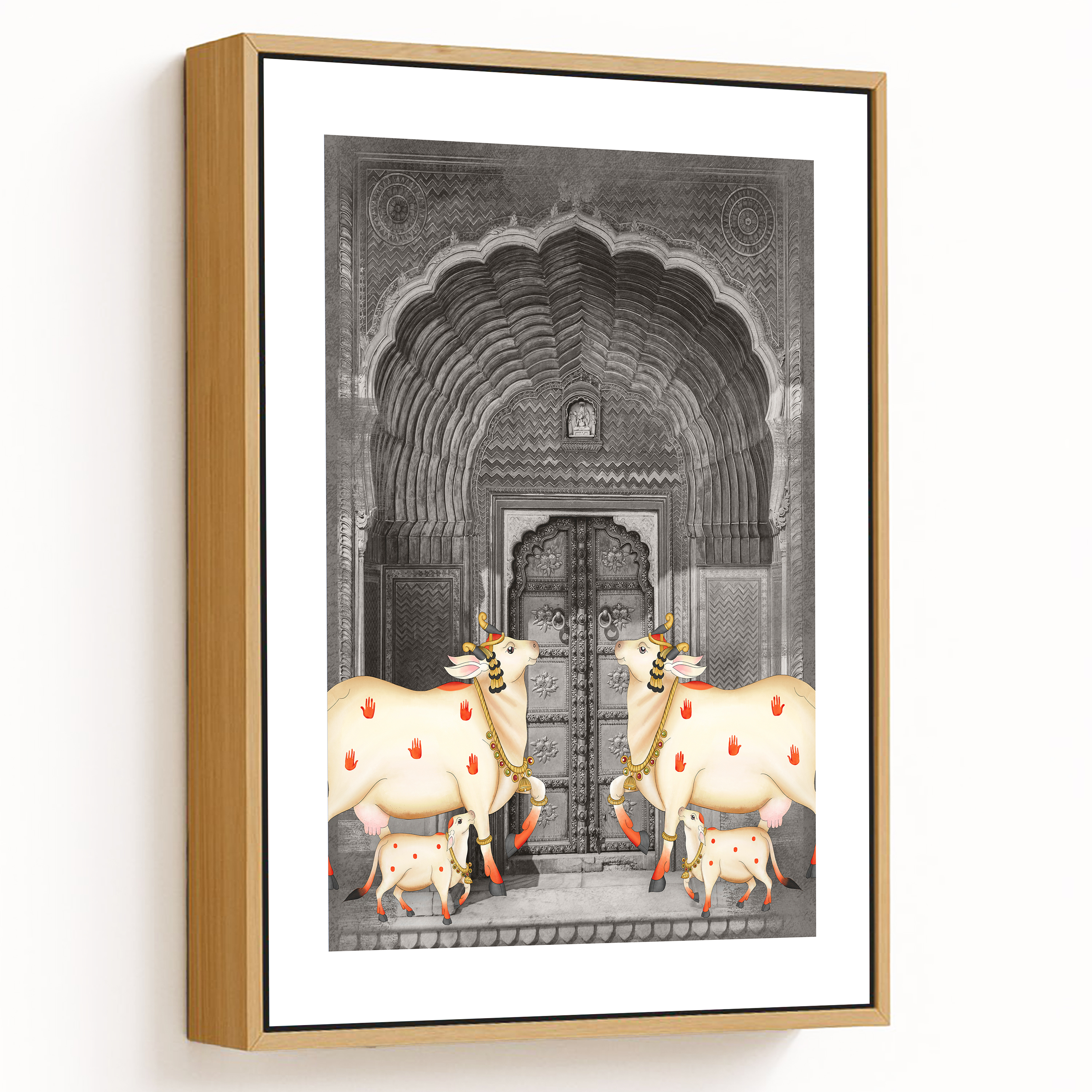
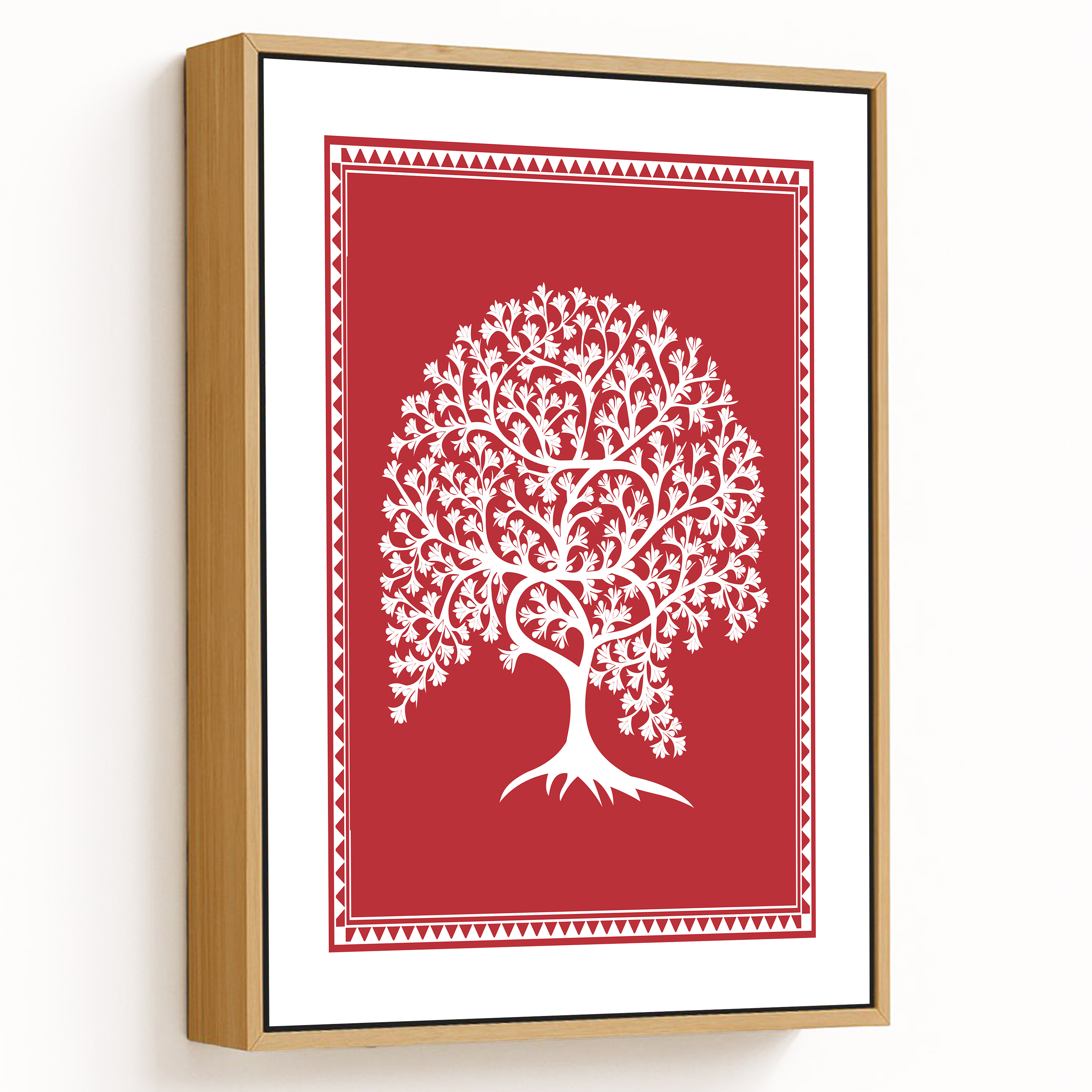
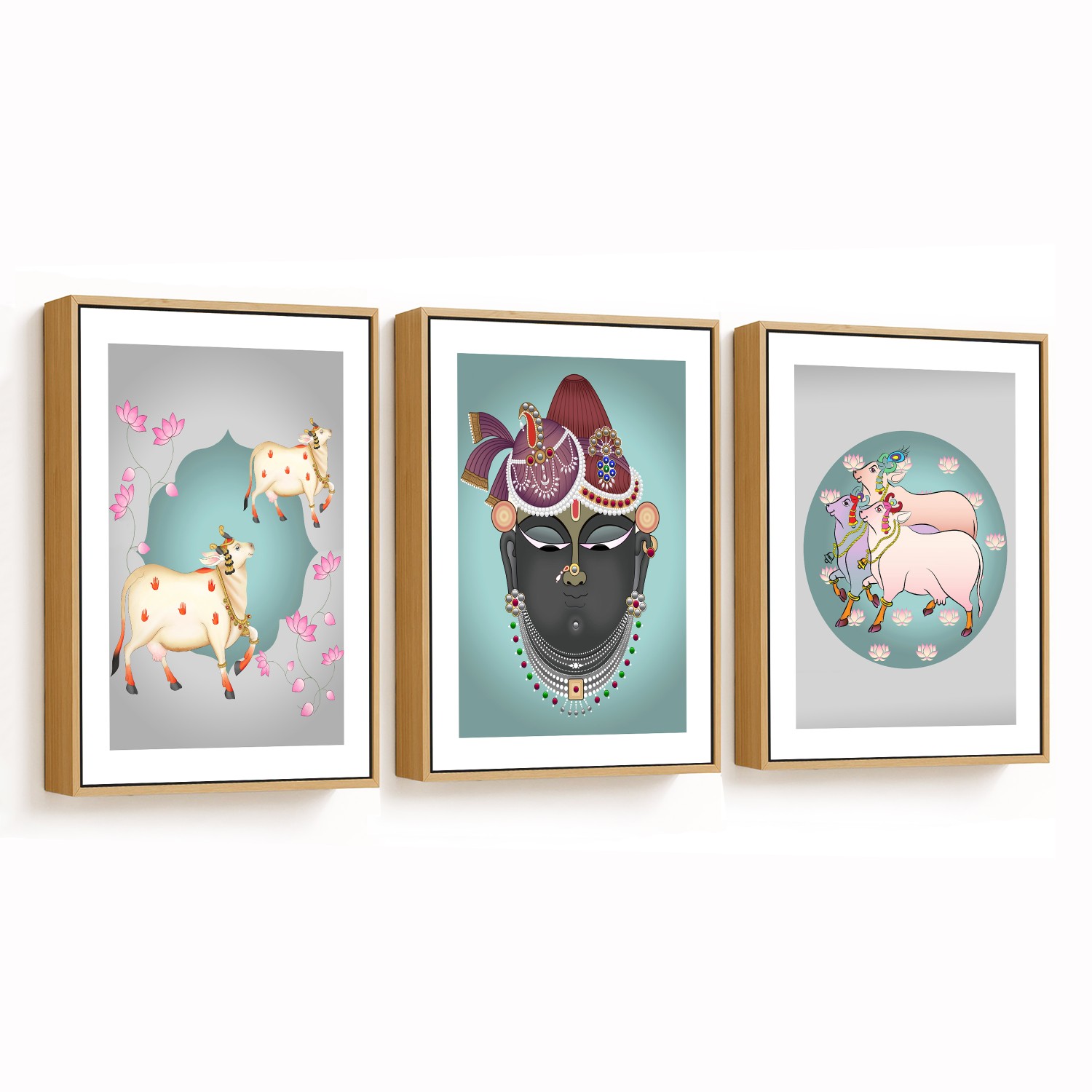
Warli — a tribal art style from Maharashtra with simple white stick figures on terracotta backgrounds — creates a rhythmic calm that's perfect for meeting rooms, whether as a canvas or a wall decal sticker. Madhubani — the densely colourful folk art from Bihar — brings energy to a reception as a large canvas. A hand-carved wooden Tree of Life wall sculpture adds dimension and gravitas to the same reception wall in a way no print can. A mandala wall sculpture in wood or metal catches light differently through the day — it's art that moves. A Pichwai painting (the intricate temple art from Rajasthan) adds warmth and conversation to a director's cabin. And a macramé wall hanging — woven, textural, bohemian — softens break rooms and collaborative spaces in a way that flat art simply doesn't.
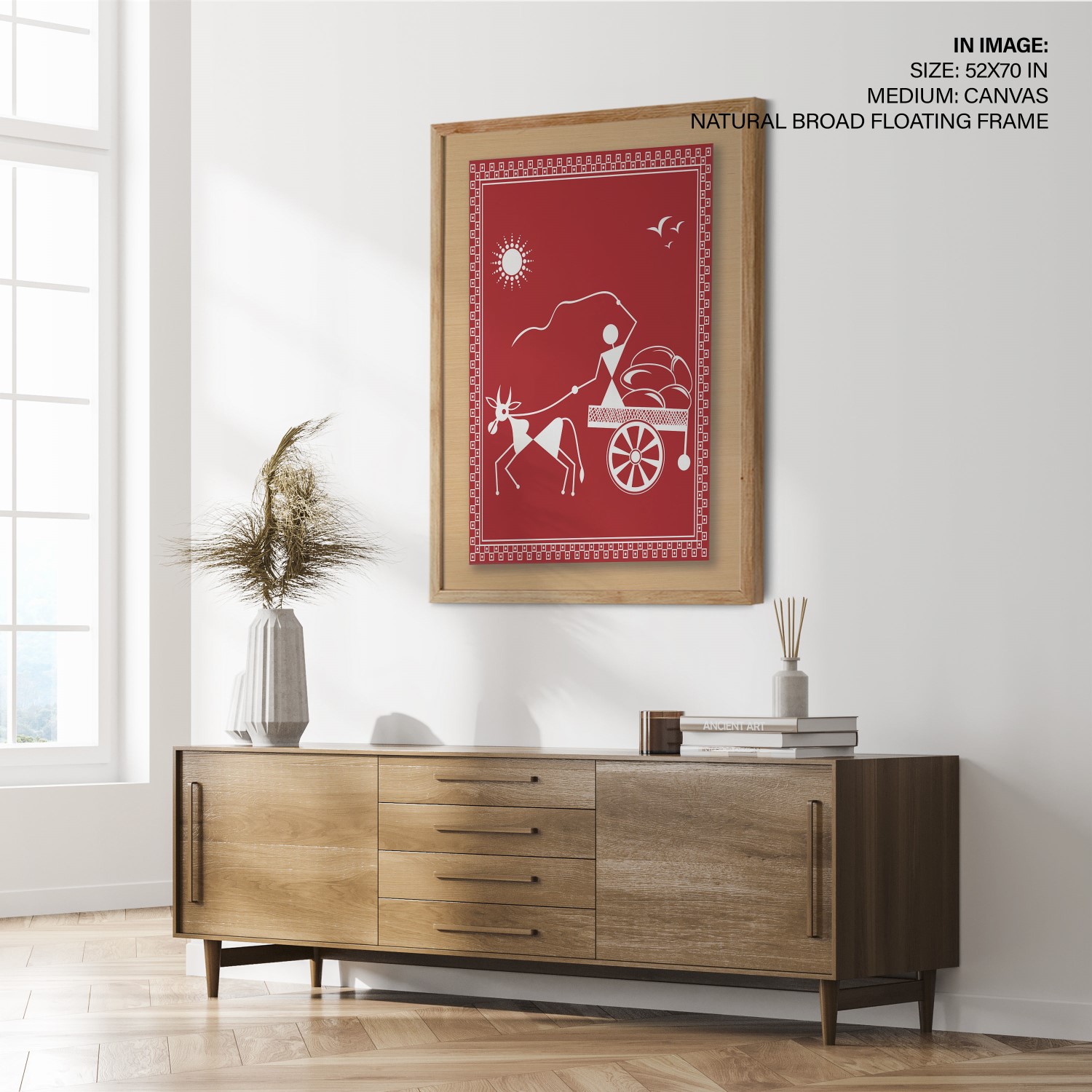
Priya didn't order generic prints online. She asked her team what they connected with. The Pune office wanted Warli — they recognised the style from back home, so she got Warli canvases for the meeting room and Warli wall stickers for the phone booths. The coworking floor picked Madhubani for its colour and energy — a large canvas in the break room, plus a mandala wood sculpture for the reception that people literally reach out and touch. That cultural connection isn't just decoration — it's the difference between decor that blends into the wall and decor that actually changes how people feel in the room.
And here's the part that removed Priya's biggest fear — that she'd pick the "wrong" art and waste the money. She didn't have to get it perfect. She just had to get it personal. The research is clear: the act of choosing matters more than the specific choice. When your team picks their own art, the benefit multiplies — even if their taste isn't what a designer would pick.
Pick traditions that resonate with your team and your city — as canvases, wall sculptures, or even wall stickers of the same motifs. A carved Tree of Life in reception, a Warli sticker in the phone booth, a macramé hanging in the break room. The cultural connection multiplies the psychological benefit regardless of the format.




Office Decor Ideas: Room-by-Room Guide
Here's what actually works in each room — based on the same research Priya used. Notice it's not just wall art. Each space calls for a different type of decor:
Reception / Entrance → Wall Sculptures
Your first impression deserves dimension. A carved wooden Tree of Life (Rs. 3,499) or a metal mandala sculpture (Rs. 4,399) creates a statement piece that flat prints simply can't match. Visitors notice texture, depth, the way light catches a 3D surface. If you only invest in one spot, make it here. Centre at 58–60 inches from the floor.
Corridors & Walkways → Wallpaper Accent Walls
The space everyone walks through six times a day. A botanical wallpaper accent wall (from Rs. 99/sq ft) turns a dead corridor into a green transition zone — the kind of nature imagery participants reported feeling calmer around in the BMJ Open review above. Peel-and-stick options mean zero damage — swap the pattern when you get bored.
Workstations & Cabins → Wall Art + Stickers
Smaller pieces that rest the eye between screen sessions. Framed botanical canvases (12×16 to 18×24) or nature wall stickers that you can stick above a monitor. Cool-toned, calming. In the line of sight when looking up — not behind you.
Conference & Meeting Rooms → Wallpaper or Subtle Art
One accent wall with a geometric or nature-pattern wallpaper, or one to two medium art pieces (24×36 inches). Nothing busy enough to compete with presentations. A Warli wall sticker — white on terracotta — works beautifully as a subtle backdrop. Facing the seats, not behind the speaker.
Break Rooms → Bold Art, Macramé & Cushions
Go bold. Colourful folk art canvases. A macramé wall hanging for texture. Gallery walls mixing prints and 3D pieces. Throw in Indian-pattern cushion sets (Rs. 799 for a set of 2) on the sofas — they cost almost nothing, warm up the room, and signal: this space is for people, not just furniture.
Phone Booths & Small Nooks → Wall Stickers
Small spaces where frames won't fit and drilling isn't worth it. A floral or botanical wall decal sticker (Rs. 1,499) transforms a bare phone booth in minutes. Peel on, peel off, no damage. Perfect for rented offices where you can't touch the walls.
The Vastu Angle
North wall: water themes, blue-green wallpaper or art (career). South: warm-toned wall sculptures, mountain imagery (recognition). East: sunrise motifs, fresh green wallpaper (new beginnings). Avoid conflict or stagnant water imagery in any format.
How to Pitch This to Your Boss (Priya's Playbook)
Let's be real. You might be convinced by now. But you're probably not the one who signs off on the spend. So here's what Priya did — and what you can steal.
She didn't walk into her director's office and say "the office looks sad." She sent a one-page email with four numbers and a request. Here are the numbers:
- ~32% faster task completion when workers arranged their own workspace, vs a bare room — 47 office workers, single session (Knight & Haslam, 2010)
- ~17% faster in a room decorated for them — same experiment, and errors did not rise in either condition
- 94% of surveyed workplace professionals said art makes a workplace feel more welcoming; 61% said it stimulates creativity (Making Art Work in the Workplace, BCO/IAC, ~150 respondents)
- 22% fall in salivary cortisol after 20 minutes with original paintings — 25 adults, not randomised, not yet peer-reviewed (KCL, 2025)
Be straight with whoever you send this to about what these numbers are. The Exeter figures are task-timing from single sessions, not sustained output over months. The 94% is workplace professionals giving an opinion in a survey run by a firm that sells workplace art, not a measured outcome. The cortisol study is small and unpublished. They point in one direction, and none of them proves a return.
And here's the request Priya made: "Give me Rs. 15,000 and three walls. If nothing changes in 60 days, I'll take them down myself."
Nobody said no. Because the risk was near zero, the research was hard to argue with, and a wallpaper accent wall + a few canvases + some wall stickers had never been cheaper. That's your pitch. Copy it.
But What If It Doesn't Work?
This is the fear that stops most people. Not the cost — art for three walls is less than a team lunch at a decent restaurant. The real fear is: what if I pick wrong? What if people don't notice? What if it looks bad and I've stuck my neck out for nothing?
Here's why that fear is bigger than the actual risk.
First, the direction of the evidence is consistent even where its strength isn't. In both of Exeter's experiments, the bare, manager-controlled office came last — on task speed, on comfort, and on satisfaction. The effect sizes vary and the studies are small, so anyone promising you a fixed percentage is overselling. But nobody has found the bare office winning.
Second — and this is the part Priya wishes she'd known from day one — you don't need perfect taste. The biggest productivity jump came when employees chose their own decor. Your job isn't to be an interior designer. Your job is to put options in front of your team and let them pick. The choosing is the benefit.
Third, it's reversible. Canvases come off walls. Frames unhook. And if you're in a rented office where you can't even put nails in? Wall decal stickers — botanical murals, floral patterns, geometric designs — peel on and peel off without leaving a mark. Not a single nail hole. Some offices use peel-and-stick wallpaper on a single accent wall for the same reason. Total risk: zero.
Priya's director asked the same question. Her answer: "The worst case is we're back where we started. The best case is we actually fix something that's been bothering everyone for years." She started with wall stickers and peel-off wallpaper in shared spaces — literally zero damage, zero permission needed — then added canvases and a wall sculpture once she had buy-in. That staged approach is worth copying.

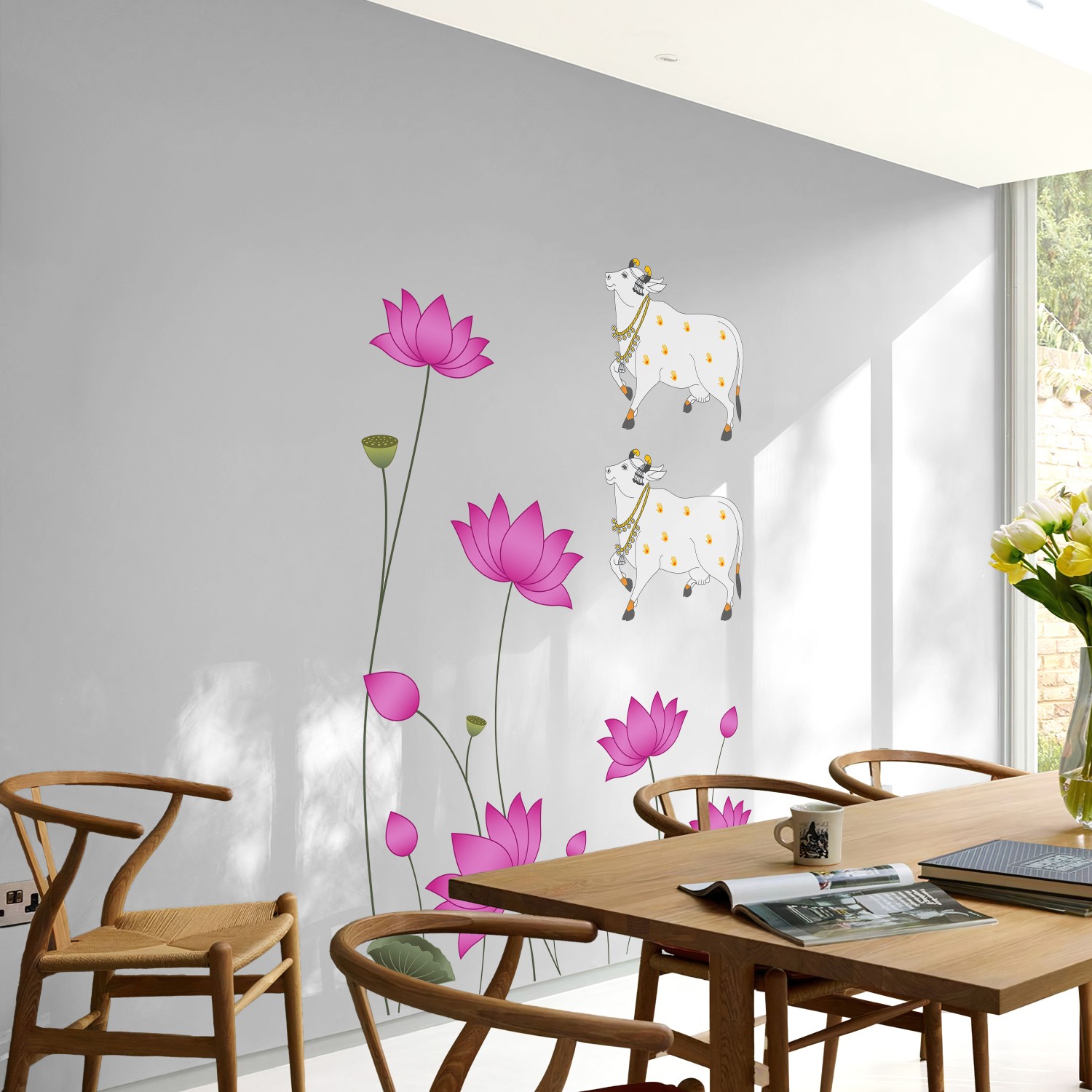
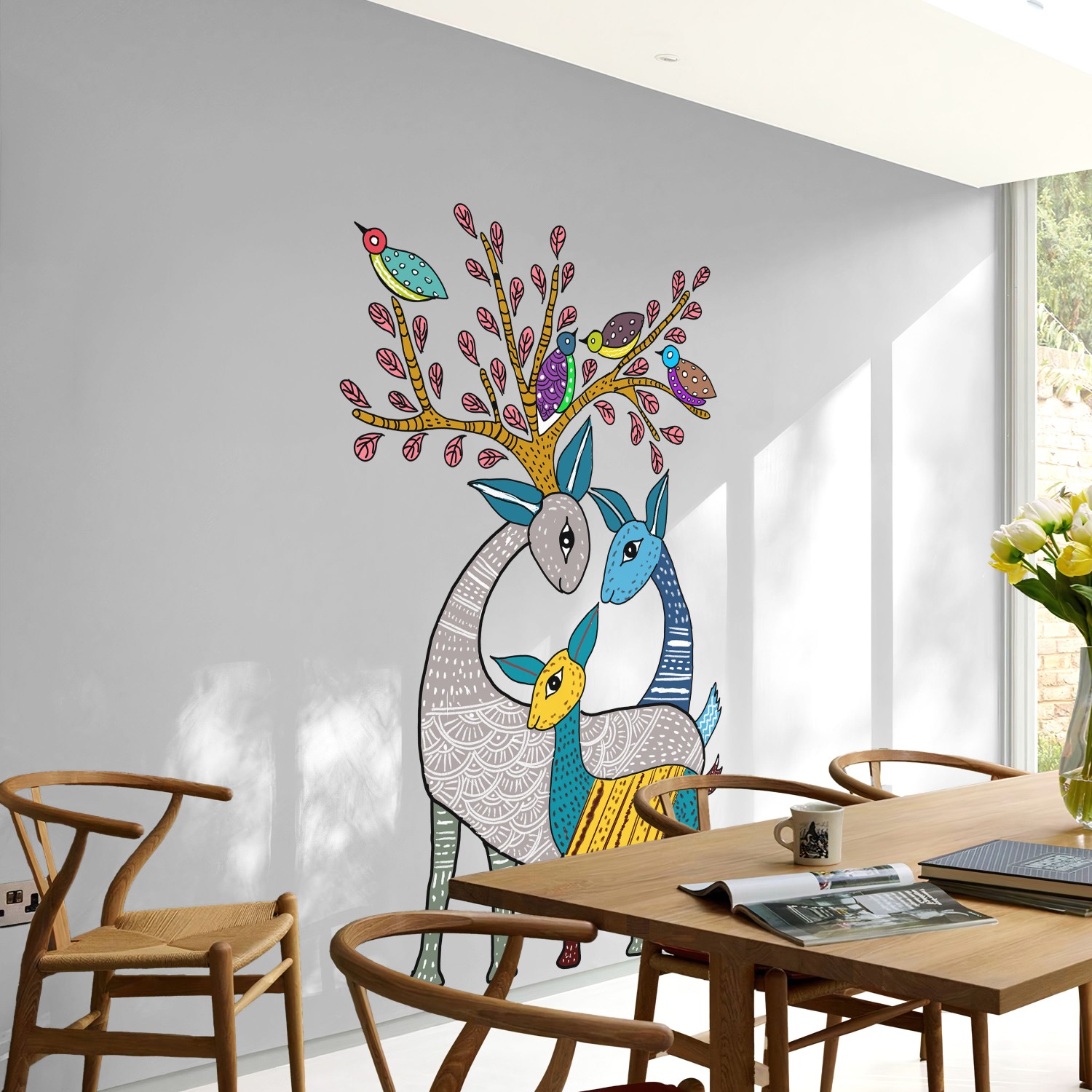
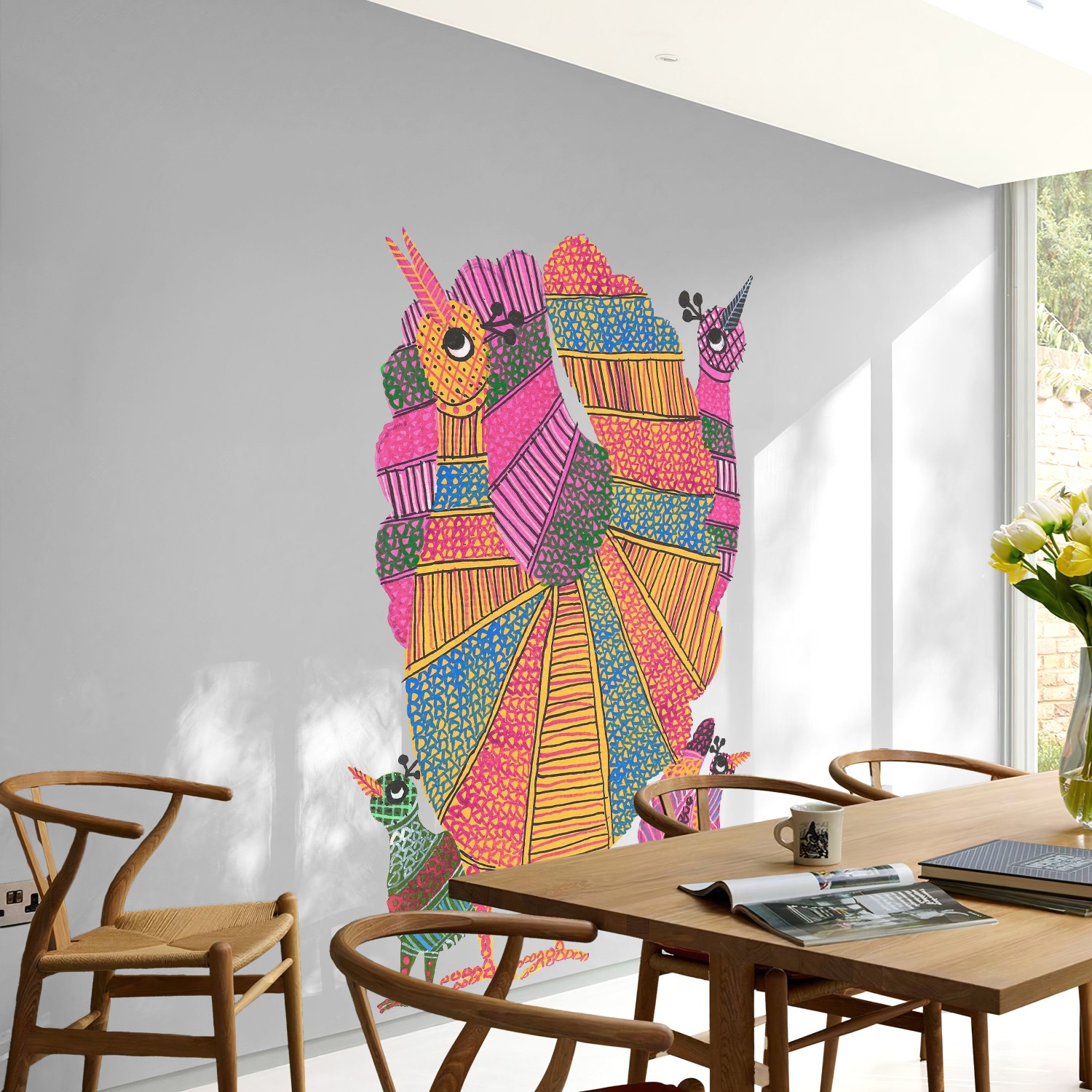
How to Go From Office A to Office B: A 5-Step Office Decor Guide
You don't need a renovation. You need a wall audit, a few decisions, and a weekend. Here's Priya's five-step playbook:
Walk the floor. Note every blank wall, dead corridor, and bare phone booth your team faces daily. Those are your priority spots — and each one might call for a different solution.
Match the format to the space. Not everything needs to be a framed print. Corridors → wallpaper accent walls. Reception → a wall sculpture for dimension. Break rooms → bold canvases, macramé hangings, and cushion sets on sofas. Phone booths and small nooks → wall stickers. Meeting rooms → geometric wallpaper or subtle art. Pick the format that fits the space, not just the aesthetic.
Size it right. Art on a wall wider than 4 feet? Go 24×36 inches minimum — anything smaller looks lost. Wallpaper works on a single accent wall — you don't need to cover all four. Wall sculptures look best as standalone statement pieces, not clustered. For gallery walls, lay it out on the floor first.
Start with zero-damage options if you're renting. Wall stickers and peel-off wallpapers transform a space without touching the paint — no nails, no landlord drama. Once you have buy-in, add framed canvases and wall sculptures. Whichever you choose, look for UV-resistant, non-toxic materials. GREENGUARD Gold certification — the same standard hospitals and schools use — is a plus.
Let your team choose. This is the most important step. The biggest productivity jump came when employees picked their own decor — not a designer. Let each team choose for their section: a wallpaper pattern, a canvas, a wall sculpture, a sticker — whatever speaks to them. The act of choosing itself creates ownership and engagement.
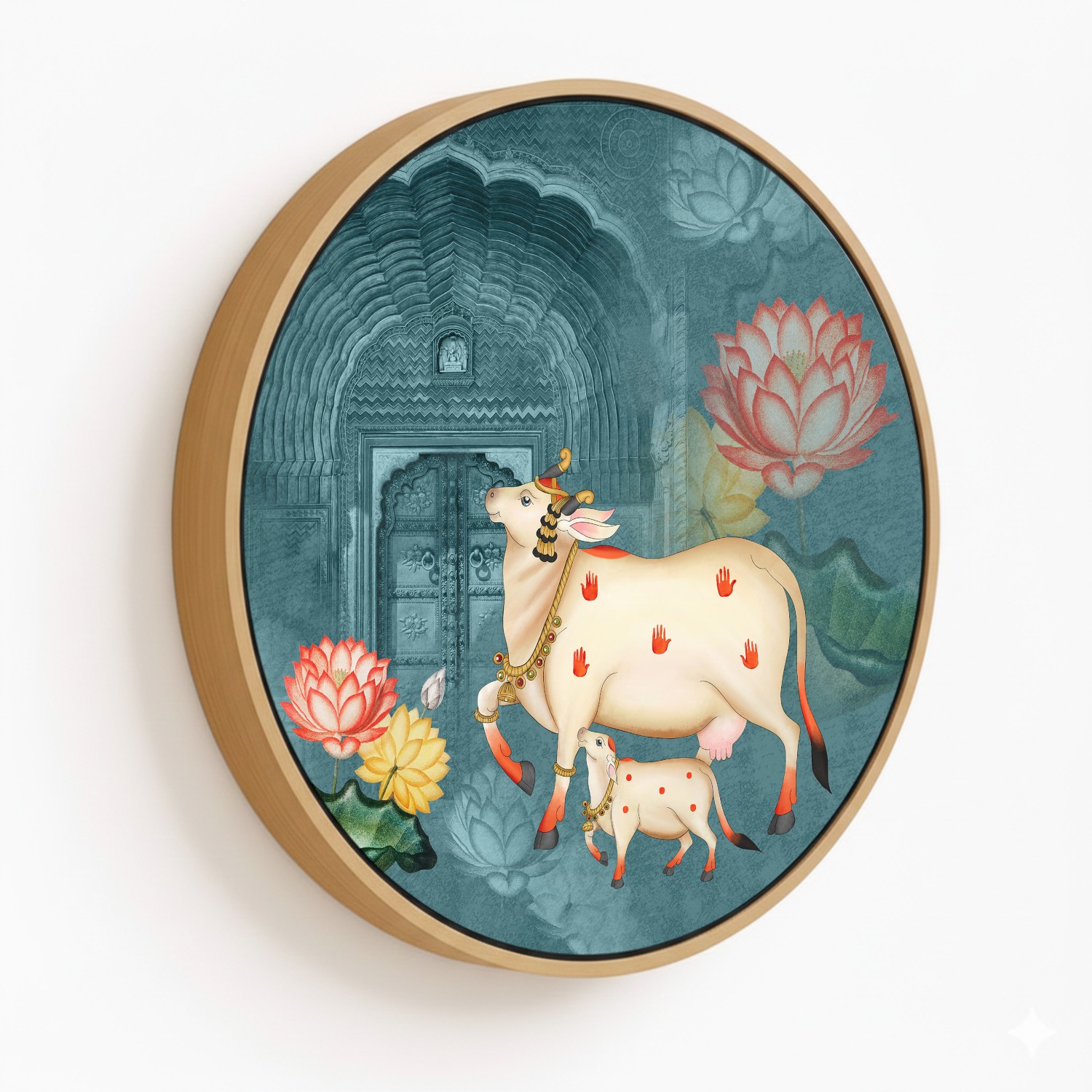

Priya wasn't a designer. She wasn't given a budget. She was just the person who decided that blank walls weren't good enough — and backed it up with numbers nobody could argue with.
She started with peel-off stickers and a wallpaper accent wall. Then came canvases. Then a wooden sculpture for the reception. Then cushions on the break room sofa. Not a grand overhaul — just one wall at a time.
You're reading this article. You now have the same research she found, the same playbook she used, and the same low-risk pitch she made.
The only question is whether you'll be your office's Priya — or whether you'll keep walking past those white walls.
Six months from now, someone will walk into your office and feel something different. They won't know why. But you will.
Frequently Asked Questions
In a 2010 University of Exeter experiment, 47 office workers finished test tasks about 17% faster in a decorated room than a bare one, and about 32% faster when they arranged the room themselves, with no rise in errors. That is task timing from a single session, not sustained output — and the researchers credited the choice, not the decoration.
Lead with the cost, not the claims. Rs. 15,000 across three walls is less than one team dinner, and the strongest evidence — Exeter's 32% faster task completion when people arrange their own space — is about giving staff a say, which is free. Frame it as a low-risk pilot: "If nothing changes in 60 days, we take it down."
The research says the biggest benefit comes when employees choose their own decor — not when a designer picks it. Your job is to provide options, not perfect taste. Let each team pick for their space. The act of choosing itself drives the productivity gain.
Nature imagery has the most evidence behind it, though less than usually claimed: a 2021 BMJ Open review found two studies comparing nature against abstract images, and participants reported lower stress with nature in both. Colour advice is shakier — a 2018 review of 40 workplace-colour studies found contradictory results and no scheme the evidence agrees on.
Less than you'd think. Three walls at Rs. 5,000 each covers most offices. Wall decal stickers and peel-off wallpapers start under Rs. 1,500 — ideal for rented spaces. The key is proper sizing (24×36 inches minimum for walls wider than 4 feet) and durability (UV-resistant, non-toxic inks, GREENGUARD Gold certified). For Indian folk and traditional art like Madhubani, Warli, Pichwai, and more, wall sculptures for reception areas, or wallpapers and wall stickers for an instant refresh, BestOfBharat's catalog has 34,000+ certified options with free shipping above Rs. 999.
According to Vastu, north walls suit water themes and blue-green tones (career growth). South walls suit warm reds and mountain imagery (recognition). East walls benefit from sunrise motifs and fresh greens (new beginnings). Avoid images of conflict, stagnant water, or war scenes anywhere in the office.
- Knight, C. & Haslam, S. A. (2010). "The relative merits of lean, enriched, and empowered offices." Journal of Experimental Psychology: Applied, 16(2), 158–172. doi:10.1037/a0019292 · PubMed — the 17% / 32% figures, from Experiment 2 (n=47). Experiment 1 (n=112) gave 14% and 26%.
- Law, M., Karulkar, N. & Broadbent, E. (2021). "Evidence for the effects of viewing visual artworks on stress outcomes: a scoping review." BMJ Open, 11(6), e043549. doi:10.1136/bmjopen-2020-043549 · full text — 14 studies; two compared nature against abstract imagery.
- Worrell, C. et al. (2025). "The Physiological Impact of Viewing Original Artworks vs. Reprints." King's Research Portal — preprint, not peer-reviewed, n=50, not randomised. Source of the 22% cortisol figure.
- Clow, A. & Fredhoi, C. (2006). "Normalisation of salivary cortisol levels and self-report stress by a brief lunchtime visit to an art gallery by London City workers." Journal of Holistic Healthcare, 3(2), 29–32. Extraction in Law et al. 2021, Table 2 — n=25, no control group.
- Vessel, E. A., Starr, G. G. & Rubin, N. (2012). "The brain on art: intense aesthetic experience activates the default mode network." Frontiers in Human Neuroscience, 6, 66. doi:10.3389/fnhum.2012.00066 — n=16, 109 artworks; mean inter-observer agreement 0.13 ± 0.17.
- Heath, A., Digby, J. & Tanqueray, R. (2013). Making Art Work in the Workplace. International Art Consultants with the British Council for Offices. PDF — trade survey, ~150 respondents, commissioned by a firm selling workplace art. Respondents were property and workplace professionals answering for their companies, not employees.
- Deloitte (2022). Mental health and well-being in the workplace. Deloitte India — US$14bn annual cost estimate, n=3,995.
- Kwallek, N., Soon, K. & Lewis, C. M. (2007), office colour and error rates (n=90); Bakker, I. et al. (2013), meeting-room colour and team outcomes (n=52).
Corrected 2026-08-09. An earlier version of this page cited figures that could not be traced to the studies named — including an inflammation statistic and a productivity survey result that do not appear in the cited sources, and a workplace-stress cost figure attributed to the wrong organisation. Those claims have been removed or replaced with verified equivalents.