Nicholas Roerich
Nicholas Roerich was born in St Petersburg in 1874 and trained as a painter and an archaeologist. He designed the sets and co-wrote the scenario for the first Rite of Spring in 1913. In the 1920s Roerich crossed Central Asia on a long expedition. He then settled at Naggar in the Kulu valley of Himachal Pradesh, and lived there until his death in 1947. He drafted the Roerich Pact, the 1935 treaty protecting cultural sites in wartime, and was nominated for the Nobel Peace Prize. Around seven thousand works survive.

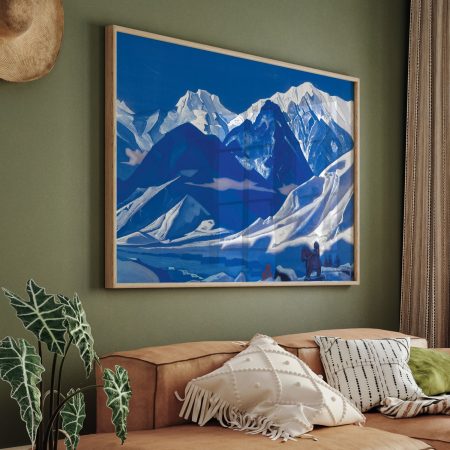

Wall Art
The Greatest and Holiest of Tangla, From the Shambalah Series by Nicholas Roerich
by Nicholas Roerich


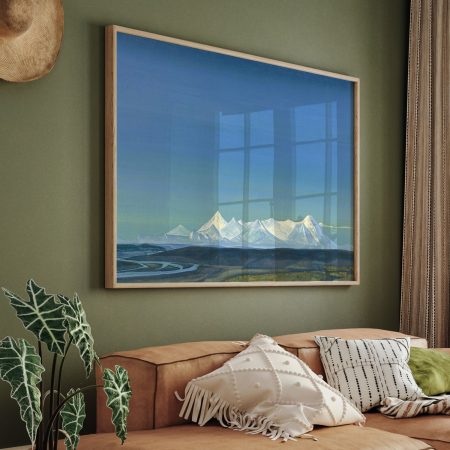
Wall Art
Buddha, the Conqueror. From the Banners of the East Series by Nicholas Roerich
by Nicholas Roerich
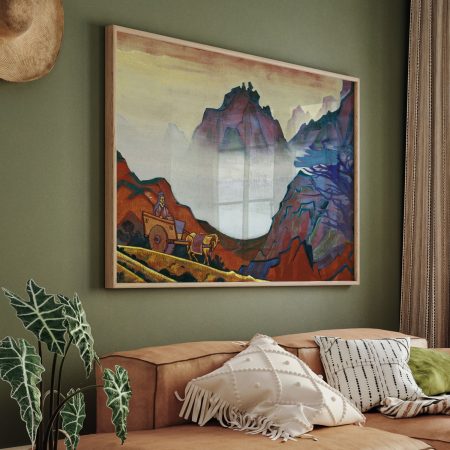
Wall Art
Confucius, the Just One. From the Banners of the East Series by Nicholas Roerich
by Nicholas Roerich
About Nicholas Roerich
Nicholas Roerich was born in St Petersburg in 1874 and trained as a painter and an archaeologist. He designed the sets and co-wrote the scenario for the first Rite of Spring in 1913. In the 1920s Roerich crossed Central Asia on a long expedition. He then settled at Naggar in the Kulu valley of Himachal Pradesh, and lived there until his death in 1947. He drafted the Roerich Pact, the 1935 treaty protecting cultural sites in wartime, and was nominated for the Nobel Peace Prize. Around seven thousand works survive.
The Nicholas Roerich Collection at BestOfBharat
Most of the range is Himalayan. Kuluta, Shekar Dzong and Himalayan Landscape come from the years of mountain studies painted at Naggar. Beside them sit the Shambhala and Rigden Jyepo subjects, where Buddhist and Vedic figures stand against the same peaks. Krishna Spring in Kulu belongs to the Indian work. Colour runs from cold ultramarine through violet to gold.
Nicholas Roerich in Your Space
Roerich works in sets. Two or three Himalayan studies stacked vertically suit a stairwell or a narrow hall. One large peak painting above a bed or a meditation seat holds a room by itself. The saturated blues sit well against lime-washed white walls and pale wood, and they cool down a south-facing room. Warm gold or brass frames pick up the light in the Shambhala pieces. Hang them high enough that you look up slightly.
Every artwork here is an archival print, hand-framed to order and delivered ready to hang — made in India.
