Wall Sculptures: The Complete India-Focused Guide
Table of Contents
- What are wall sculptures in interior design?
- Earliest forms of wall sculptures in Indian history
- Evolution of wall sculptures in India—from temples to modern homes
- Different types of wall sculptures used today
- Common materials used in Indian wall sculptures
- Popular Indian colours, motifs, and design themes
- Which rooms in Indian homes are ideal for wall sculptures?
- Choosing the right size, scale, and placement for sculptures
- Matching wall sculptures with Indian interior design styles
- Pairing wall sculptures with furniture, lighting, and décor
- Indian art, craft traditions, and movements inspiring modern sculpture design
- Installation tips for Indian walls (cement, plaster, texture)
- Caring for wall sculptures in India’s climate
- Expert styling tips for modern Indian homes
- Why wall sculptures are becoming a trend in today’s Indian interiors
Wall Sculptures: The Complete India-Focused Guide
1. What are wall sculptures in interior design?
Wall sculptures are three-dimensional artworks mounted on walls, adding depth, structure, and character to a room. Unlike flat art, wall sculptures use shadows, contours, and textures to create visual drama. In Indian interiors, wall sculptures have found a distinct place because they echo India’s architectural heritage—rich with carved temples, ornate motifs, and relief artwork.
Modern wall sculptures blend traditional craftsmanship with contemporary aesthetics, making them suitable for every kind of home—from luxurious villas to compact apartments.
2. Earliest forms of wall sculptures in Indian history
India has one of the richest histories of wall sculpture in the world. Some of the earliest and most iconic examples include:
- Ajanta & Ellora Caves: Intricate relief sculptures narrating Buddhist, Hindu, and Jain stories.
- Khajuraho Temples (10th century): Known for their extraordinary carvings and expressive reliefs.
- Konark Sun Temple: Walls covered with stone sculpture panels and intricate iconography.
- South Indian temples: Including Chola and Pallava architecture with ornate pillar and wall sculptures.
- Gond & Bhil tribal reliefs: Early forms of mud-relief patterns on village walls.
- Lippan Kaam (Kutch): Mud and mirror work decorating interior walls of homes.
These traditions show that India has been celebrating wall-based sculptural art for over 2,000 years.
3. Evolution of wall sculptures in India—from temples to modern homes
- Ancient Era: Sculpture was a medium of storytelling, devotion, and architecture.
- Medieval Era: Sculptures became more refined with classical styles like Mughal jaali carvings.
- Colonial Period: Introduction of metal and European-style reliefs into Indian décor.
- Post-independence: Wooden carvings, brass panels, and tribal-inspired art gained popularity.
- Contemporary Era: Clean, minimalistic, abstract, and geometric wall sculptures became common in urban homes.
Today’s wall sculptures balance tradition with modernity—drawing inspiration from centuries-old artistry while matching contemporary interiors.
4. Different types of wall sculptures used today
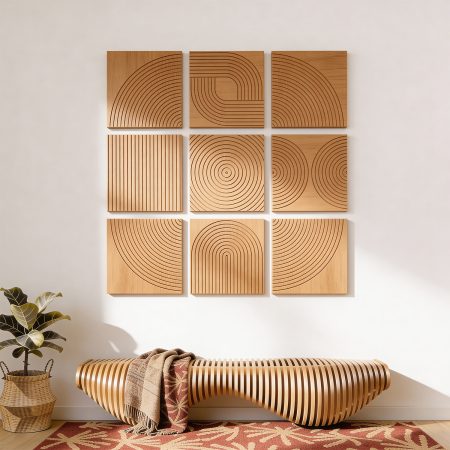
- Wooden wall sculptures – warm, natural, carved, or layered designs.
- Metal wall sculptures – sleek, bold, suitable for modern or industrial interiors.
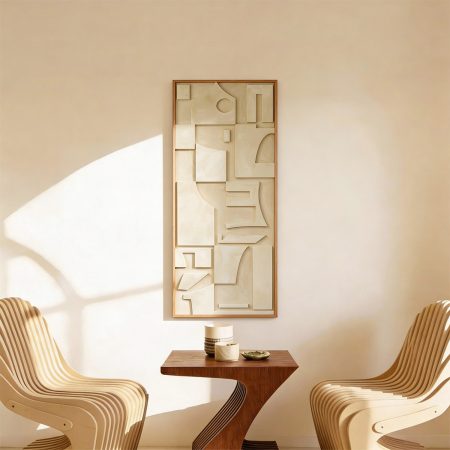
- MDF layered 3D sculptures – lightweight and extremely popular for contemporary styling.
- Stone or cement-finish sculptures – rustic, heritage-inspired.
- Resin sculptures – smooth, elegant, available in premium finishes.
- Mixed-media sculptures – combining wood, metal, acrylic, and textures.
- Handmade traditional crafts – including mud relief, mirror work, and carved panels.
Each type creates a unique look depending on visual weight and material finish.
5. Common materials used in Indian wall sculptures
- Wood (Teak, Sheesham, Mango): Traditional, durable, highly textured.
- Metal (Iron, Brass, Copper): Luxurious or industrial depending on finish.
- MDF: Perfect for modern layered sculptures with clean edges.
- Resin: Ideal for smooth, premium contemporary sculptures.
- Terracotta: Earthy, traditional, and eco-friendly.
- Cement & Plaster: Used for artisanal wall murals and reliefs.
- Mirror & Mud: For Lippan Kaam-inspired pieces.
Material choice influences durability, weight, and cultural character.
6. Popular Indian colours, motifs, and design themes
Colours
- Terracotta red
- Haldi yellow
- Deep indigo
- Matte black
- Bronze & antique gold
- Sage green
- Sandstone beige
Motifs & Themes
- Mandalas
- Lotus and peacock motifs
- Tribal art-inspired reliefs
- Mughal jaali geometric designs
- Spiritual themes (Buddha, Ganesha, Om patterns)
- Nature-inspired abstract forms
- Rajasthani miniature-inspired silhouettes
These motifs infuse sculptures with unmistakable Indian character.
7. Which rooms in Indian homes are ideal for wall sculptures?
- Living Room: The most common place for large statement sculptures.
- Entrance Foyer: Sets the tone for the home.
- Bedroom: Soft, abstract, or nature-inspired sculptures above the headboard.
- Dining Area: Elegant or minimal pieces that complement lighting.
- Hallways: Vertical or narrow sculptures to add dimension.
- Puja Room: Mandalas, lotus motifs, or sacred geometry.
- Balconies: Weather-resistant metal or stone sculptures.
Wall sculptures elevate the ambience and act as conversation starters.
8. Choosing the right size, scale, and placement for sculptures
- Sculptures should be proportionate to wall size to avoid visual imbalance.
- Above furniture, the sculpture should cover 60–70% of the furniture width.
- Use larger pieces for big empty walls; avoid tiny sculptures on vast surfaces.
- Centre sculptures at 57–60 inches from the floor for ideal eye level.
- Vertical sculptures work best on narrow walls; horizontal for wide spaces.
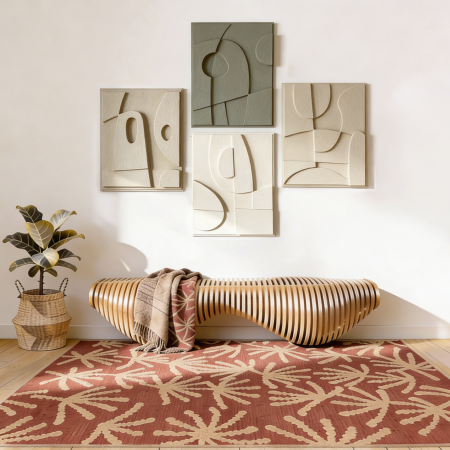
- Group small sculptures to create a cohesive installation.
Mindful placement maximises visual impact.
9. Matching wall sculptures with Indian interior design styles
- Modern Indian: Minimalist 3D shapes, matte finishes, geometric forms.
- Traditional Indian: Carved wood, brass panels, temple-inspired motifs.
- Bohemian Indian: Tribal art, earthy textures, and natural finishes.
- Royal Rajasthani: Ornate carved panels, mirror work.
- Industrial: Metal sculptures with raw, distressed textures.
- Luxury Contemporary: Resin, gold-accented art, or abstract metallic pieces.
Every interior style has a corresponding sculptural language.
10. Pairing wall sculptures with furniture, lighting, and décor
- Warm-toned lights enhance shadows and depth.
- Pair wood sculptures with wooden furniture for natural harmony.
- Use spotlights or directional lighting to highlight contours.
- Metallic sculptures pair beautifully with plush interiors.
- Balance busy furniture with simple sculptures—and vice versa.
- Surround sculptures with minimal décor so they become the focal point.
Lighting is especially crucial because it enhances 3D textures.
11. Indian art, craft traditions, and movements inspiring modern sculpture design
Modern Indian wall sculptures are influenced by:
- Temple carvings
- Mughal jaalis
- Lippan Kaam (Kutch mirror work)
- Bastar tribal metal craft
- Wooden carvings from Saharanpur
- Madhubani & Gond simplified motifs
- Kerala temple mural styles
- Contemporary Indian abstract art
These elements blend history, craft, and modern expression.
12. Installation tips for Indian walls (cement, plaster, texture)
- Use proper anchors and plugs—most Indian walls are cement-based.
- Avoid drilling where electrical conduits may run.
- For heavy sculptures, choose metal brackets or concealed hooks.
- Ensure wall is smooth; if not, use additional support plates.
- Check for seepage before installation—humidity can damage materials.
- Secure multi-panel sculptures evenly with a spirit level.
A strong installation ensures longevity and safety.
13. Caring for wall sculptures in India’s climate
- Dust regularly with a soft cloth.
- Use dry microfiber cloths for wood or MDF; avoid water.
- For metal, apply gentle anti-rust care in coastal cities.
- Keep sculptures away from direct sunlight to prevent fading.
- Maintain indoor humidity to avoid wood warping.
- Use soft brushes for intricate carved areas.
Care habits depend on the material.
14. Expert styling tips for modern Indian homes
- Choose one statement sculpture for a clutter-free premium look.
- Use mandala or lotus sculptures in meditation or puja spaces.
- Match colours of cushions or rugs with sculpture tones.
- Pair metallic sculptures with textured wallpapers for contrast.
- Use layered MDF sculptures for minimal, contemporary rooms.
- Combine sculptural art with mirror décor to enhance depth.
Wall sculptures, when styled right, elevate the entire home’s personality.
15. Why wall sculptures are becoming a trend in today’s Indian interiors
Wall sculptures are gaining popularity because:
- They add instant dimension and richness to walls.
- They resonate with India’s heritage of carved art and architecture.
- They suit both modern and traditional interiors effortlessly.
- They offer a premium alternative to flat wall art or paintings.
- They create shadows and textures that enhance lighting.
- They reflect India’s evolving taste for contemporary décor with cultural authenticity.
Today’s Indian homes celebrate sculptural art as a blend of tradition, texture, and modern style.